

Duchenne muscular dystrophy (DMD) research continues to move forward with the launch of the Del-Zota SAFARI44 Phase 3 clinical trial evaluating AOC 1044, also known as delpacibart zotadirsen. This investigational therapy is being developed for individuals with DMD mutations amenable to exon 44 skipping.
Table of Contents
What Is the SAFARI44 Trial?
The SAFARI44 study is a randomized, double-blind, placebo-controlled Phase 3 clinical trial designed to evaluate the safety and efficacy of AOC 1044 (Del-Zota) in boys with Duchenne muscular dystrophy who are eligible for exon 44 skipping treatment. Read More: Del-zota (EXPLORE44) Provides Nearly 30% Normal Dystrophin Production
The trial will investigate whether intravenous AOC 1044 can help improve disease outcomes in DMD patients carrying specific dystrophin gene mutations. The therapy is administered through intravenous infusion every six weeks.
What Is Del-Zota (Delpacibart Zotadirsen)?
Del-Zota is an investigational exon-skipping therapy developed to target mutations in the dystrophin gene that can benefit from exon 44 skipping. The goal of exon-skipping therapies is to help the body produce a shorter but functional dystrophin protein, which may slow muscle degeneration in Duchenne muscular dystrophy. Learn More: Mutations and Deletions Amenable to Exon 44 Skipping Therapies
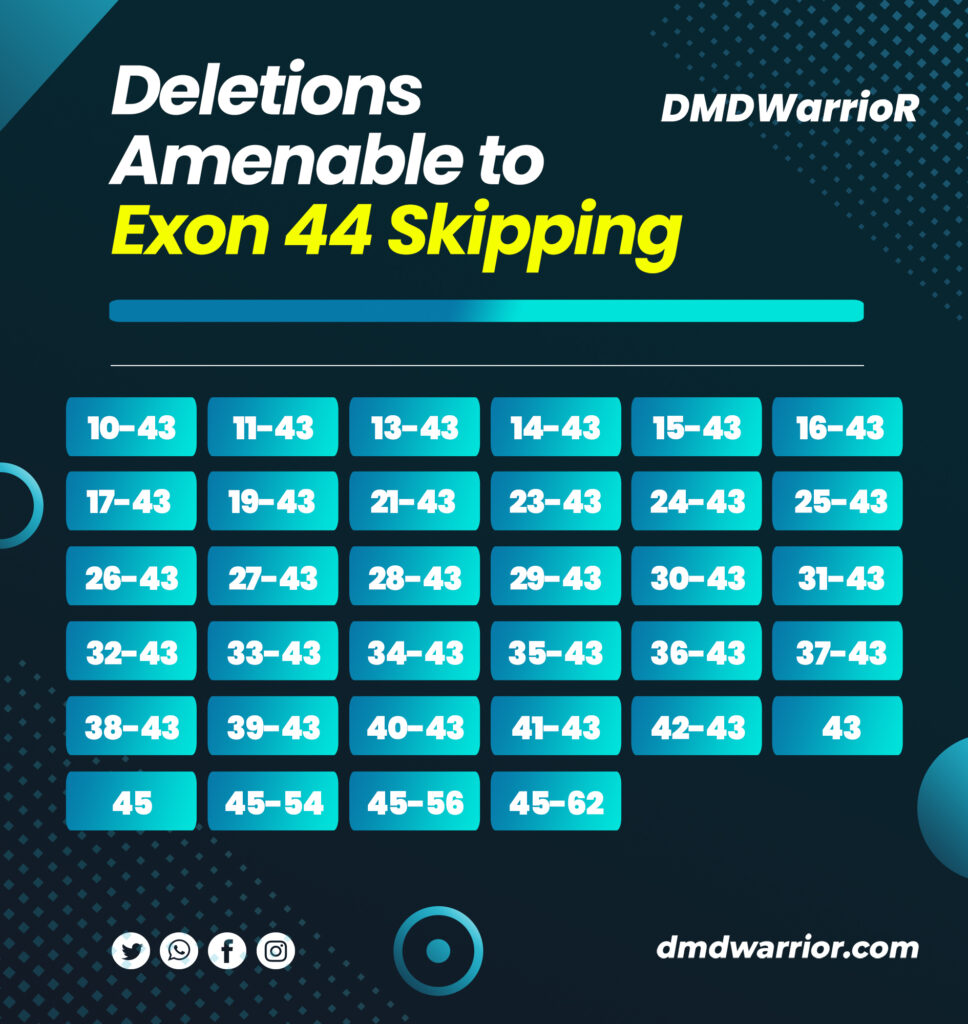
Unlike traditional exon-skipping drugs, Del-Zota uses antibody oligonucleotide conjugate technology designed to improve delivery of the therapy into muscle tissue.
How the Study Will Work
Randomized Treatment Period
Participants enrolled in the SAFARI44 study will receive either:
- Del-Zota (delpacibart zotadirsen)
- Placebo
Treatments will be given every six weeks for a total of nine doses during the first 54 weeks of the study.
Open Label Extension (OLE)
After the randomized portion is completed, all participants may enter a 54-week Open Label Extension phase. During this period, every participant will receive Del-Zota regardless of their original treatment assignment.
The final treatment dose is expected at Week 102, followed by additional assessments and safety monitoring through Week 114.
Independent Safety Monitoring
An Independent Data Monitoring Committee (IDMC) will regularly review safety, tolerability, and efficacy data throughout the study.
SAFARI44 Timeline
Estimated Study Dates
- Study Start: June 2026
- Primary Completion: May 2029
- Study Completion: July 2030
Planned Enrollment
Researchers plan to enroll approximately 70 participants in this Phase 3 interventional study.
Who Can Participate?
Key Inclusion Criteria
To qualify for the SAFARI44 study, participants must:
- Be ambulatory males diagnosed with Duchenne muscular dystrophy
- Have a confirmed dystrophin gene mutation amenable to exon 44 skipping
- Be between 2 Years and older (Child, Adult, Older Adult)
- Complete required functional assessments during screening
- Be on a stable corticosteroid regimen for at least six months before treatment begins
Key Exclusion Criteria
Participants may not qualify if they:
- Previously received gene therapy or cell therapy
- Used another oligonucleotide therapy within six months before enrollment
- Have laboratory values outside protocol limits
- Recently changed treatments such as growth hormone, testosterone, or givinostat
Why This Trial Matters for the DMD Community
Exon-skipping therapies remain one of the most important therapeutic approaches in Duchenne muscular dystrophy research. While several exon-skipping drugs already exist for other exon targets, there are still limited options for patients with mutations amenable to exon 44 skipping.
The SAFARI44 trial could provide important information about whether AOC 1044 can safely improve dystrophin restoration and clinical outcomes in this patient population.
Learn More: Upcoming Exon 44 Skipping Therapies for the Treatment of Duchenne
Contact Information
The study is sponsored by Avidity Biosciences.
- Phone: 858-771-7038
- Email: [email protected]
Currently, no study locations have been publicly listed.
Follow This Page >>> All Clinical Trials for Duchenne