
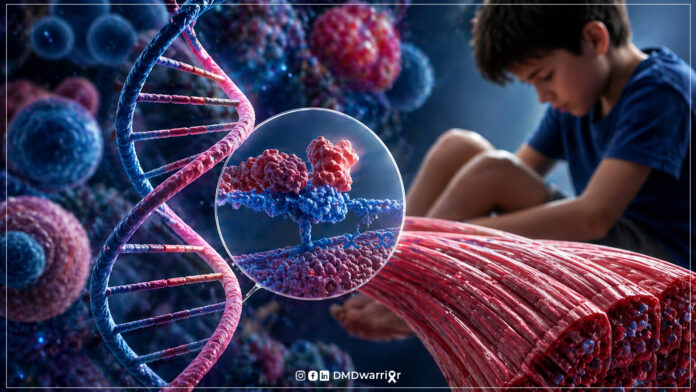
The dystrophin gene in Duchenne muscular dystrophy (DMD) is the central factor underlying the disease’s development, progression, and emerging treatment strategies. The dystrophin gene, also known as the DMD gene, encodes the dystrophin protein, which plays a critical structural and protective role in muscle fibers. Mutations in the dystrophin gene disrupt normal protein production, leading to muscle degeneration, weakness, and progressive disability. Understanding the dystrophin gene in Duchenne muscular dystrophy is essential not only for explaining the genetic cause of the disease but also for evaluating modern therapies such as exon skipping, gene therapy, and CRISPR-based approaches.
Table of Contents
What Is the Dystrophin Gene?
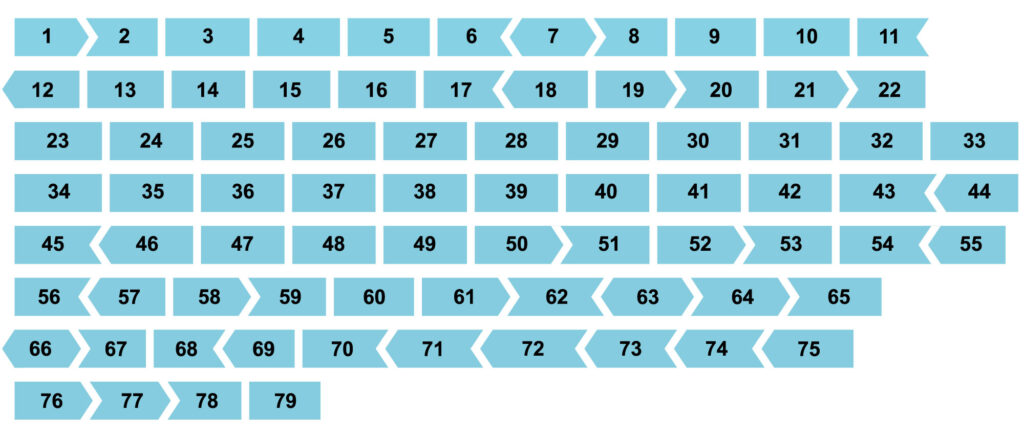
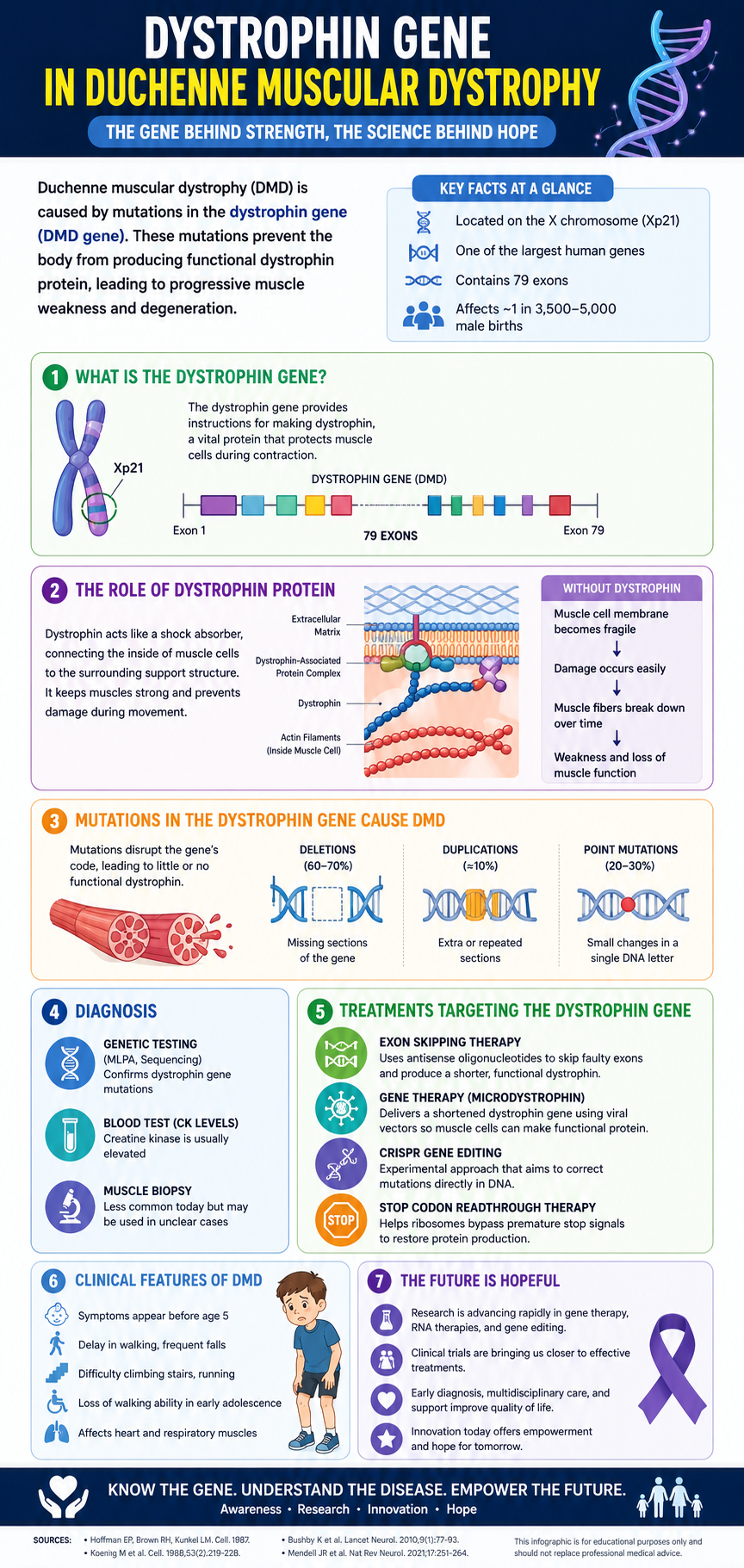
The dystrophin gene (DMD gene) is one of the largest known genes in the human genome. It is located on the X chromosome at position Xp21 and spans approximately 2.4 million base pairs. This gene contains 79 exons, which are coding regions responsible for producing the dystrophin protein.
The dystrophin gene plays a critical role in maintaining the structural integrity of muscle cells. It encodes dystrophin, a protein that connects the internal cytoskeleton of muscle fibers to the extracellular matrix through the dystrophin-associated protein complex.
Key Features of the Dystrophin Gene
- Located on the X chromosome (Xp21)
- Contains 79 exons
- One of the largest human genes
- Encodes dystrophin protein essential for muscle stability
Because of its size, the dystrophin gene is particularly susceptible to mutations, making it a frequent target for genetic errors leading to Duchenne muscular dystrophy.
Function of the Dystrophin Protein in Muscle Cells
The dystrophin protein acts as a shock absorber during muscle contraction. It stabilizes the muscle cell membrane (sarcolemma) and prevents damage when muscles contract and relax.
How It Works
- Links actin filaments inside the muscle cell to proteins in the cell membrane
- Connects to the extracellular matrix
- Maintains mechanical stability during muscle contraction
Without functional dystrophin, muscle fibers become fragile and prone to damage. Over time, repeated cycles of damage and repair lead to muscle wasting.
Dystrophin Gene in Duchenne Muscular Dystrophy: The Genetic Cause
The dystrophin gene in Duchenne muscular dystrophy is mutated, resulting in little or no production of functional dystrophin protein.
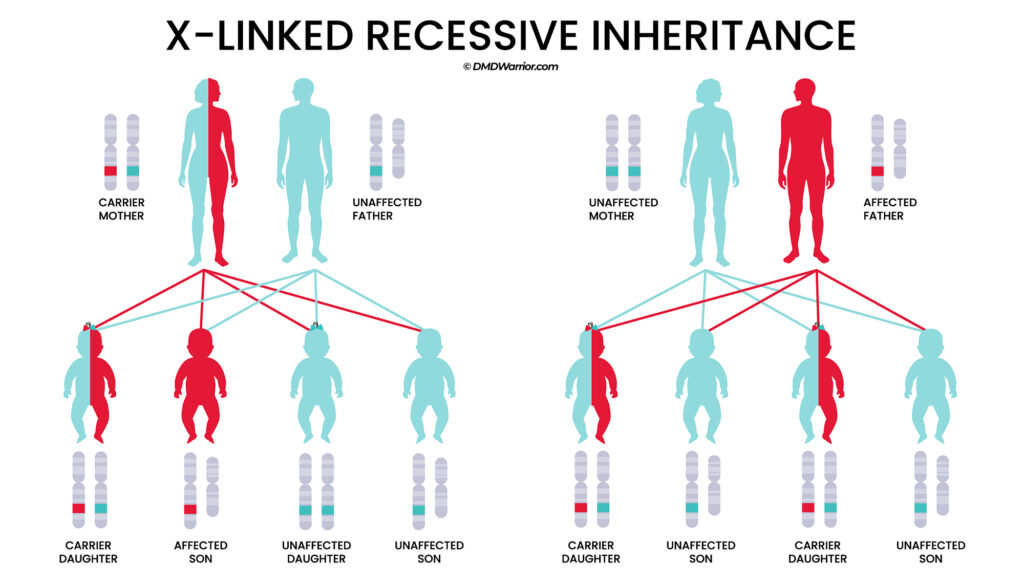
Duchenne muscular dystrophy (DMD) is an X-linked recessive disorder, meaning:
- It primarily affects males
- Females are usually carriers
- The defective gene is inherited from the mother
Types of Mutations in the Dystrophin Gene
- Deletions (≈60–70%) – Missing sections of the gene
- Duplications (≈10%) – Repeated gene segments
- Point mutations (≈20–30%) – Small changes affecting protein production
These mutations often disrupt the reading frame, leading to a truncated, nonfunctional dystrophin protein. Learn More: Types of Mutations in DMD
How Dystrophin Gene Mutations Cause Muscle Weakness
The absence of dystrophin causes progressive muscle damage due to:
- Increased membrane fragility
- Calcium influx into muscle cells
- Activation of destructive enzymes
- Chronic inflammation
This cascade leads to:
- Muscle fiber degeneration
- Replacement of muscle tissue with fat and fibrosis
- Progressive weakness
Clinical Impact
Children with Duchenne muscular dystrophy typically:
- Show symptoms before age 5
- Experience difficulty walking, running, or climbing stairs
- Lose ambulation in early adolescence
Dystrophin Gene Structure: Why Size Matters
The large size of the dystrophin gene is a major reason for its vulnerability to mutations.
Structural Complexity
- 79 exons must be correctly spliced
- Multiple promoters regulate tissue-specific expression
- Alternative isoforms exist (brain, retina, etc.)
Because of this complexity:
- Errors during DNA replication are more likely
- Large deletions are common
Difference Between Duchenne and Becker Muscular Dystrophy
Both conditions involve mutations in the dystrophin gene, but severity differs.
Duchenne Muscular Dystrophy (DMD)
- No functional dystrophin
- Severe and early onset
Learn More: What are The Differences Between DMD and BMD?
Becker Muscular Dystrophy (BMD)
- Partially functional dystrophin
- Milder symptoms and slower progression
The key difference lies in whether the mutation disrupts the reading frame of the dystrophin gene. TRY NOW: DMD or BMD? Exon Check Tool
Diagnostic Approaches for Dystrophin Gene Mutations
Accurate diagnosis relies on identifying mutations in the dystrophin gene.
Common Diagnostic Methods
- Genetic testing (MLPA, sequencing)
- Creatine kinase (CK) (Blood test)
- Muscle biopsy (less common today)
Genetic testing is now the gold standard for confirming Duchenne muscular dystrophy.
Therapies Targeting the Dystrophin Gene
Modern treatments focus on restoring or compensating for dystrophin deficiency.
1. Exon Skipping Therapy
- Uses antisense oligonucleotides
- Skips faulty exons during mRNA processing
- Produces shorter but functional dystrophin
2. Gene Therapy (Microdystrophin)
- Delivers a shortened dystrophin gene via viral vectors
- Enables muscle cells to produce functional protein
3. CRISPR Gene Editing
- Experimental approach
- Aims to correct mutations directly in DNA
4. Stop Codon Readthrough Therapy
- Allows ribosomes to bypass premature stop signals
Follow This Page >>> All Clinical Trials for Duchenne
Restoring Dystrophin Expression: Current Research
Restoring dystrophin expression is the primary goal of DMD therapies.
Research Focus Areas
- Increasing efficiency of gene delivery
- Reducing immune responses
- Enhancing long-term expression
Clinical trials continue to evaluate the safety and effectiveness of these approaches.
Epidemiology and Genetic Inheritance
- Occurs in approximately 1 in 3,500–5,000 male births
- Caused by mutations in the dystrophin gene
- Carrier mothers have a 50% chance of passing the mutation
Beyond Muscle: Effects of Dystrophin Gene Mutations
The dystrophin gene also affects:
- Brain function (cognitive impairment in some patients)
- Cardiac muscle (cardiomyopathy)
- Respiratory muscles
Future Directions in Dystrophin Gene Research
Emerging innovations include:
- Next-generation gene therapies
- RNA editing technologies
- Combination therapies
The future of Duchenne muscular dystrophy treatment is closely tied to advancements in dystrophin gene research.
FAQ: Dystrophin Gene in DMD
What does the dystrophin gene do?
The dystrophin gene provides instructions for producing the dystrophin protein, which helps maintain the structural stability of muscle cells. It connects the internal cytoskeleton of muscle fibers to the surrounding extracellular matrix, preventing damage during muscle contraction. Without a properly functioning dystrophin gene, muscle cells become fragile and are easily damaged, leading to progressive muscle degeneration.
What happens when the dystrophin gene is mutated?
When the dystrophin gene is mutated, the body cannot produce enough functional dystrophin protein. This leads to weakened muscle cell membranes, increased susceptibility to damage, and gradual muscle wasting. In Duchenne muscular dystrophy, mutations often completely disrupt dystrophin production, resulting in severe symptoms that begin in early childhood.
How does the dystrophin gene cause Duchenne muscular dystrophy?
Duchenne muscular dystrophy is caused by mutations in the dystrophin gene located on the X chromosome. These mutations disrupt the production of dystrophin protein, which is essential for muscle integrity. Without dystrophin, muscle fibers break down over time and are replaced by fat and fibrotic tissue, leading to progressive weakness.
Is Duchenne muscular dystrophy inherited?
Yes, Duchenne muscular dystrophy is an inherited genetic disorder. It follows an X-linked recessive inheritance pattern, meaning the mutated dystrophin gene is typically passed from carrier mothers to their sons. Females can be carriers and may have mild symptoms, but males are usually more severely affected.
Can the dystrophin gene be repaired?
Currently, the dystrophin gene cannot be fully “repaired” in routine clinical practice, but advanced therapies aim to correct or bypass mutations. Techniques such as exon skipping, gene therapy (microdystrophin), and CRISPR gene editing are being developed to restore partial dystrophin function and slow disease progression.
What is exon skipping therapy for the dystrophin gene?
Exon skipping therapy is a treatment that uses synthetic molecules to skip over faulty sections of the dystrophin gene during protein production. This allows the body to produce a shorter but partially functional dystrophin protein, which can improve muscle stability and slow disease progression in some patients.
What is microdystrophin gene therapy?
Microdystrophin gene therapy delivers a shortened but functional version of the dystrophin gene into muscle cells using viral vectors. This therapy enables the production of a smaller dystrophin protein that can still perform essential functions, offering a promising approach for treating Duchenne muscular dystrophy.
How is a dystrophin gene mutation diagnosed?
A dystrophin gene mutation is typically diagnosed through genetic testing, such as MLPA (Multiplex Ligation-dependent Probe Amplification) or next-generation sequencing. Blood tests measuring creatine kinase (CK) levels and, in some cases, muscle biopsy may also support the diagnosis.
What are the early symptoms of dystrophin gene mutations?
Early symptoms of dystrophin gene mutations in Duchenne muscular dystrophy include delayed walking, difficulty climbing stairs, frequent falls, and enlarged calf muscles. These symptoms usually appear before the age of five and progressively worsen over time.
What is the difference between Duchenne and Becker muscular dystrophy?
Both conditions are caused by mutations in the dystrophin gene, but Duchenne muscular dystrophy results in little or no dystrophin production, leading to severe symptoms. Becker muscular dystrophy involves partially functional dystrophin, resulting in milder symptoms and slower disease progression.
Final Thoughts
The dystrophin gene in Duchenne muscular dystrophy is central to disease onset and progression. Mutations in the dystrophin gene disrupt dystrophin protein production, driving muscle degeneration. Understanding dystrophin gene function enables earlier diagnosis and targeted care. Advances in exon skipping and gene therapy offer real hope. Emerging CRISPR strategies may further transform treatment. Accurate genetic testing is essential for management decisions. Multidisciplinary care improves outcomes and quality of life. Ongoing trials continue to refine dystrophin gene therapies. Awareness and research investment remain critical. The future of DMD care is increasingly gene-focused and promising.
Learn More: Multidisciplinary Care in DMD
Academic Sources and References
- Hoffman EP, Brown RH, Kunkel LM. Dystrophin: the protein product of the Duchenne muscular dystrophy locus. Cell. 1987.
- Koenig M et al. The complete sequence of dystrophin predicts a rod-shaped cytoskeletal protein. Cell. 1988.
- Mendell JR et al. Gene therapy for muscular dystrophy. Nature Reviews Neurology.
- Bushby K et al. Diagnosis and management of Duchenne muscular dystrophy. Lancet Neurology.