
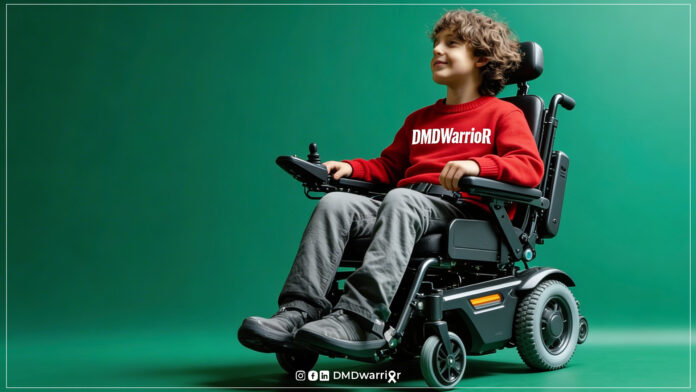
For families navigating a diagnosis of Duchenne muscular dystrophy (DMD), mobility changes are a significant milestone. One of the most common and important questions parents ask is: When is it time for a power wheelchair?
Understanding when and why power wheelchairs are recommended in DMD can help you make informed, confident decisions that protect your child’s independence, safety, and quality of life.
Table of Contents
What Is a Power Wheelchair?
A power wheelchair (also called an electric wheelchair) is a motorized mobility device controlled by a joystick or alternative input system. Unlike a manual wheelchair, which requires upper body strength or caregiver assistance, a power wheelchair allows the user to move independently with minimal physical effort.

Modern power wheelchairs can include:
- Powered tilt and recline
- Elevating leg rests
- Custom seating and positioning systems
- Adjustable drive controls
- Standing functions (in some models)
For boys living with DMD, these features are not just about mobility — they are about preserving energy, protecting joints, and maintaining independence.
When Is It Time for a Power Wheelchair in DMD?
DMD is a progressive condition, meaning muscle weakness gradually increases over time. While every child’s timeline is different, there are clear indicators that it may be time to consider a power wheelchair.
Increasing Fatigue with Walking
If your son becomes extremely tired after short distances or struggles to keep up with peers, a power wheelchair can help conserve energy.
Frequent Falls
Frequent tripping or falling increases the risk of fractures, which can significantly impact long-term mobility in DMD.
Loss of Independent Ambulation
Many boys with DMD transition to full-time wheelchair use between ages 10–14, though this varies. A power wheelchair often becomes essential when walking independently is no longer safe.
Difficulty Self-Propelling a Manual Wheelchair
Because DMD affects upper body strength over time, manual wheelchair use may become exhausting or impossible.
Postural Changes
Spinal curvature (scoliosis) and trunk weakness can make proper positioning difficult without powered seating systems. Read More: Scoliosis in Duchenne
When Are Power Wheelchairs Recommended in DMD?
Healthcare teams — including neurologists, physiatrists, and physical therapists — often recommend introducing a power wheelchair before walking is completely lost.
Early introduction can:
- Prevent dangerous falls
- Preserve energy for school and social activities
- Reduce strain on muscles
- Maintain participation in daily life
The goal is not to “give up walking,” but to maximize independence and protect long-term health.
Clinicians specializing in neuromuscular disorders, often guided by standards of care from organizations like the Muscular Dystrophy Association, emphasize proactive planning rather than waiting for a crisis.
What Are the Benefits of a Power Wheelchair?
Choosing a power wheelchair is a major decision, but it can dramatically improve quality of life.
Independence
Your son can move freely without relying on constant assistance.
Energy Conservation
DMD causes progressive muscle fatigue. A power wheelchair allows energy to be used for learning, friendships, and hobbies instead of just getting around.
Improved Safety
Reduced risk of falls and injuries.
Better Postural Support
Advanced seating systems support the spine, hips, and head — which is especially important as trunk weakness progresses.
Social Inclusion
Participation in school, family outings, and community activities becomes easier and less stressful.
Psychological Confidence
Maintaining mobility supports emotional well-being and independence during adolescence.
Features to Consider When Choosing an Electric Wheelchair for a DMD Patient
Not all power wheelchairs are the same. Because DMD is progressive, choosing a chair that can adapt over time is critical.
Custom Seating and Positioning
Look for pressure-relieving cushions, lateral supports, and headrests to prevent skin breakdown and support posture.
Tilt and Recline Functions
These features:
- Help prevent pressure sores
- Improve comfort
- Support breathing
- Assist with fatigue management
Elevating Leg Rests
Important for circulation and comfort.
Growth Adjustability
Children with DMD need equipment that grows with them.
Alternative Drive Controls
As arm strength decreases, alternative joystick placements or controls may be necessary.
Lightweight vs. Heavy-Duty Frames
Consider transport needs (school buses, vans, travel).
Standing Function (Optional)
Some power wheelchairs offer standing features that may help with bone health and circulation, though suitability depends on your child’s condition.
Battery Life
Ensure sufficient range for school days and outings.
Home Accessibility
Measure doorways and consider ramp access before purchasing.
Working with a certified assistive technology professional (ATP) ensures proper fitting and long-term adaptability.
Planning Ahead: A Proactive Approach
Transitioning to a power wheelchair is not a setback — it is a strategic step in managing DMD effectively.
Early planning allows:
- Insurance approval processes to move smoothly
- Proper customization
- Home modifications if needed
- Emotional adjustment time
Most importantly, it ensures your child remains active, engaged, and empowered.
Frequently Asked Questions (FAQ) About Power Wheelchairs in DMD
At what age do boys with DMD typically need a power wheelchair?
Many boys transition between ages 10–14, but timing varies. The decision is based on strength, safety, and fatigue rather than age alone.
Should we wait until walking is completely lost?
No. Early introduction can prevent injuries and conserve energy. Many clinicians recommend planning before full loss of ambulation.
Will using a power wheelchair make my son weaker?
No. DMD progression is genetic and not caused by wheelchair use. In fact, a power wheelchair can help conserve strength and reduce injury risk.
Is a manual wheelchair enough at first?
Manual chairs may work short-term, but as upper body weakness progresses, a power wheelchair usually becomes necessary.
Does insurance typically cover power wheelchairs?
In many cases, yes — if medical necessity is documented by your healthcare team. Coverage policies vary by region and provider.
How long does it take to get a power wheelchair?
The evaluation, customization, insurance approval, and delivery process can take several months. Early planning is essential.
Can a power wheelchair be used at school?
Yes. Schools are required in many regions to provide accessibility accommodations. Coordination with school staff is important.
What is the lifespan of a power wheelchair?
Typically 3–5 years, depending on growth, usage, and mechanical wear.
✅ Power Wheelchair Readiness Checklist for DMD
Use this checklist to help determine whether it may be time to begin the evaluation process.
Mobility & Safety
- ☐ My son becomes very fatigued after short distances
- ☐ He struggles to keep up with peers
- ☐ He has frequent falls or near-falls
- ☐ He avoids walking longer distances
- ☐ He needs assistance getting up from the floor
- ☐ He cannot safely self-propel a manual wheelchair
Physical Changes
- ☐ Noticeable decline in leg strength
- ☐ Increasing upper body weakness
- ☐ Difficulty maintaining upright posture
- ☐ Developing scoliosis or trunk instability
- ☐ Complaints of pain from fatigue or poor positioning
Daily Life Impact
- ☐ Difficulty participating fully at school
- ☐ Avoids social activities due to mobility limits
- ☐ Needs increasing caregiver assistance for mobility
- ☐ He gets tired very quickly during trips.
Planning Considerations
- ☐ We have discussed mobility planning with our neuromuscular team
- ☐ We understand insurance requirements
- ☐ We have measured doorways and home access
- ☐ We are emotionally preparing for transition
If you checked several boxes, it may be time to schedule a seating and mobility evaluation.
📊 Power Wheelchair Feature Comparison Guide for DMD
Because Duchenne muscular dystrophy is progressive, selecting adaptable features is essential.
| Feature | Why It Matters in DMD | Recommended? |
|---|---|---|
| Powered Tilt | Relieves pressure, reduces fatigue | Highly recommended |
| Powered Recline | Supports breathing and comfort | Highly recommended |
| Elevating Leg Rests | Improves circulation, comfort | Recommended |
| Custom Cushioning | Prevents pressure sores | Essential |
| Lateral Trunk Supports | Helps maintain posture | Often needed |
| Headrest | Supports neck as weakness progresses | Recommended |
| Adjustable Joystick | Adapts to changing arm strength | Essential |
| Alternative Drive Controls | For future upper limb weakness | Plan ahead |
| Standing Function | May support bone health (case-dependent) | Optional |
| Growth-Adjustable Frame | Adapts as child grows | Essential |
| Long-Range Batteries | Supports full school days | Important |
🏥 Questions to Ask During Your Seating Evaluation
Bring this list to your appointment:
- How will this chair adapt as DMD progresses?
- What features can be added later?
- How often will reassessment be needed?
- What is the expected insurance approval timeline?
- What maintenance support is available?
- Can we trial different models?
- How will this support respiratory function?
- What backup mobility option should we have?
Organizations like the Muscular Dystrophy Association in your country can often help guide families through equipment funding and evaluation resources.
🏠 Home Preparation Mini-Checklist
- ☐ Doorways at least 32 inches (82-85 cm) wide
- ☐ Accessible bathroom plan
- ☐ Ramp or level entry
- ☐ Charging station location
- ☐ School transportation coordination
💛 Emotional Readiness Reminder for Parents
Transitioning to a power wheelchair can feel emotional. It’s important to remember:
- It is not a failure.
- It does not accelerate disease progression.
- It increases independence.
- Many boys feel empowered once they gain full mobility control.
Final Thoughts
A power wheelchair in DMD is not about losing independence — it’s about protecting it. By recognizing the signs early and choosing features that support long-term needs, you can help your son stay active, safe, and fully engaged in life.
Follow This Page >>> All Clinical Trials for Duchenne