
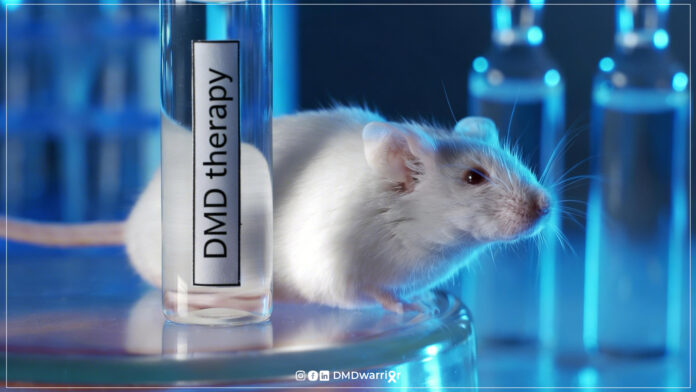
The mdx mouse is the most widely used animal model for studying Duchenne Muscular Dystrophy (DMD), a severe genetic condition characterized by progressive muscle degeneration. Because DMD is caused by mutations in the dystrophin gene, researchers rely on mdx mice, which lack functional dystrophin, to better understand disease progression and evaluate potential therapies.
For decades, the mdx mouse model has been essential in preclinical research, contributing to major advances in gene therapy, exon-skipping strategies, anti-inflammatory treatments, and muscle biology.
Table of Contents
What Is the mdx Mouse Model?
The mdx mouse model is a naturally occurring mutant mouse strain with a point mutation in the dystrophin gene. This mutation prevents the production of functional dystrophin protein, mirroring the genetic defect seen in Duchenne Muscular Dystrophy.
Key Characteristics of mdx Mice
- Absence of dystrophin protein
- Early onset muscle fiber necrosis
- Elevated serum creatine kinase (CK) levels
- Cycles of muscle degeneration and regeneration
- Progressive fibrosis with age
- Development of mild cardiomyopathy
Unlike boys with DMD, mdx mice typically experience a milder clinical course and have a near-normal lifespan. While they replicate the genetic cause of DMD, the severity of symptoms differs significantly from the human condition.
Why Are mdx Mice Used in Research?
Genetic Similarity to DMD
Mdx mice were identified in the 1980s after researchers observed a group of mice showing symptoms of muscle weakness and degeneration. Further genetic testing revealed a mutation in the dystrophin gene—the same gene affected in individuals with Duchenne Muscular Dystrophy (DMD). >> Source
Mdx mice carry a mutation in the same gene responsible for Duchenne Muscular Dystrophy. This makes them highly relevant for studying how dystrophin deficiency affects muscle cells at the molecular and cellular levels.
Testing Emerging Therapies
Before moving to human clinical trials, experimental therapies are typically tested in animal models. The mdx mouse is commonly used to evaluate:
- Gene replacement therapies
- Exon-skipping drugs
- CRISPR gene-editing approaches
- Anti-inflammatory medications
- Corticosteroids
- Cell-based regenerative therapies
Many therapeutic strategies currently in development were first validated in mdx mice.
Follow This Page >>> All Clinical Trials for Duchenne
Understanding Disease Mechanisms
The mdx model allows researchers to investigate:
- Muscle membrane instability
- Chronic inflammation pathways
- Fibrosis progression
- Satellite cell activation
- Cardiac muscle involvement
Insights from mdx mouse studies have significantly shaped scientific understanding of Duchenne Muscular Dystrophy.
Accessibility and Research Standardization
Mdx mice are widely available, cost-effective, and extensively characterized in scientific literature. This consistency enables reproducible results across laboratories worldwide, making them a standardized preclinical research model.
What Are the Downsides of Using mdx Mice in Research?
While the mdx mouse model is invaluable, it has important limitations.
Milder Disease Severity
One of the biggest challenges is that mdx mice show much milder symptoms compared to humans with DMD. They retain stronger muscle regeneration capabilities and often maintain mobility longer than human patients.
Differences in Muscle Regeneration
Mice possess a greater capacity for muscle repair than humans. As a result, treatments that appear effective in mdx mice may not perform as well in human trials.
Limited Cardiac Severity
Although mdx mice can develop cardiomyopathy, it typically occurs later and is less severe than in people with Duchenne Muscular Dystrophy.
Translational Gaps
Not all therapies that succeed in mdx mice translate successfully into human clinical trials. Differences in immune response, lifespan, muscle physiology, and overall disease progression can limit predictive accuracy.
Genetic Simplicity
The mdx model represents one specific mutation, while DMD in humans involves a wide range of genetic variations. This reduces its ability to represent all patient subtypes.
Frequently Asked Questions (FAQ) About mdx Mice
What does “mdx” stand for?
“mdx” refers to the specific mutation in the dystrophin gene identified in this mouse strain. It is not an acronym but a strain designation.
Do mdx mice completely lack dystrophin?
Yes, mdx mice lack functional dystrophin protein due to a point mutation in the dystrophin gene.
At what age do mdx mice show symptoms?
Muscle damage typically begins around 3–4 weeks of age, with peak muscle degeneration occurring shortly afterward.
Do mdx mice have the same life expectancy as humans with DMD?
No. Unlike humans with Duchenne Muscular Dystrophy, mdx mice usually have a near-normal lifespan.
Why is the disease milder in mdx mice?
Mice have a greater capacity for muscle regeneration and different physiological responses compared to humans, which reduces overall disease severity.
Are mdx mice used to test gene therapy?
Yes. Many gene therapy and exon-skipping strategies are first tested in mdx mice before advancing to larger animal models or clinical trials.
Do mdx mice develop heart problems?
They can develop cardiomyopathy, but it is generally milder and occurs later than in human DMD patients.
Are there other animal models for DMD?
Yes. Researchers also use canine models (such as dystrophic dogs) and genetically engineered mouse models that may better mimic severe disease progression.
Why aren’t mdx mice a perfect model for DMD?
The main limitations include milder symptoms, stronger muscle regeneration, and physiological differences that reduce direct comparability to human disease.
Are mdx mice still important in research today?
Absolutely. Despite limitations, mdx mice remain one of the most important and widely used preclinical models for Duchenne Muscular Dystrophy research worldwide.
Conclusion
The mdx mouse model remains a cornerstone of Duchenne Muscular Dystrophy research. It closely mimics the genetic basis of DMD and has played a pivotal role in advancing therapeutic development. However, researchers must carefully interpret findings due to the model’s milder disease course and biological differences from humans.
Understanding both the strengths and limitations of mdx mice is essential for translating laboratory discoveries into safe and effective treatments for Duchenne Muscular Dystrophy.