

Parents often ask an important question after their child is diagnosed with Duchenne muscular dystrophy (DMD): Can children with DMD be circumcised? The short answer is yes—circumcision in Duchenne Muscular Dystrophy is generally possible and can be performed safely when appropriate medical precautions are taken. However, unlike healthy children, boys with DMD require special consideration before any surgical procedure because of potential complications related to anesthesia, respiratory function, cardiac health, and steroid treatment. Understanding these risks and working with an experienced neuromuscular care team can significantly improve safety and outcomes.
For many families, circumcision is performed for religious, cultural, social, or medical reasons. While the circumcision procedure itself is usually minor, the anesthetic management of children with Duchenne muscular dystrophy is often the most important concern. International DMD care guidelines emphasize that patients with Duchenne muscular dystrophy have unique perioperative risks and should be managed according to specialized protocols whenever surgery is planned.
This comprehensive guide explains whether children with DMD can undergo circumcision, which anesthesia methods may be safest, how to prepare before surgery, what precautions hospitals should take, and what families should monitor during recovery.

Table of Contents
Understanding Duchenne Muscular Dystrophy and Surgery Risks
Duchenne muscular dystrophy is a progressive genetic neuromuscular disorder caused by mutations in the DMD gene that result in little or no functional dystrophin protein. Over time, muscle weakness affects skeletal muscles, respiratory muscles, and the heart.
Because DMD affects multiple organ systems, even relatively minor surgical procedures require careful planning.
Several factors contribute to increased surgical risk:
- Respiratory muscle weakness
- Reduced cough effectiveness
- Cardiomyopathy
- Cardiac conduction abnormalities
- Chronic corticosteroid use
- Increased sensitivity to certain anesthetic agents
- Potential metabolic complications during anesthesia
Importantly, most concerns associated with circumcision in Duchenne Muscular Dystrophy are related to anesthesia rather than the surgical procedure itself.
Can Children with DMD Be Circumcised?
The Short Answer
Yes. Most children with Duchenne muscular dystrophy can be circumcised safely when the procedure is performed in an appropriate medical setting with experienced anesthesiology and surgical teams.
The decision should be individualized based on:
- Age
- Ambulatory status
- Cardiac function
- Respiratory function
- Current medications
- Previous anesthesia history
For younger children who still have good cardiac and respiratory function, risks are generally lower than for older non-ambulatory patients with advanced disease.
However, every case should be evaluated separately.
Why Circumcision Requires Special Planning in DMD
Surgery Is Not the Main Risk
Parents often focus on the circumcision procedure itself, but specialists generally focus more on anesthesia management.
According to international DMD care recommendations, children with Duchenne muscular dystrophy can develop severe complications when exposed to certain anesthetic agents.
Potential complications include:
- Rhabdomyolysis
- Hyperkalemia
- Cardiac arrhythmias
- Respiratory insufficiency
- Prolonged recovery from anesthesia
For this reason, anesthesiologists should be informed about the child’s DMD diagnosis well before surgery.
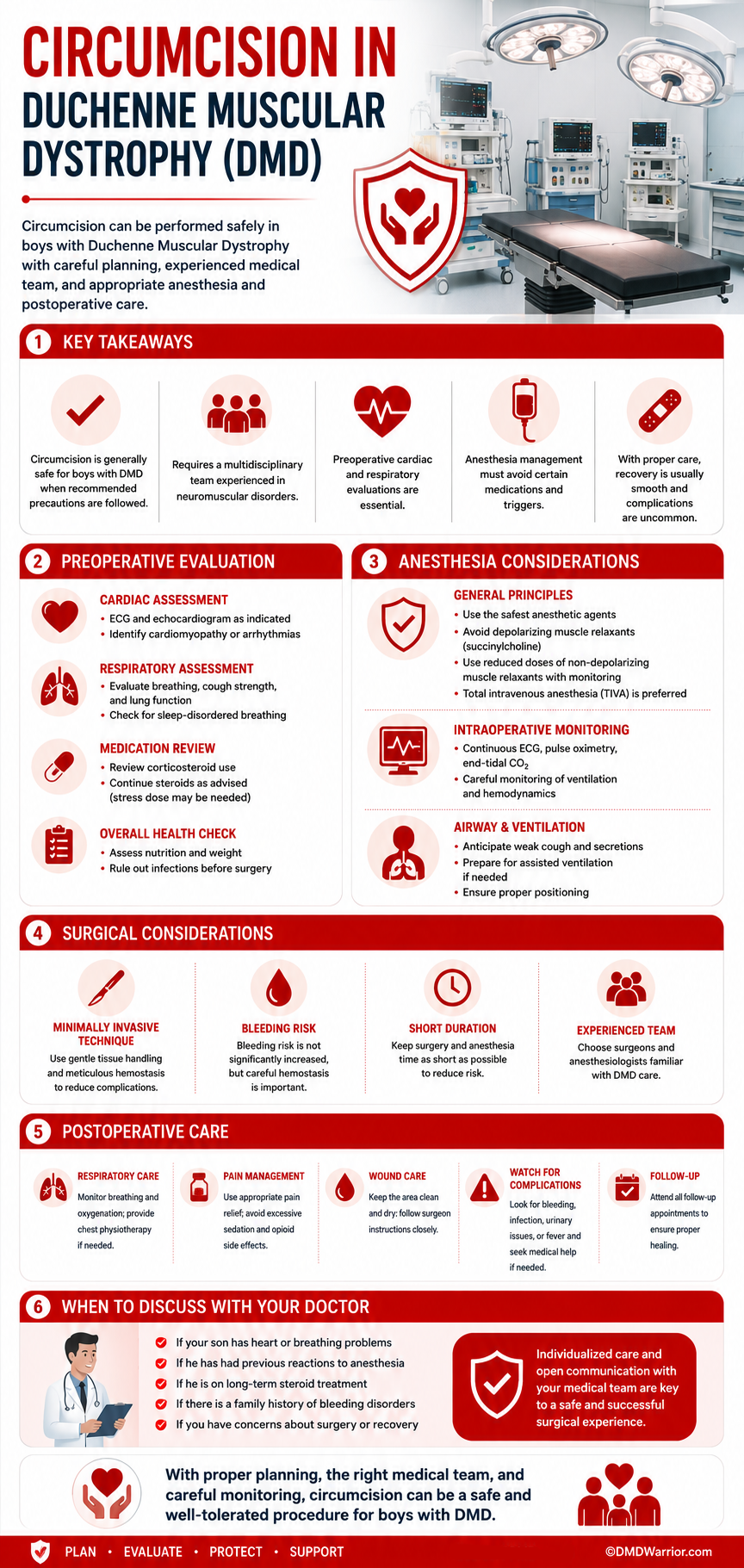
Preoperative Assessment Before Circumcision
Neuromuscular Evaluation
The neuromuscular specialist should evaluate:
- Disease progression
- Current muscle strength
- Functional status
- Recent clinical changes
This helps determine whether additional testing is required.
Cardiac Assessment
Because cardiomyopathy is common in DMD, a recent cardiac evaluation is often recommended.
Tests may include:
- Echocardiogram
- Electrocardiogram (ECG)
- Cardiology consultation
Even children who appear healthy may have early cardiac involvement.
Respiratory Assessment
Respiratory evaluation becomes increasingly important with age.
Depending on the child’s condition, physicians may order:
- Spirometry
- Peak cough flow testing
- Oxygen saturation measurements
- Sleep studies
Children with respiratory weakness may require additional postoperative monitoring.
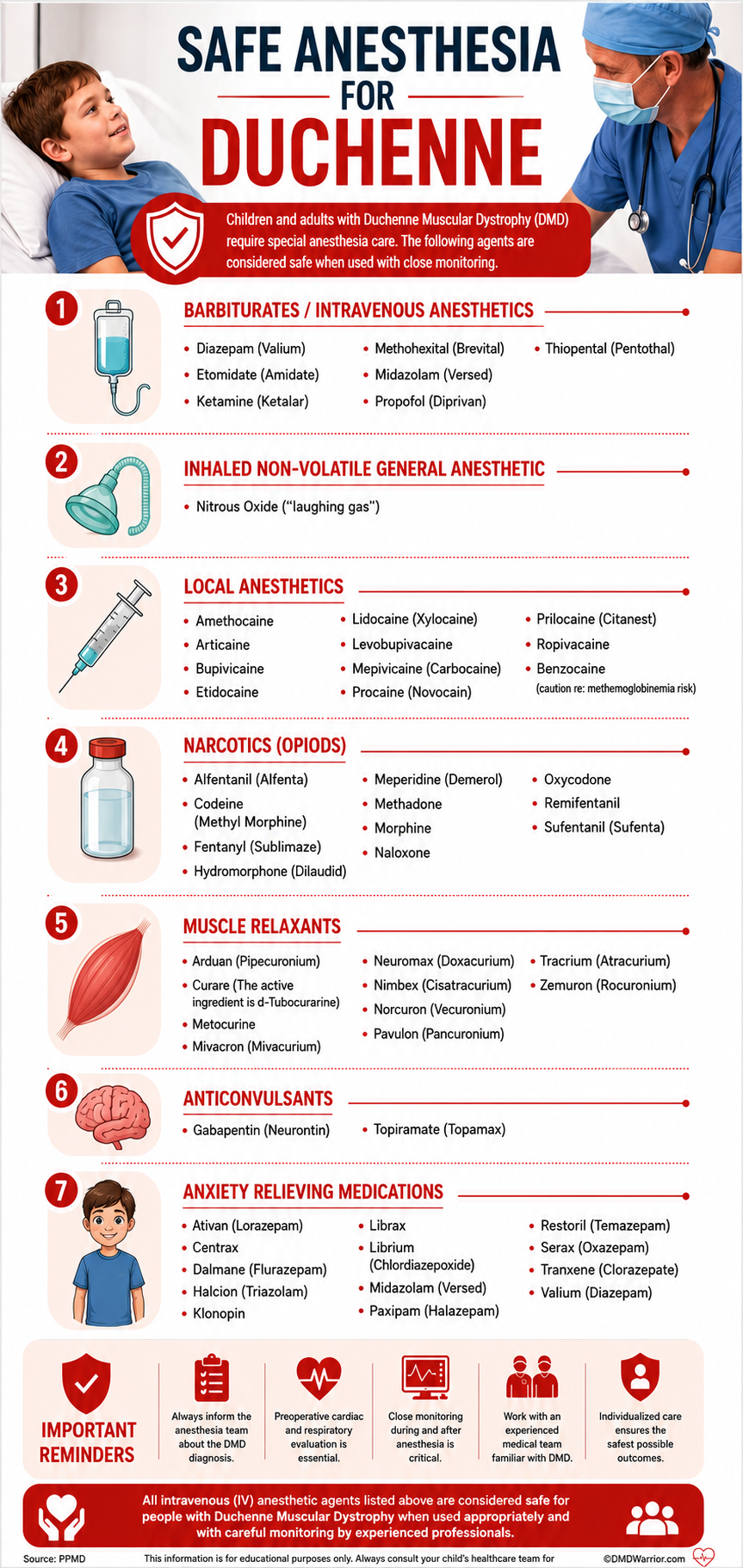
Which Anesthesia Is Safest for Children with DMD?
Anesthesia Must Be Planned Carefully
The most important consideration during circumcision in Duchenne Muscular Dystrophy is anesthesia selection.
International anesthesia recommendations generally advise avoiding:
Succinylcholine
Succinylcholine is contraindicated in DMD because it can cause:
- Severe hyperkalemia
- Cardiac arrest
- Life-threatening complications
Volatile Inhalational Anesthetics
Agents such as:
- Sevoflurane
- Isoflurane
- Desflurane
- Halothane
may increase the risk of anesthesia-induced rhabdomyolysis in patients with Duchenne muscular dystrophy.
Many DMD experts recommend avoiding these medications whenever possible.
Total Intravenous Anesthesia (TIVA)
Many neuromuscular anesthesia specialists prefer Total Intravenous Anesthesia (TIVA).
TIVA may utilize:
- Propofol
- Remifentanil
- Other intravenous medications
The specific anesthetic plan should always be determined by a qualified anesthesiologist.
Read More: Surgery Under Anesthesia in DMD
Is Local Anesthesia an Option?
In some cases, circumcision may be performed using:
- Local anesthesia
- Regional anesthesia
- Sedation combined with local anesthetic techniques
Potential advantages include:
- Reduced anesthetic exposure
- Faster recovery
- Less respiratory compromise
However, suitability depends on:
- Child’s age
- Cooperation level
- Surgical technique
- Physician preference
Not every child is an ideal candidate for local anesthesia alone.
Should Circumcision Be Performed in a Hospital?
Hospital Setting Is Strongly Preferred
For boys with Duchenne muscular dystrophy, circumcision should ideally be performed in:
- A hospital
- A pediatric surgical center
- A facility experienced with neuromuscular disorders
Families should avoid settings that lack:
- Pediatric anesthesiology support
- Emergency monitoring capabilities
- Cardiac and respiratory expertise
Although circumcision is often considered minor surgery, DMD makes perioperative planning much more important.
Questions Parents Should Ask Before Circumcision
Before scheduling the procedure, parents should discuss the following questions with the medical team:
Anesthesia Questions
- Does the anesthesiologist have experience treating DMD patients?
- Will succinylcholine be avoided?
- Will volatile anesthetic agents be avoided?
- What emergency protocols are available?
Cardiac Questions
- Is a recent echocardiogram needed?
- Is cardiology clearance recommended?
Respiratory Questions
- Does my child need pulmonary testing?
- Will overnight monitoring be required?
Steroid Questions
- Does my child need stress-dose steroids?
Special Considerations for Children Taking Corticosteroids
Many boys with DMD receive:
- Deflazacort
- Prednisone
- Prednisolone
Long-term steroid use may suppress normal adrenal function.
Read More: Pros and Cons of Steroids (Cortisone) for Duchenne
During surgery, some patients require:
Stress-Dose Steroids
Stress-dose steroids may help prevent:
- Adrenal crisis
- Hypotension
- Fatigue
- Electrolyte disturbances
The need for supplemental steroids should be determined by the child’s physician.
Laboratory Tests Before Circumcision
Are CK, AST, and ALT Important?
Many parents become concerned when laboratory tests show elevated:
- Creatine kinase (CK)
- Aspartate aminotransferase (AST)
- Alanine aminotransferase (ALT)
These values are commonly elevated in Duchenne muscular dystrophy because muscle damage releases these enzymes into the bloodstream.
Elevated CK, AST, and ALT alone do not necessarily prevent circumcision.
However, physicians may still order laboratory testing to establish baseline values before surgery.
Additional Laboratory Studies
Depending on the situation, doctors may request:
- Complete blood count
- Electrolytes
- Liver function tests
- Kidney function tests
- Coagulation studies
What Happens on the Day of Surgery?
Families should ensure:
- All medications are documented.
- The DMD diagnosis is clearly communicated.
- Recent cardiac reports are available.
- Recent pulmonary reports are available.
The anesthesiology team should review:
- Previous surgeries
- Previous anesthesia exposure
- Allergies
- Current medications
Proper communication helps reduce risks associated with circumcision in Duchenne Muscular Dystrophy.
Postoperative Recovery After Circumcision
Immediate Recovery
Most children recover without major complications.
Medical staff should monitor:
- Heart rate
- Oxygen saturation
- Breathing pattern
- Pain control
Observation periods may be longer for DMD patients compared with healthy children.
Respiratory Monitoring
Respiratory complications remain a concern, especially in older children.
Families should watch for:
- Difficulty breathing
- Persistent coughing
- Unusual fatigue
- Excessive sleepiness
Any concerning symptoms should be reported immediately.
Learn More: Respiratory Health Care in DMD
Pain Management After Circumcision
Safe Pain Control
Pain management plans vary.
Common options may include:
- Tylenol (acetaminophen) – For children over 4 years.
- Physician-approved medications
Families should never start medications without medical guidance.
The care team should provide individualized recommendations based on:
- Age
- Weight
- Medical history
- Current medications
Learn More: Pain Management in DMD
Signs Families Should Watch for After Surgery
Parents should contact their physician if they observe:
Surgical Concerns
- Excessive bleeding
- Increasing swelling
- Worsening redness
- Fever
- Foul-smelling drainage
Respiratory Concerns
- Shortness of breath
- Difficulty waking the child
- Blue discoloration around lips
- Persistent oxygen desaturation
Cardiac Concerns
- Chest discomfort
- Palpitations
- Dizziness
- Unexplained weakness
Prompt medical evaluation is important if any of these symptoms occur.
Circumcision in Non-Ambulatory DMD Patients
As Duchenne muscular dystrophy progresses, perioperative risks generally increase.
Older non-ambulatory patients may have:
- Reduced lung capacity
- More significant cardiomyopathy
- Increased anesthesia complexity
In these situations, multidisciplinary planning becomes even more important.
The team may include:
- Neurologist
- Cardiologist
- Pulmonologist
- Anesthesiologist
- Pediatric surgeon
Learn More: Multidisciplinary Neuromuscular Team in DMD
International DMD Care Recommendations
The international Duchenne muscular dystrophy care guidelines emphasize:
- Comprehensive preoperative assessment
- Specialized anesthesia protocols
- Cardiac monitoring
- Respiratory monitoring
- Steroid management
These recommendations have significantly improved surgical safety for patients with DMD.
Families should ensure that all physicians involved in circumcision are familiar with current DMD anesthesia guidelines.
Practical Tips for Families
Before Surgery
- Inform every healthcare provider about the DMD diagnosis.
- Obtain recent cardiac evaluations.
- Obtain recent respiratory evaluations.
- Discuss steroid management.
- Confirm anesthesia plans.
During Surgery
- Ensure experienced pediatric anesthesia support.
- Confirm DMD-specific precautions.
After Surgery
- Monitor breathing closely.
- Follow wound care instructions.
- Attend follow-up appointments.
- Report concerning symptoms immediately.
FAQs: Circumcision in Duchenne Muscular Dystrophy
Can children with Duchenne be circumcised?
Yes. Most children with Duchenne muscular dystrophy (DMD) can be circumcised safely when appropriate medical precautions are taken. The circumcision procedure itself is usually not the primary concern. Instead, the greatest risks are related to anesthesia, respiratory function, cardiac health, and steroid management. Families should ensure that the procedure is performed in a hospital or surgical center familiar with DMD-specific anesthesia guidelines.
Is circumcision safe for boys with Duchenne muscular dystrophy?
Circumcision is generally considered safe for boys with Duchenne muscular dystrophy when performed under the supervision of experienced pediatric surgeons, anesthesiologists, and neuromuscular specialists. Preoperative cardiac and respiratory evaluations are often recommended to reduce the risk of complications and ensure the safest possible outcome.
Why is anesthesia a concern in children with DMD?
Children with DMD have an increased risk of serious reactions to certain anesthetic medications. Some anesthetic agents can trigger rhabdomyolysis, dangerous elevations in blood potassium levels (hyperkalemia), respiratory complications, or cardiac problems. Because of these risks, anesthesiologists should follow DMD-specific anesthesia protocols before, during, and after circumcision.
Which anesthetic drugs should be avoided in Duchenne muscular dystrophy?
International DMD care guidelines generally recommend avoiding succinylcholine because it can cause life-threatening hyperkalemia and cardiac arrest. Many experts also recommend avoiding volatile inhalational anesthetics such as sevoflurane, desflurane, and isoflurane whenever possible due to the risk of anesthesia-induced rhabdomyolysis. The safest anesthetic plan should always be determined by a qualified anesthesiologist experienced in neuromuscular disorders.
Should circumcision be performed in a hospital for children with DMD?
Yes. Circumcision for children with Duchenne muscular dystrophy should ideally be performed in a hospital or pediatric surgical center that has experience managing neuromuscular conditions. Hospital-based procedures provide access to advanced monitoring equipment, pediatric anesthesia specialists, emergency care resources, and postoperative observation if needed.
Does my child need heart and lung testing before circumcision?
In many cases, yes. Because Duchenne muscular dystrophy can affect both the heart and respiratory muscles, doctors may recommend tests such as an echocardiogram, electrocardiogram (ECG), pulmonary function tests, or oxygen saturation monitoring before surgery. These evaluations help determine whether additional precautions are necessary during anesthesia and recovery.
Can a child taking Deflazacort or Prednisone safely undergo circumcision?
Never stop your steroids abruptly. Consult with your doctor first. Many boys with DMD who take Deflazacort, Prednisone, or Prednisolone safely undergo circumcision. However, long-term corticosteroid therapy may suppress the body’s natural stress response. Some children may require supplemental “stress-dose steroids” during surgery to prevent complications such as adrenal insufficiency. Parents should discuss steroid management with their child’s healthcare team before the procedure.
How long does recovery take after circumcision in children with DMD?
Recovery time is usually similar to that of children without DMD. Most boys experience healing within one to two weeks. However, children with Duchenne muscular dystrophy may require additional monitoring immediately after surgery because of potential anesthesia-related respiratory or cardiac concerns. Families should carefully follow all postoperative instructions provided by their medical team.
What symptoms should parents watch for after circumcision?
Parents should contact their healthcare provider if they notice excessive bleeding, increasing redness, significant swelling, fever, foul-smelling drainage, difficulty breathing, unusual sleepiness, chest discomfort, or persistent oxygen desaturation. While serious complications are uncommon, early recognition and medical evaluation are important for children with DMD.
What is the most important precaution before circumcision in Duchenne muscular dystrophy?
The most important precaution is informing the surgical and anesthesia teams that the child has Duchenne muscular dystrophy before the procedure is scheduled. Proper anesthesia planning, recent cardiac and respiratory evaluations, steroid management, and perioperative monitoring are essential components of safe circumcision in Duchenne muscular dystrophy. Most complications can be minimized when the healthcare team follows established DMD-specific surgical guidelines.
Conclusion
So, can children with DMD be circumcised? In most cases, yes. Circumcision in Duchenne Muscular Dystrophy can be performed safely when families, surgeons, anesthesiologists, cardiologists, pulmonologists, and neuromuscular specialists work together. The primary concern is not the circumcision procedure itself but the unique anesthesia and perioperative considerations associated with Duchenne muscular dystrophy.
With appropriate cardiac screening, respiratory assessment, anesthesia planning, steroid management, and postoperative monitoring, most boys with DMD can successfully undergo circumcision without serious complications. Families should always seek care from healthcare providers familiar with neuromuscular disorders and follow current DMD-specific surgical guidelines to maximize safety and recovery.
Academic Sources and References
- Birnkrant DJ, Bushby K, Bann CM, et al. Diagnosis and Management of Duchenne Muscular Dystrophy, Part 1-3. Lancet Neurology. 2018.
- Muenster T, Mueller C, Forst J, et al. Anaesthetic management in patients with Duchenne muscular dystrophy. European Journal of Anaesthesiology.
- Parent Project Muscular Dystrophy (PPMD). Surgery and Anesthesia Precautions for Duchenne Muscular Dystrophy.
- American College of Medical Genetics and Genomics. Neuromuscular Disease Anesthesia Recommendations.
- American Academy of Pediatrics. Perioperative Care of Children with Neuromuscular Disorders.
- Muscular Dystrophy Association. Surgical and Anesthesia Guidelines for Duchenne Muscular Dystrophy.