

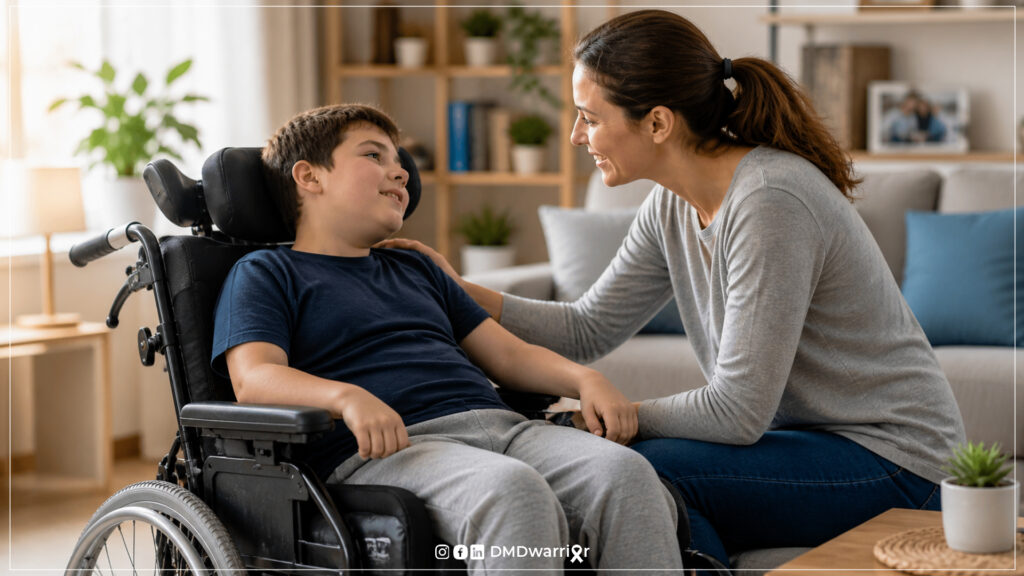
Care of non-ambulatory patients with Duchenne muscular dystrophy (Who use a wheelchair) is a critical stage in the disease journey that requires structured, multidisciplinary, and highly practical support. As Duchenne Muscular Dystrophy progresses, individuals lose the ability to walk and become increasingly dependent on caregivers for daily activities. At this stage, care of non-ambulatory patients with Duchenne muscular dystrophy focuses on maintaining comfort, preventing complications, and preserving quality of life through proactive, evidence-based interventions. Understanding each aspect of care—from positioning to respiratory management—empowers families to provide safer and more effective support.
Table of Contents
What Is the Non-Ambulatory Stage in DMD?
The non-ambulatory stage marks a major transition in disease progression and requires a shift in care priorities. This phase is characterized by increased muscle weakness, reduced independence, and a higher risk of secondary complications such as scoliosis and respiratory decline.
Clinical Definition of Non-Ambulatory DMD
Non-ambulatory DMD refers to the stage where independent walking is no longer possible. This typically occurs in early adolescence but varies depending on treatment and disease progression.

Key Clinical Indicators
- Loss of ability to stand or walk independently
- Increased reliance on wheelchair mobility
- Reduced upper limb strength over time
Why This Stage Requires Specialized Care
As mobility declines, the risk of complications increases significantly. Early adaptation of care strategies can prevent long-term issues and improve outcomes.
Main Risks in This Stage
- Contractures
- Respiratory insufficiency
- Pressure ulcers
Daily Care Routine for Non-Ambulatory DMD Patients
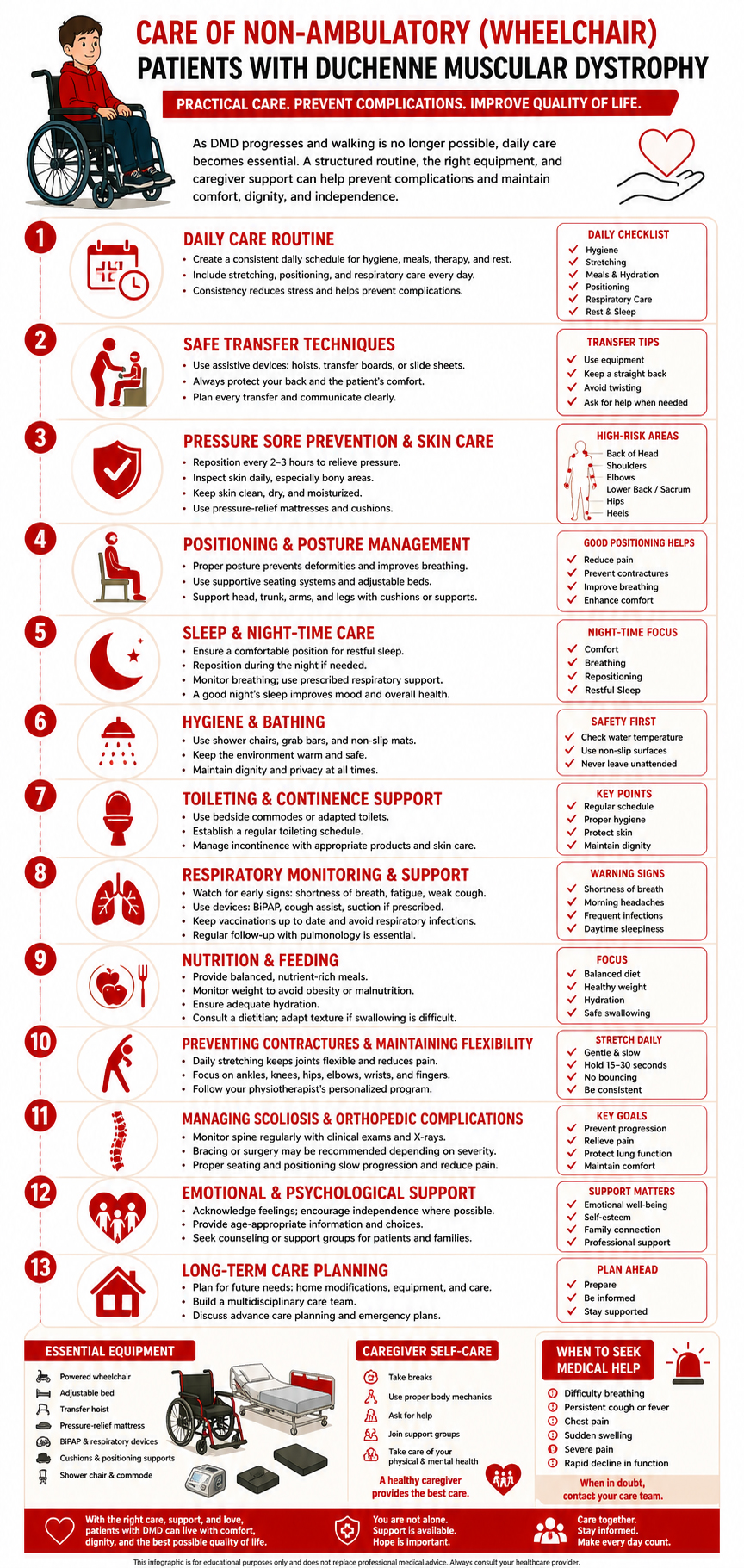
Establishing a structured daily routine is essential to maintain stability and prevent complications. Routine care should include hygiene, positioning, feeding, physical therapy, and rest periods. Consistency helps both the patient and caregiver manage expectations and reduces stress throughout the day. A well-planned schedule is a cornerstone of effective care of non-ambulatory patients with Duchenne muscular dystrophy.
Building a Consistent Daily Schedule
Daily routines should balance activity, rest, and medical care.
Example Daily Routine
- Morning hygiene and repositioning
- Passive stretching exercises
- Meals and hydration
- Afternoon rest and repositioning
- Evening respiratory care
Why Routine Matters for Physical and Mental Health
Consistency improves emotional stability and reduces anxiety.
Benefits of Structured Care
- Reduced caregiver stress
- Improved patient comfort
- Better adherence to therapy
Safe Transfer Techniques (Bed, Wheelchair, Bathroom)
Transfers are one of the most physically demanding and risk-prone aspects of caregiving. Improper techniques can lead to injuries for both the caregiver and the patient. Using assistive devices such as hoists or transfer boards significantly improves safety and efficiency. Mastering safe transfer techniques is a key component of care of non-ambulatory patients with Duchenne muscular dystrophy.
Common Transfer Scenarios
Transfers occur multiple times daily and must be performed safely.
Typical Transfers
- Bed to wheelchair
- Wheelchair to toilet
- Shower transfers
Assistive Devices for Safe Transfers
Using equipment reduces physical strain.
Recommended Devices
- Mechanical hoists
- Transfer boards
- Adjustable beds
Injury Prevention for Caregivers
Caregivers are at high risk of musculoskeletal injuries.
Safety Tips
- Use proper body mechanics
- Avoid twisting movements
- Ask for assistance when needed
Pressure Sore Prevention and Skin Care
Non-ambulatory patients are at high risk for pressure ulcers due to prolonged immobility. These wounds can lead to serious infections if not managed properly. Regular repositioning, appropriate cushioning, and daily skin inspection are essential preventive strategies. Skin integrity is a fundamental aspect of care of non-ambulatory patients with Duchenne muscular dystrophy.
Why Pressure Ulcers Develop
Prolonged pressure reduces blood flow to tissues.
High-Risk Areas
- Heels
- Sacrum
- Elbows
Daily Skin Care Routine
Routine inspection helps detect early issues.
Skin Care Checklist
- Inspect skin daily
- Keep skin dry
- Use protective creams
Advanced Prevention Strategies
Technology can help reduce risk.
Support Surfaces
- Pressure-relief mattresses
- Gel cushions
Positioning and Posture Management
Correct positioning is vital to prevent deformities, discomfort, and respiratory compromise. Poor posture can accelerate scoliosis and reduce lung capacity. Specialized seating systems and adjustable beds can significantly improve posture and comfort. Effective positioning strategies enhance overall care of non-ambulatory patients with Duchenne muscular dystrophy.
Importance of Correct Posture
Poor posture can worsen scoliosis and breathing.
Key Positioning Goals
- Maintain spinal alignment
- Reduce pressure points
- Support limb positioning
Seating Systems and Adaptive Equipment
Customized seating improves long-term outcomes.
Equipment Options
- Custom wheelchairs
- Postural supports
Sleep and Night-Time Care
Sleep disturbances are common due to discomfort, breathing difficulties, and positioning challenges. Night-time care may involve repositioning, monitoring breathing, or using ventilatory support. Ensuring proper sleep improves both physical and emotional well-being. Sleep management is an often overlooked but essential part of care of non-ambulatory patients with Duchenne muscular dystrophy.
Common Sleep Challenges in DMD
Patients may experience discomfort or breathing issues.
Causes of Sleep Disturbance
- Pain
- Poor positioning
- Respiratory weakness
Night-Time Care Strategies
Proper support improves sleep quality.
Practical Tips
- Repositioning during the night
- Using supportive mattresses
- Monitoring breathing
Hygiene and Bathing Solutions
Maintaining hygiene can become increasingly challenging in the non-ambulatory stage. Adapted bathrooms, shower chairs, and caregiver assistance are often required. Safe and efficient hygiene routines help preserve dignity and prevent infections. Hygiene management is a daily priority in care of non-ambulatory patients with Duchenne muscular dystrophy.
Safe Bathing Techniques
Safety is essential during hygiene routines.
Bathing Equipment
- Shower chairs
- Non-slip surfaces
Maintaining Dignity and Comfort
Respect and privacy are important.
Best Practices
- Communicate clearly
- Maintain a consistent routine
Toileting and Continence Support
Toileting requires careful planning to ensure comfort, hygiene, and dignity. Options include bedside commodes, adapted toilets, and continence products when necessary. Proper support reduces caregiver burden and improves patient quality of life. Toileting solutions are an integral part of care of non-ambulatory patients with Duchenne muscular dystrophy.
Toileting Options for Non-Ambulatory Patients
Different solutions exist depending on needs.
Equipment Options
- Bedside commodes
- Adapted toilets
Managing Continence Issues
Planning reduces stress and discomfort.
Key Strategies
- Scheduled toileting
- Hygiene management
Respiratory Monitoring and Support at Home
Respiratory muscles weaken progressively in DMD, making monitoring essential. Early signs of respiratory decline include shallow breathing, fatigue, and frequent infections. Non-invasive ventilation (e.g., BiPAP) may be introduced as needed. Respiratory care is one of the most critical aspects of care of non-ambulatory patients with Duchenne muscular dystrophy.
Early Signs of Respiratory Decline
Recognizing symptoms early is crucial.
Warning Signs
- Shortness of breath
- Frequent infections
Read More: Respiratory Health Care in DMD
Home Respiratory Support Tools
Devices can significantly improve outcomes.
Common Devices
Nutrition and Feeding in Advanced DMD
Proper nutrition supports overall health and helps prevent complications such as obesity or malnutrition. Swallowing difficulties may develop, requiring dietary adjustments or feeding support. Collaboration with a dietitian ensures optimal nutritional intake. Nutrition is a foundational component of care of non-ambulatory patients with Duchenne muscular dystrophy.
Nutritional Challenges in DMD
Swallowing difficulties may develop.
Common Issues
- Weight gain
- Malnutrition
Dietary Strategies
Balanced nutrition is essential.
Key Recommendations
- Monitor calorie intake
- Ensure adequate hydration
Learn More: Best Foods and Nutrition Plan for DMD
Preventing Contractures and Maintaining Flexibility
Joint contractures can significantly limit mobility and increase discomfort. Daily stretching and proper positioning help maintain flexibility and reduce stiffness. Physical therapy remains essential even in the non-ambulatory phase. Preventing contractures is a key goal in care of non-ambulatory patients with Duchenne muscular dystrophy.
Why Contractures Occur
Lack of movement leads to joint stiffness.
High-Risk Joints
- Ankles
- Knees
- Elbows
Daily Stretching Programs
Regular stretching maintains flexibility.
Stretching Guidelines
- Gentle movements
- Consistent routine
Learn More: Best Physical Therapy Strategies for DMD
Managing Scoliosis and Orthopedic Complications
Scoliosis is a common complication that can impact posture, breathing, and comfort. Regular monitoring and early intervention are crucial. Treatment options may include bracing or surgery depending on severity. Orthopedic management is a specialized aspect of care of non-ambulatory patients with Duchenne muscular dystrophy.
Monitoring Spinal Curvature
Regular assessments are necessary.
Signs of Progression
- Uneven posture
- Back pain
Treatment Options
Interventions vary based on severity.
Options Include
- Bracing
- Surgery
Learn More: Scoliosis in DMD: Detection, Exercises, and Surgical Treatment
Emotional and Psychological Support
The transition to non-ambulatory status can be emotionally challenging for both patients and families. Feelings of loss, frustration, and anxiety are common. Providing psychological support helps maintain emotional resilience and quality of life. Emotional care is an essential dimension of care of non-ambulatory patients with Duchenne muscular dystrophy.
Emotional Challenges in Non-Ambulatory Stage
Patients may experience frustration or sadness.
Common Feelings
- Loss of independence
- Anxiety
Supporting Mental Health
Providing emotional support improves quality of life.
Practical Approaches
- Open communication
- Professional counseling
Learn More: Psychological Support in DMD
Assistive Devices and Equipment
Assistive technologies greatly improve independence and comfort. These include powered wheelchairs, standing frames, and communication devices. Selecting the right equipment requires professional guidance. Assistive devices are indispensable in modern care of non-ambulatory patients with Duchenne muscular dystrophy.
Essential Mobility Devices
Mobility aids are critical.
Examples
- Powered wheelchairs
- Standing frames
Choosing the Right Equipment
Professional guidance is important.
Selection Criteria
- Comfort
- Functionality
Caregiver Safety and Self-Care
Caregivers play a central role but are at risk of physical and emotional strain. Proper training, ergonomic techniques, and emotional support are essential. Taking care of the caregiver ensures sustainable care delivery. Caregiver well-being is inseparable from care of non-ambulatory patients with Duchenne muscular dystrophy.
Physical Risks for Caregivers
Caregivers are prone to injury.
Common Injuries
- Back strain
- Fatigue
Emotional Well-Being of Caregivers
Mental health support is essential.
Self-Care Strategies
- Rest
- Support groups
When to Seek Medical Help
Timely medical intervention can prevent serious complications. Warning signs include breathing difficulties, chest infections, severe pain, or sudden functional decline. Regular follow-ups with a multidisciplinary team are essential. Medical monitoring supports safe and effective care of non-ambulatory patients with Duchenne muscular dystrophy.
Urgent Medical Symptoms
Immediate care may be required.
Red Flags
- Severe breathing difficulty
- Chest pain
Routine Medical Monitoring
Regular check-ups are essential.
Recommended Follow-Ups
- Cardiology
- Pulmonology
Learn More: Emergency Care in Duchenne
Long-Term Care Planning
Planning for future needs reduces uncertainty and improves preparedness. This includes home modifications, advanced care planning, and coordination with healthcare providers. A proactive approach ensures continuity of care. Long-term planning is a strategic component of care of non-ambulatory patients with Duchenne muscular dystrophy.
Preparing for Future Needs
Anticipating changes reduces stress.
Key Considerations
- Home modifications
- Equipment upgrades
Coordinating Multidisciplinary Care
Team-based care improves outcomes.
Care Team Members
- Neurologists
- Physiotherapists
Read More: Multidisciplinary Care in DMD
Frequently Asked Questions (FAQ)
What is the best way to care for non-ambulatory patients with Duchenne muscular dystrophy?
The best care of non-ambulatory patients with Duchenne muscular dystrophy involves a structured daily routine that includes proper positioning, safe transfers, skin care, respiratory monitoring, and balanced nutrition. Using assistive devices and maintaining regular medical follow-ups are also essential. A multidisciplinary approach ensures optimal quality of life.
How often should a non-ambulatory DMD patient be repositioned?
Non-ambulatory DMD patients should be repositioned at least every 2–3 hours to prevent pressure sores and improve circulation. Regular repositioning reduces the risk of skin breakdown and enhances comfort. Specialized cushions and mattresses can further support pressure relief.
What are the most important daily care needs in advanced DMD?
Daily care includes hygiene, safe transfers, proper positioning, respiratory support, nutrition, and stretching exercises. These elements work together to prevent complications such as infections, contractures, and breathing difficulties. Consistency in care routines is key to maintaining stability.
How do you prevent pressure sores in non-ambulatory Duchenne patients?
Pressure sores can be prevented by frequent repositioning, using pressure-relief surfaces, maintaining clean and dry skin, and performing daily skin checks. Early detection of redness or irritation is critical. Proper nutrition also supports skin health and healing.
What equipment is needed for non-ambulatory DMD care at home?
Essential equipment includes a powered wheelchair, adjustable bed, transfer hoist, pressure-relief mattress, and respiratory devices like BiPAP if needed. These tools improve safety, comfort, and independence. Selection should be guided by healthcare professionals.
When should respiratory support be started in DMD patients?
Respiratory support is typically introduced when signs of breathing weakness appear, such as fatigue, shallow breathing, or frequent infections. Pulmonary function tests help determine timing. Early intervention with devices like BiPAP improves outcomes and quality of life.
How can caregivers safely transfer a non-ambulatory DMD patient?
Caregivers should use proper body mechanics and assistive devices such as hoists or transfer boards. Avoid lifting manually whenever possible to reduce injury risk. Training from a physiotherapist is highly recommended for safe handling techniques.
What are common complications in non-ambulatory Duchenne muscular dystrophy?
Common complications include scoliosis, contractures, respiratory insufficiency, cardiac issues, and pressure sores. Early monitoring and preventive care significantly reduce these risks. Regular check-ups with a multidisciplinary team are essential.
How can quality of life be improved in non-ambulatory DMD patients?
Quality of life can be improved through proper pain management, assistive technologies, social engagement, and emotional support. Maintaining independence where possible and ensuring comfort are key priorities. Family involvement plays a crucial role.
What support is available for families caring for DMD patients?
Families can access support through neuromuscular clinics, patient organizations, online communities, and mental health professionals. These resources provide education, emotional support, and practical guidance. Building a strong support network reduces caregiver burden and improves outcomes.
Final Thoughts
Care of non-ambulatory patients with Duchenne muscular dystrophy requires consistency, planning, and compassion. Structured routines help prevent complications and improve comfort. Safe transfers and proper positioning protect both patient and caregiver. Skin care and respiratory monitoring are critical daily priorities. Nutrition and hydration support overall health and energy. Assistive devices can greatly enhance independence and quality of life. Emotional support remains just as important as physical care. Caregivers should also prioritize their own well-being. Regular medical follow-up ensures timely intervention. With the right approach, families can provide safe, effective, and dignified care.
Academic Sources and References
- Birnkrant DJ et al. (2018) Duchenne Muscular Dystrophy Care Considerations
Comprehensive international guidelines covering multidisciplinary care, including respiratory, cardiac, and non-ambulatory management strategies. - Bushby K et al. (2010) Diagnosis and Management of Duchenne Muscular Dystrophy
Foundational clinical framework defining best practices for diagnosis, treatment, and long-term care in DMD patients. - Landfeldt E et al. (2015) Compliance to Care Guidelines for Duchenne Muscular Dystrophy
Evaluates how real-world clinical care aligns with established DMD guidelines across multiple countries. - Malaga M et al. (2024) Clinical Practice Guidelines for Duchenne Muscular Dystrophy
Recent systematic review analyzing updated clinical guidelines and their reliability in DMD management. - European Medicines Agency (EMA) DMD Guideline
Provides regulatory recommendations for treatment development and clinical trial design in Duchenne muscular dystrophy. - Gremyakova TA et al. (2022) Ambulatory vs Non-Ambulatory DMD Definitions
Defines ambulatory and non-ambulatory stages and emphasizes stage-specific care approaches in DMD. - Finder JD et al. (2004) Respiratory Care of Neuromuscular Disease
Highlights the importance of early respiratory monitoring and non-invasive ventilation in progressive neuromuscular diseases. - Eagle M et al. (2002) Survival in Duchenne Muscular Dystrophy
Demonstrates how improved respiratory and cardiac care has increased survival rates in DMD patients. - Pangalila RF et al. (2015) Quality of Life in Duchenne Muscular Dystrophy
Explores psychosocial and quality-of-life outcomes in DMD patients and caregivers. - Ricotti V et al. (2016) Neurodevelopmental and Behavioral Issues in DMD
Examines cognitive, behavioral, and psychological aspects associated with Duchenne muscular dystrophy. - Raina P et al. (2005) Caregiver Burden in Chronic Pediatric Conditions
Investigates caregiver stress and its impact on families managing chronic illnesses like DMD. - Case Study: Non-Ambulatory Duchenne Muscular Dystrophy (2022) Provides insights into interventions and outcomes in advanced-stage DMD patients.