
Hydrotherapy in Duchenne Muscular Dystrophy (DMD)—also known as aquatic therapy, water-based rehabilitation, or pool-based physiotherapy—has emerged as a highly valuable intervention for preserving mobility, reducing contractures, and improving quality of life. For children living with Duchenne, where progressive muscle degeneration limits traditional exercise tolerance, aquatic exercises and swimming for Duchenne offer a uniquely supportive environment that reduces strain while enabling meaningful movement. This article provides a comprehensive, evidence-based guide to hydrotherapy in DMD, integrating clinical insights, academic research, and practical recommendations for families, therapists, and educators.
Table of Contents
Understanding Duchenne Muscular Dystrophy and the Need for Adaptive Therapies
Duchenne Muscular Dystrophy is a severe, X-linked genetic disorder caused by mutations in the dystrophin gene, leading to progressive muscle degeneration. Boys with DMD typically experience early motor delays, followed by gradual loss of ambulation, respiratory compromise, and cardiomyopathy. Read More: What is Duchenne?
Why Conventional Exercise is Challenging in DMD
Traditional land-based exercise presents several risks:

- Increased mechanical load on fragile muscle fibers
- Higher likelihood of eccentric contraction-induced damage
- Fatigue leading to prolonged recovery periods
- Risk of falls and injury
As a result, clinicians emphasize low-impact, submaximal, and non-eccentric activities—making hydrotherapy an ideal modality.
What is Hydrotherapy in DMD?
Hydrotherapy (pool therapy) refers to structured therapeutic exercise performed in water, typically under the supervision of a physiotherapist trained in neuromuscular conditions.
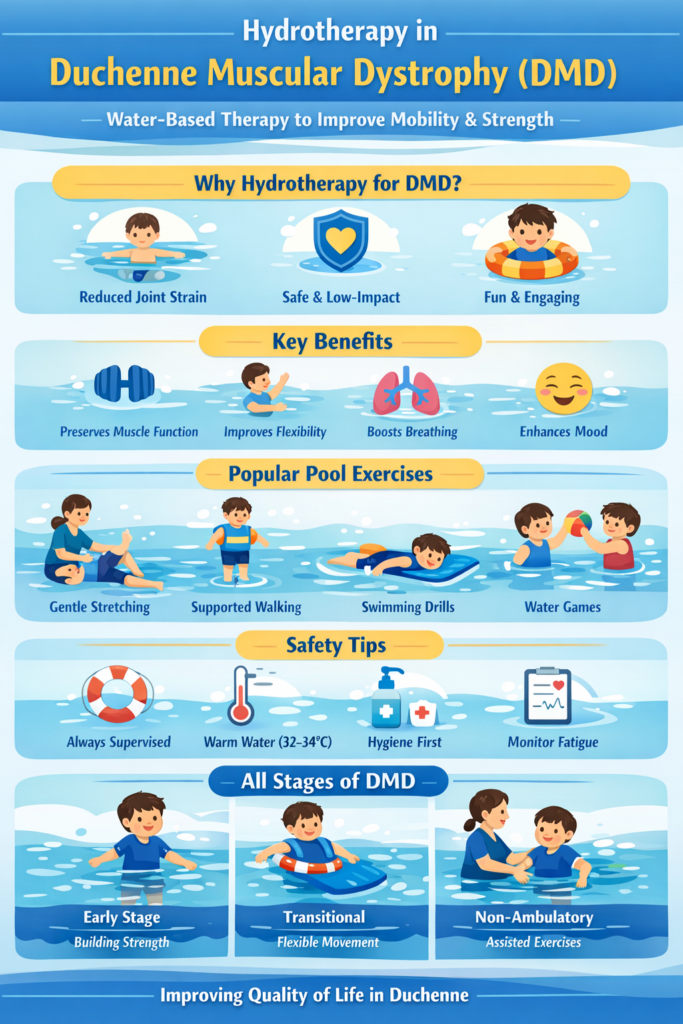
Key Properties of Water That Benefit DMD Patients
- Buoyancy: Reduces body weight load by up to 90%
- Hydrostatic Pressure: Supports circulation and respiratory function
- Viscosity: Provides gentle resistance without overexertion
- Thermal Effects: Warm water (32–34°C) relaxes muscles and reduces stiffness
These properties collectively enable safe movement patterns that are otherwise difficult or impossible on land.
Benefits of Aquatic Therapy in Duchenne Muscular Dystrophy
Preservation of Muscle Function
Aquatic exercises allow patients to engage muscles in a gravity-reduced environment, delaying functional decline.
Evidence:
A study by Hind et al. (2017) demonstrated that low-intensity, non-eccentric exercise can help maintain muscle strength without accelerating degeneration in DMD.
Improved Joint Mobility and Reduced Contractures
- Water immersion facilitates passive and active stretching
- Reduces joint stiffness, especially in ankles, hips, and knees
Learn More: Bone & Joint Health in Duchenne
Clinical Insight:
Regular hydrotherapy sessions are associated with slower progression of joint contractures, a major complication in DMD.
Enhanced Cardiovascular and Respiratory Function
Swimming for Duchenne promotes:
- Controlled breathing patterns
- Increased lung capacity
- Gentle cardiovascular conditioning
Learn More: Maintaining for Lung Muscles in Duchenne
Study Reference:
McDonald et al. (2018) highlight that moderate aerobic activity improves endurance without overloading muscles.
Pain Reduction and Relaxation
Warm water immersion:
- Decreases muscle spasms
- Reduces perceived pain levels
- Improves overall comfort
Psychological and Social Benefits
Aquatic therapy is not only physical—it also supports mental well-being:
- Increased confidence in movement
- Social interaction in group sessions
- Enjoyable and motivating environment
Learn More: Stress and Anxiety in Duchenne
Types of Aquatic Exercises for Duchenne
Gentle Range-of-Motion Exercises
- Assisted leg kicks
- Arm circles in water
- Floating-supported stretching
Functional Movement Training
- Sit-to-stand in shallow water
- Walking with water support
- Balance exercises
Swimming-Based Activities
- Backstroke with flotation devices
- Supported front crawl
- Kicking drills
Play-Based Pool Activities
- Water games to encourage movement
- Ball exercises
- Group participation tasks
These activities ensure therapy remains engaging and sustainable, especially for younger children.
Designing a Hydrotherapy Program for DMD
Individualized Assessment
Before starting aquatic therapy:
- Evaluate functional level (ambulatory vs non-ambulatory)
- Assess respiratory and cardiac status
- Identify joint limitations
Frequency and Duration
- One session per week is recommended
- Each session: 30–45 minutes
- Avoid fatigue—monitor closely
Intensity Guidelines
- Submaximal effort only
- Avoid high-resistance or rapid movements
- Emphasize slow, controlled motions
Safety Considerations
- Supervision by trained therapist
- Temperature-controlled pool
- Infection control (important for immunocompromised patients)
- Use of flotation devices
Hydrotherapy Across Disease Stages
Early Stage (Ambulatory Phase)
- Focus on maintaining strength and coordination
- Encourage independent movement
Transitional Stage
- Increase support with flotation aids
- Emphasize flexibility and posture
Non-Ambulatory Stage
- Passive movements
- Assisted stretching
- Respiratory exercises in water
Hydrotherapy remains beneficial even in advanced stages, with appropriate modifications.
Practical Tips for Parents and Caregivers
Choosing the Right Facility
- Warm-water therapy pool
- Accessibility (ramps, lifts)
- Experienced physiotherapists
Preparing Your Child
- Introduce water gradually
- Use familiar toys
- Ensure comfort and trust
Monitoring Fatigue
Signs of overexertion:
- Prolonged tiredness
- Muscle soreness
- Reduced function after sessions
If observed, adjust intensity immediately.
Role of Physiotherapists in Aquatic Therapy
A specialized physiotherapist:
- Designs individualized programs
- Monitors progression
- Adjusts exercises based on disease stage
Their expertise is critical to ensure therapeutic benefit without harm.
Comparing Hydrotherapy vs Land-Based Therapy
| Feature | Hydrotherapy | Land-Based Therapy |
|---|---|---|
| Joint Load | Low | High |
| Fall Risk | Minimal | Moderate |
| Resistance Type | Gentle (water) | Gravity-based |
| Patient Comfort | High | Variable |
Hydrotherapy complements—not replaces—land-based interventions.
Common Misconceptions About Swimming for Duchenne
“Exercise accelerates muscle loss”
Not true when properly prescribed. Controlled, low-intensity activity is beneficial.
“Swimming is too tiring”
With proper pacing and support, it is one of the safest forms of exercise.
“Hydrotherapy is only for early stages”
Incorrect—adapted aquatic therapy benefits all stages.
Future Directions in Aquatic Therapy for DMD
Emerging innovations include:
- Robotic-assisted aquatic devices
- Virtual reality integration in pools
- Personalized therapy algorithms
Research continues to refine protocols for optimal outcomes.
FAQ: Hydrotherapy in Duchenne Muscular Dystrophy (DMD)
Is hydrotherapy safe for children with Duchenne muscular dystrophy?
Yes, hydrotherapy is generally safe for children with DMD when supervised by a trained physiotherapist. The buoyancy of water reduces stress on muscles and joints, minimizing injury risk. Programs should be individualized, avoiding overexertion and focusing on controlled, low-intensity movements.
How does aquatic therapy help Duchenne patients?
Aquatic therapy supports mobility, flexibility, and circulation while reducing muscle strain. Water buoyancy allows easier movement, while gentle resistance helps maintain muscle function without causing damage. It also improves breathing control and overall comfort.
Can swimming slow the progression of Duchenne muscular dystrophy?
Swimming cannot stop disease progression, but it can help preserve function longer. Regular, low-impact aquatic exercise may delay stiffness, maintain joint mobility, and improve endurance without accelerating muscle degeneration when properly managed.
How often should hydrotherapy be done in DMD?
Most experts recommend one session per week, lasting 30–45 minutes. The frequency depends on the child’s condition, energy levels, and tolerance. Consistency is more important than intensity.
What type of pool is best for hydrotherapy?
A warm-water pool (32–34°C) is ideal. Warm temperatures help relax muscles and reduce stiffness. The facility should also have accessibility features like ramps or lifts and be supervised by experienced staff.
Can non-ambulatory patients benefit from aquatic therapy?
Yes, hydrotherapy is beneficial at all stages of DMD, including non-ambulatory phases. It allows assisted movement, gentle stretching, and respiratory exercises, helping maintain comfort and joint flexibility.
What exercises are recommended in hydrotherapy for Duchenne?
Recommended exercises include gentle range-of-motion movements, supported walking, floating exercises, and light swimming activities. All exercises should be slow, controlled, and adapted to the patient’s abilities.
Are there any risks associated with aquatic therapy in DMD?
Risks are minimal but may include fatigue, overexertion, or infections if hygiene is poor. These can be avoided with proper supervision, appropriate session intensity, and well-maintained pool conditions.
Does hydrotherapy improve breathing in Duchenne patients?
Yes, water pressure and controlled breathing during aquatic exercises can support respiratory muscle function. It may help improve breathing efficiency and lung capacity over time.
Can hydrotherapy replace land-based physiotherapy?
No, hydrotherapy should complement—not replace—land-based physiotherapy. Both approaches together provide a balanced rehabilitation program, addressing different functional needs.
Final Thoughts
Hydrotherapy in Duchenne Muscular Dystrophy represents a cornerstone of supportive care, offering a rare combination of safety, effectiveness, and enjoyment. By leveraging the unique physical properties of water, aquatic therapy enables patients to maintain mobility, reduce complications, and enhance quality of life across all disease stages. When implemented correctly—under professional supervision and individualized planning—it becomes not just a therapy, but a powerful tool for preserving independence and dignity in the face of a progressive condition.
Clinical Evidence Supporting Hydrotherapy in DMD
Key Studies and Findings
- Hind et al., 2017 (Neuromuscular Disorders Journal)
- Safe exercise improves functional outcomes in DMD
- Emphasizes non-eccentric activity like aquatic therapy
- Daniel Hind et al., 2017 (Springer)
- Aquatic therapy enhances mobility and reduces fatigue
- McDonald et al., 2018 (DMD Care Considerations)
- Recommends low-impact aerobic activity
- Bushby et al., 2010 (Lancet Neurology)
- Multidisciplinary care includes physiotherapy and adaptive exercise