
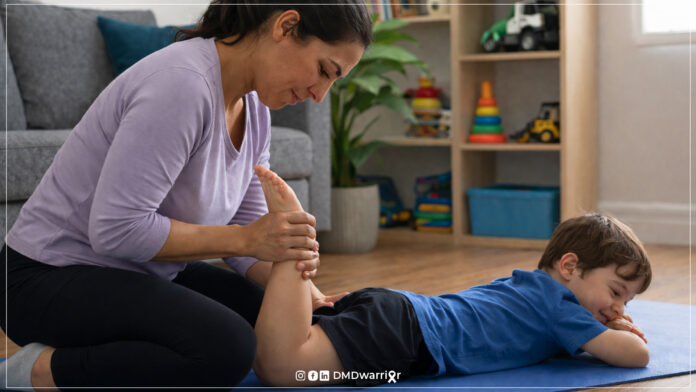
Physical therapy in Duchenne muscular dystrophy (DMD) is a cornerstone of comprehensive disease management, aimed at preserving muscle function, delaying complications, and improving quality of life. Also referred to as physiotherapy in Duchenne muscular dystrophy, rehabilitation in DMD, or DMD physical management strategies, this approach plays a critical role from early diagnosis through advanced stages.
As Duchenne muscular dystrophy is a progressive neuromuscular disorder caused by mutations in the dystrophin gene, early and continuous physical therapy interventions can significantly influence functional outcomes, mobility, and long-term independence.
Table of Contents
Introduction to Duchenne Muscular Dystrophy and the Role of Physical Therapy
Duchenne muscular dystrophy (DMD) is a severe X-linked genetic disorder characterized by progressive muscle degeneration. It primarily affects boys, with symptoms typically appearing between ages 2 and 5. The absence of dystrophin leads to muscle fiber damage, inflammation, and eventual replacement with fat and fibrotic tissue. Read More: What is Duchenne?

Physical therapy in Duchenne muscular dystrophy is not merely supportive—it is a proactive, evidence-based intervention that helps delay disease progression. Unlike traditional rehabilitation models focused on recovery, physical therapy in DMD is designed to preserve function and prevent secondary complications such as contractures, scoliosis, and respiratory decline.
Why Physical Therapy Is Essential in Duchenne Muscular Dystrophy
Slowing Functional Decline
Physical therapy in Duchenne muscular dystrophy helps maintain muscle elasticity and joint range of motion, delaying the onset of contractures and stiffness.
Preventing Secondary Complications
Without proper physiotherapy in DMD, patients are at high risk for:
- Joint contractures
- Postural deformities
- Respiratory insufficiency
- Reduced circulation
Improving Quality of Life
Maintaining mobility—even partial—supports independence, psychological well-being, and social participation.
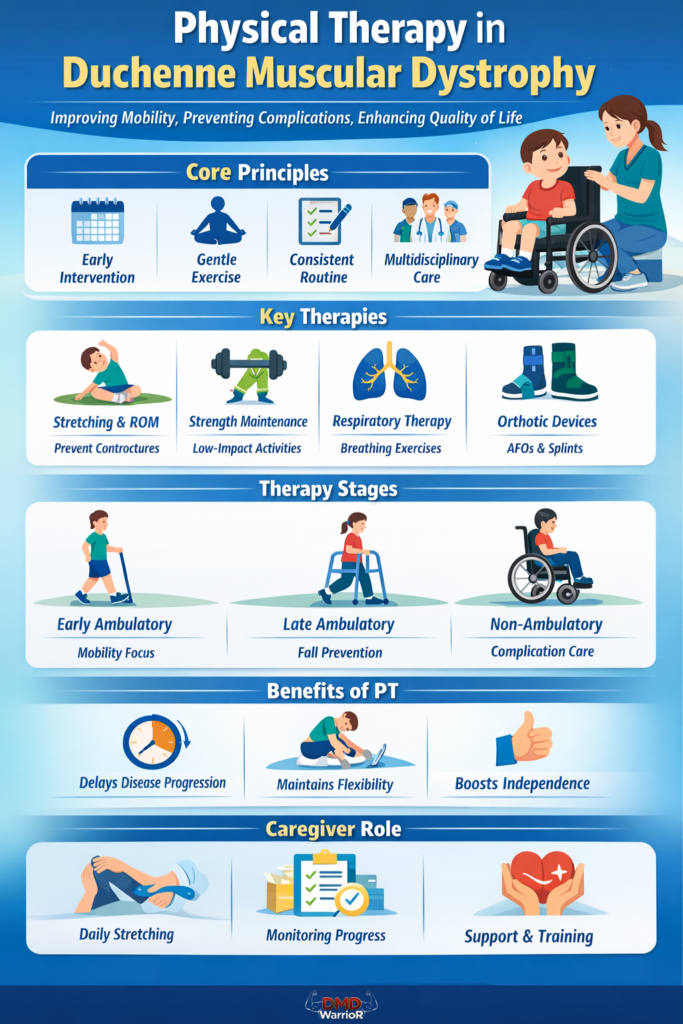
Core Principles of Physical Therapy in Duchenne Muscular Dystrophy
1. Early Intervention
Starting physical therapy in Duchenne muscular dystrophy as soon as diagnosis is confirmed leads to better long-term outcomes.
2. Low-Intensity, Non-Damaging Exercise
High-resistance exercises can accelerate muscle damage. Instead, therapy focuses on:
- Gentle stretching
- Submaximal aerobic activity
- Functional training
3. Consistency Over Intensity
Daily routines are more effective than sporadic high-effort sessions.
4. Multidisciplinary Approach
Physical therapists collaborate with neurologists, pulmonologists, and orthopedic specialists.
Learn More: Multidisciplinary Neuromuscular Team in Duchenne
Key Components of Physical Therapy in Duchenne Muscular Dystrophy
Stretching Programs
Stretching is a foundational element of physical therapy in Duchenne muscular dystrophy.
Goals:
- Prevent contractures
- Maintain joint mobility
- Reduce muscle stiffness
Common Target Areas:
- Achilles tendon (ankle plantarflexors)
- Hamstrings
- Hip flexors
Daily passive stretching by caregivers is strongly recommended.
Range of Motion (ROM) Exercises
ROM exercises maintain joint flexibility and delay stiffness.
- Passive ROM: performed by caregivers or therapists
- Active ROM: encouraged when possible
Regular ROM exercises are a central component of physiotherapy in DMD.
Strength Maintenance (Not Strength Building)
In physical therapy in Duchenne muscular dystrophy, the goal is to preserve existing strength, not to increase it aggressively.
Recommended:
- Light resistance activities
- Functional movements (e.g., sit-to-stand)
Avoid:
- Eccentric exercises
- Heavy resistance training
Postural Management
As muscle weakness progresses, posture deteriorates.
Interventions include:
- Proper seating systems
- Spinal alignment strategies
- Use of orthoses
Postural management reduces the risk of scoliosis and improves respiratory function.
Learn More: Scoliosis in Duchenne
Orthotic Devices
Orthoses are frequently used in physical therapy in Duchenne muscular dystrophy.
Common types:
- Ankle-foot orthoses (AFOs)
- Night splints
These help maintain muscle length and delay deformities.
Respiratory Physiotherapy
Respiratory decline is a major concern in DMD.
Techniques include:
- Breathing exercises
- Assisted coughing techniques
- Incentive spirometry
Respiratory physiotherapy becomes increasingly important in later stages.
Learn More: Maintaining for Lung Muscles in Duchenne
Aquatic Therapy
Water-based therapy is highly beneficial in DMD.
Benefits:
- Reduced joint stress
- Improved mobility
- Enhanced cardiovascular function
Aquatic therapy is widely recommended as part of physical therapy in Duchenne muscular dystrophy.
Learn More: Hydrotherapy in Duchenne
Stage-Based Physical Therapy Approach in DMD
Early Ambulatory Stage
Focus:
- Maintain mobility
- Encourage safe physical activity
Interventions:
- Stretching
- Play-based exercises
- Gait training
Late Ambulatory Stage
Focus:
- Prevent falls
- Maintain independence
Interventions:
- Assistive devices
- Energy conservation techniques
Non-Ambulatory Stage
Focus:
- Prevent complications
- Maintain upper limb function
Interventions:
- Wheelchair positioning
- Respiratory therapy
- Passive ROM exercises
Evidence-Based Benefits of Physical Therapy in Duchenne Muscular Dystrophy
Numerous studies support the effectiveness of physiotherapy in DMD:
- Bushby et al. (2010, Lancet Neurology): Highlighted the importance of multidisciplinary care including physical therapy.
- Eagle et al. (2002): Demonstrated prolonged ambulation with consistent physiotherapy.
- Birnkrant et al. (2018 DMD Care Considerations): Strongly recommend daily stretching and respiratory management.
Guidelines and Recommendations
International Standards of Care
The 2018 DMD Care Considerations emphasize:
- Daily stretching routines
- Regular physiotherapy assessments
- Early use of orthoses
- Respiratory monitoring
Frequency of Therapy
- Daily home-based therapy
- Weekly professional sessions (if possible)
Common Mistakes in Physical Therapy for DMD
Avoid the following:
- Overexertion
- Ignoring pain signals
- Inconsistent routines
- Lack of caregiver training
Role of Caregivers in Physical Therapy
Caregivers are integral to successful physical therapy in Duchenne muscular dystrophy.
Responsibilities include:
- Performing daily stretches
- Monitoring changes
- Ensuring adherence to therapy plans
Training caregivers improves outcomes significantly.
Emerging Innovations in Physical Therapy for DMD
Robotics and Assistive Technology
- Exoskeletons
- Smart mobility aids
Tele-rehabilitation
Remote physiotherapy sessions are becoming more common.
AI-Based Monitoring
Wearables track movement and optimize therapy plans.
Integration with Medical Treatments
Physical therapy in Duchenne muscular dystrophy works alongside:
- Corticosteroids
- Gene therapies
- Exon-skipping treatments
Rehabilitation enhances the effectiveness of medical interventions.
Psychological and Social Benefits
Physical therapy also supports:
- Emotional well-being
- Social interaction
- Confidence and independence
Long-Term Outcomes and Prognosis
Consistent physical therapy in Duchenne muscular dystrophy is associated with:
- Delayed loss of ambulation
- Reduced complications
- Improved life expectancy
FAQ: Physical Therapy in Duchenne Muscular Dystrophy
What is the goal of physical therapy in Duchenne muscular dystrophy?
The primary goal of physical therapy in Duchenne muscular dystrophy is to preserve muscle function for as long as possible, delay complications such as contractures and scoliosis, and maintain independence. Unlike rehabilitation in acute conditions, physical therapy in DMD focuses on slowing disease progression rather than reversing it. A structured program combining stretching, positioning, and low-impact activity helps optimize mobility and improve overall quality of life.
When should physical therapy start in DMD?
Physical therapy in Duchenne muscular dystrophy should begin immediately after diagnosis, even if symptoms appear mild. Early intervention is critical because muscle degeneration starts before noticeable weakness occurs. Starting therapy early allows families to establish daily routines, prevent early contractures, and maximize long-term functional outcomes. Clinical guidelines strongly support early and continuous physiotherapy in DMD.
How often should physical therapy be done?
Physical therapy in Duchenne muscular dystrophy should ideally be performed daily at home, with periodic supervision by a trained physiotherapist. Daily stretching routines are essential to prevent joint stiffness, while professional sessions—typically weekly or biweekly—help adjust the program based on disease progression. Consistency is far more important than intensity in DMD rehabilitation.
What types of exercises are safe for children with DMD?
Safe exercises in physical therapy in Duchenne muscular dystrophy include gentle stretching, range-of-motion (ROM) exercises, light functional activities, and low-impact aerobic exercises such as swimming. Activities should avoid high resistance, heavy weights, and eccentric muscle contractions, as these can accelerate muscle damage. The focus should always be on maintaining function without causing fatigue or pain.
Can physical therapy slow the progression of Duchenne muscular dystrophy?
Yes, physical therapy in Duchenne muscular dystrophy can significantly slow functional decline by maintaining joint flexibility, reducing muscle tightness, and preventing secondary complications. While it does not stop the genetic cause of the disease, consistent physiotherapy has been shown in clinical studies to delay loss of ambulation and improve long-term outcomes when combined with medical treatments.
What are contractures and how does physical therapy help prevent them?
Contractures are permanent tightening of muscles and tendons that limit joint movement, commonly affecting the ankles, knees, and hips in DMD. Physical therapy in Duchenne muscular dystrophy helps prevent contractures through daily stretching, proper positioning, and the use of orthotic devices like night splints. Preventing contractures is crucial for maintaining mobility and comfort.
Is stretching really necessary every day?
Yes, daily stretching is one of the most important components of physical therapy in Duchenne muscular dystrophy. Muscles in DMD tend to shorten over time due to weakness and reduced use. Regular stretching maintains muscle length, preserves joint mobility, and reduces the risk of painful deformities. Skipping stretching routines can lead to faster development of contractures.
How does physical therapy support breathing in DMD?
As Duchenne muscular dystrophy progresses, respiratory muscles weaken, leading to breathing difficulties. Physical therapy in Duchenne muscular dystrophy includes respiratory physiotherapy techniques such as breathing exercises, assisted coughing, and lung expansion exercises. These interventions help maintain lung function, prevent infections, and improve overall respiratory health.
Can children with DMD participate in sports or physical activities?
Children with DMD can participate in carefully selected, low-impact physical activities as part of their physical therapy program. Activities like swimming and gentle cycling are encouraged because they promote movement without overloading the muscles. However, high-impact sports, running, jumping, or activities that cause excessive fatigue should be avoided to prevent muscle damage.
What is the role of caregivers in physical therapy for DMD?
Caregivers play a central role in physical therapy in Duchenne muscular dystrophy. They are responsible for performing daily stretching exercises, ensuring proper positioning, monitoring for signs of discomfort or progression, and maintaining consistency in therapy routines. Proper caregiver training by physiotherapists is essential to ensure exercises are performed safely and effectively, leading to better outcomes for the child.
Conclusion
Physical therapy in Duchenne muscular dystrophy is not optional—it is essential. From early intervention to advanced care, physiotherapy in DMD plays a decisive role in preserving function, preventing complications, and improving overall quality of life. With continued advancements in rehabilitation science and integration with emerging therapies, the future of DMD care is increasingly multidisciplinary and hopeful.
Read More: Occupational Therapy in Duchenne Muscular Dystrophy