
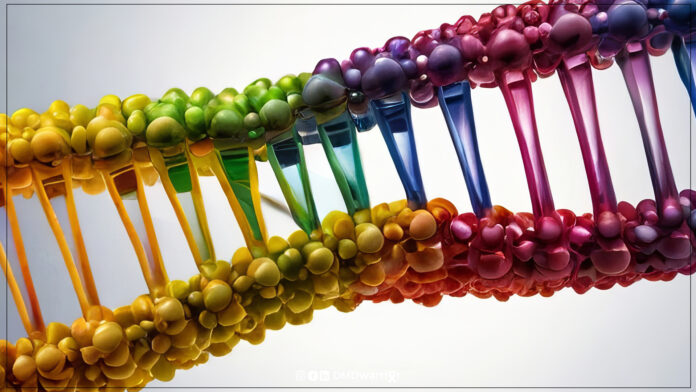
Understanding the nucleotide in Duchenne muscular dystrophy is essential for grasping how this severe genetic disorder develops at the molecular level. The role of nucleotides in DMD goes far beyond simple DNA structure—they directly influence how the dystrophin protein is produced, or fails to be produced. In Duchenne Muscular Dystrophy (DMD), even small nucleotide alterations can disrupt the genetic code, leading to progressive muscle degeneration. This article explores how nucleotide changes in the DMD gene affect protein synthesis, disease severity, and emerging therapeutic strategies.
Table of Contents
What Is a Nucleotide?
Basic Structure of a Nucleotide
A nucleotide is the fundamental building block of DNA. Each nucleotide consists of:
- A nitrogenous base (adenine, thymine, cytosine, guanine)
- A five-carbon sugar (deoxyribose)
- A phosphate group
These components form long chains, creating DNA sequences that encode genetic information.
DNA as a Language
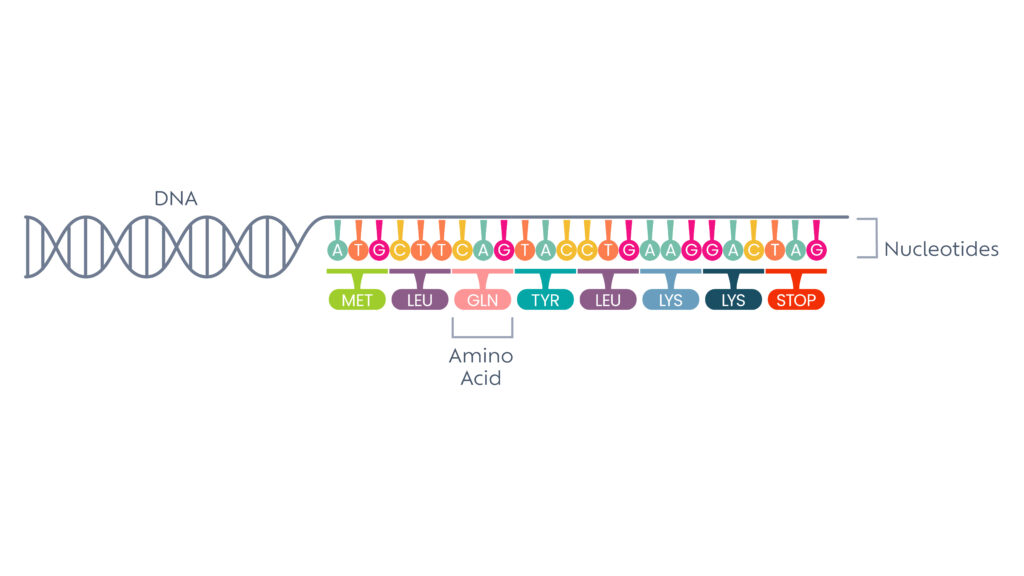
DNA can be thought of as a biological language where nucleotides act as letters. Groups of three nucleotides (codons) encode specific amino acids, forming proteins essential for cellular function.
The Role of Nucleotides in DMD
How Nucleotide Sequences Control Protein Production
The role of nucleotides in DMD is most evident in protein synthesis. The sequence of nucleotides determines how the dystrophin protein is assembled. Any disruption in this sequence can impair or completely halt protein production.
The Dystrophin Protein and Its Importance
Dystrophin stabilizes muscle cell membranes during contraction. Without it, muscle fibers become fragile and prone to damage.
How Nucleotide Mutations Cause Duchenne Muscular Dystrophy
Types of Nucleotide Mutations in DMD
1. Deletions
Segments of nucleotides are missing, often leading to frameshift mutations.
2. Duplications
Extra nucleotides are inserted, disrupting the reading frame.
3. Point Mutations
A single nucleotide change can introduce a premature stop codon.
Learn More: Types of Genetic Variants in Duchenne
Frameshift Mutations and Their Impact
DNA is read in triplets. When nucleotides are added or removed incorrectly, the reading frame shifts, producing a nonfunctional protein.
Reading Frame Rule: Duchenne vs Becker
Out-of-Frame Mutations
- Cause DMD
- No functional dystrophin
In-Frame Mutations
- Cause Becker Muscular Dystrophy
- Partially functional dystrophin
Molecular Mechanisms Behind DMD
Transcription and Translation
The nucleotide sequence in DNA is transcribed into RNA and then translated into protein. Errors in nucleotides disrupt this flow.
Nonsense Mutations
Premature stop codons halt protein synthesis early.
Exons, Introns, and Nucleotide Organization
What Are Exons?
Coding regions of genes that directly translate into protein.
Why Exons Matter in DMD
Many DMD mutations occur due to exon deletions affecting nucleotide sequences.
Therapeutic Approaches Targeting Nucleotides
Exon Skipping Therapy
Uses antisense oligonucleotides to “skip” faulty exons and restore the reading frame.
Nonsense Mutation Readthrough
Drugs help ribosomes ignore premature stop codons.
Gene Editing
Technologies like CRISPR aim to correct nucleotide errors at the DNA level.
Why Understanding Nucleotides Matters for Families
Early Diagnosis
Genetic testing identifies nucleotide mutations.
Personalized Medicine
Treatment depends on the exact nucleotide change.
Future Research Directions
RNA-Based Therapies
Emerging treatments target RNA rather than DNA.
Precision Medicine
Tailored therapies based on individual nucleotide mutations.
Frequently Asked Questions (FAQ)
What is a nucleotide in Duchenne muscular dystrophy?
A nucleotide is the basic unit of DNA, and in Duchenne muscular dystrophy (DMD), changes in nucleotides disrupt the dystrophin gene. These changes alter the genetic code, preventing the body from producing functional dystrophin protein. As a result, muscle cells become fragile and progressively damaged.
How do missing or extra nucleotides cause DMD?
Missing or extra nucleotides cause Duchenne muscular dystrophy by disrupting the DNA reading frame. This is called a frameshift mutation, where the sequence is misread during protein production. The result is a shortened or nonfunctional dystrophin protein, which leads to muscle degeneration.
How can I tell if my son with Duchenne muscular dystrophy (DMD) has missing or extra nucleotides?
You can use the DMD Warrior’s Exon Check Tool to estimate the number of missing or extra nucleotides and better understand the genetic mutation. Try Now: Exon Check Tool
What is the difference between Duchenne and Becker muscular dystrophy at the nucleotide level?
The difference lies in how nucleotide mutations affect the reading frame. In Duchenne muscular dystrophy, mutations usually disrupt the reading frame, producing no functional dystrophin. In Becker muscular dystrophy, the reading frame is preserved, allowing partial production of a shorter but functional protein.
Can treatments target nucleotide mutations in DMD?
Yes, some treatments specifically target nucleotide mutations in Duchenne muscular dystrophy. Exon skipping therapies use synthetic molecules to modify how RNA is read, restoring the reading frame. Other approaches, like gene editing and stop-codon readthrough drugs, aim to correct or bypass faulty nucleotide sequences.
Conclusion
The nucleotide in Duchenne muscular dystrophy is at the core of the disease’s origin and progression. Understanding the role of nucleotides in DMD allows researchers, clinicians, and families to better grasp how genetic mutations disrupt dystrophin production. Advances in molecular medicine are increasingly targeting these nucleotide-level errors, offering hope for more effective treatments and improved quality of life.
Academic Sources and References
🧬 Foundational DMD Genetics Studies
- Eric P. Hoffman et al. (1987).
Dystrophin: The protein product of the Duchenne muscular dystrophy locus.
Journal: Cell
👉 First identification of dystrophin and its genetic basis. - Michel Koenig et al. (1987).
Complete cloning of the Duchenne muscular dystrophy (DMD) cDNA and preliminary genomic organization.
Journal: Nature
👉 Landmark study describing the structure of the DMD gene.
🧬 Mutation Mechanisms & Nucleotide-Level Changes
- Annemieke Aartsma-Rus et al. (2016).
The importance of genetic diagnosis for Duchenne muscular dystrophy.
Journal: The Lancet Neurology
👉 Explains exon deletions, duplications, and nucleotide mutations in DMD. - Kevin M. Flanigan (2014).
The muscular dystrophies.
Journal: Seminars in Neurology
👉 Covers mutation types including frameshift and nonsense mutations.
🧬 Reading Frame Rule & Disease Severity
- Jean-Marc Tuffery-Giraud et al. (2009).
Genotype-phenotype analysis in DMD.
Journal: Human Mutation
👉 Details how nucleotide changes affect disease severity.
💊 Therapeutic Approaches Targeting Nucleotides
- Atsushi Aartsma-Rus & van Ommen (2007).
Antisense-mediated exon skipping: A versatile tool with therapeutic potential.
Journal: RNA
👉 Foundational paper on exon skipping therapies. - Francesco Muntoni et al. (2019).
Duchenne muscular dystrophy: Current management and future therapies.
Journal: The Lancet Neurology
👉 Reviews modern therapies targeting nucleotide defects.