
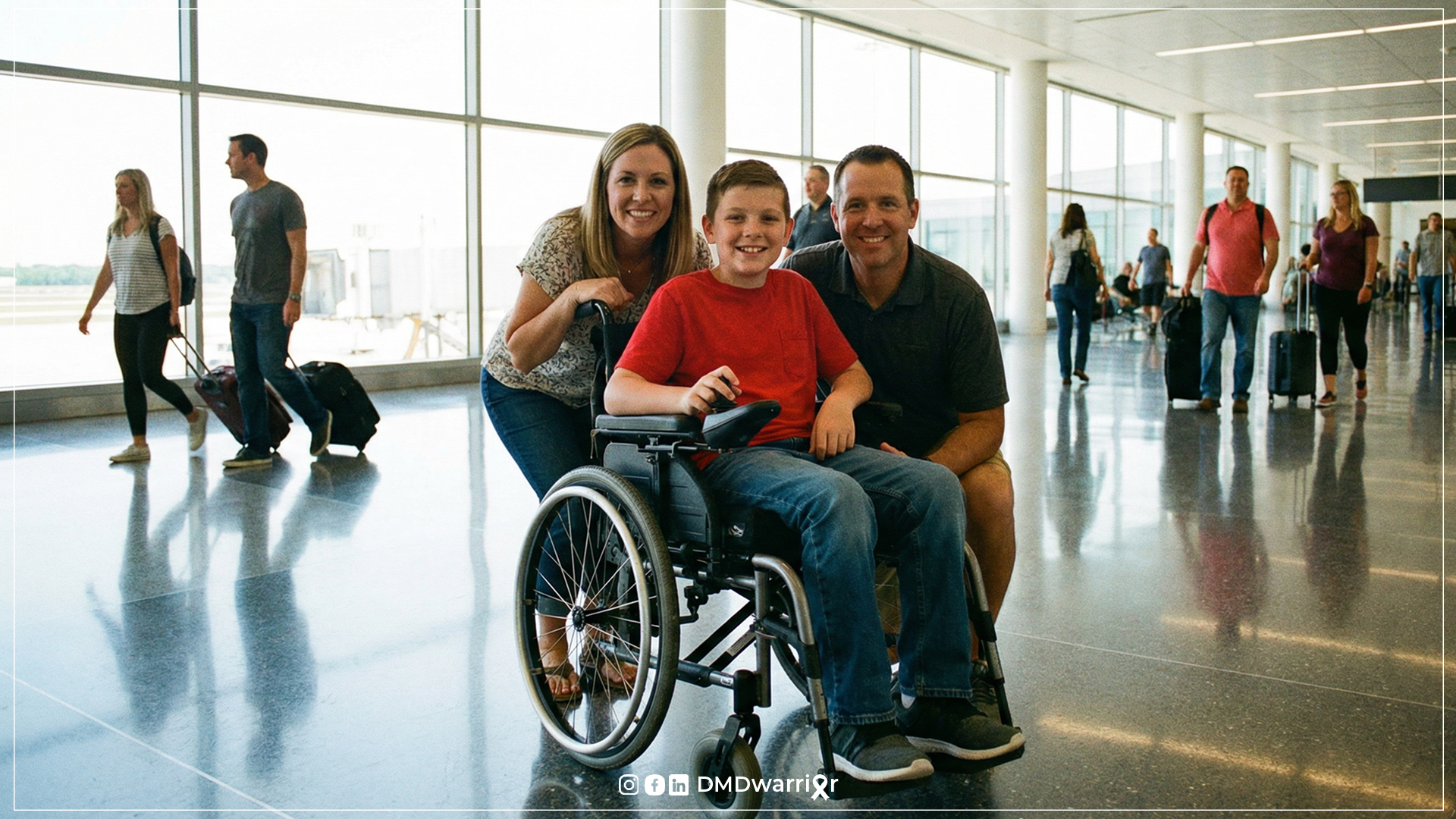
Duchenne Muscular Dystrophy travel requires thoughtful preparation, flexibility, and the right support to ensure a safe and enjoyable experience. For families traveling with Duchenne Muscular Dystrophy, every journey—whether by plane, train, car, or bus—comes with unique considerations, from mobility equipment to accessibility and medical planning. With the right approach and practical DMD travel tips, it’s possible to reduce stress and focus on making meaningful memories together. This guide to traveling with DMD will help you plan ahead, navigate common challenges, and feel confident wherever your destination may be.
Table of Contents
Flying With a Power Wheelchair
Air travel can be one of the most challenging modes of transportation for individuals with DMD, particularly those who rely on power wheelchairs. Here are the most important tips:
- Notify the Airline in Advance: Inform your airline at least 72 hours prior about your power wheelchair and any special assistance needs. Request wheelchair assistance for boarding, deplaning, and connections.
- Battery Type Considerations: Airlines have specific rules for lithium-ion batteries and must approve them for safe transport. Always check airline guidelines for battery size and type.
- Arrive Early: Allow extra time at the airport for security screening, boarding, and setup of assistive devices.
- Use Airline Equipment Only When Necessary: If your wheelchair can be partially disassembled, it may help with airline storage, but always ensure it’s protected with padding.
Traveling With Duchenne Muscular Dystrophy by Bus, Car, and Train
Different modes of ground transportation require their own strategies:

- Car Travel: Ensure seatbelts accommodate your body and wheelchair. Portable ramps or adaptive vehicles can increase safety and comfort. Frequent rest stops are essential.
- Bus Travel: Contact bus operators in advance to confirm wheelchair-accessible vehicles and seating. Some buses may not have enough space for large power wheelchairs.
- Train Travel: Many trains offer wheelchair spaces, accessible bathrooms, and priority boarding. Confirm accommodations before travel.
Things to Consider When Choosing a Hotel
Selecting an accessible hotel is crucial for a comfortable stay. Key factors include:
- Wheelchair Accessibility: Confirm ramps, elevators, wide doorways, and accessible bathrooms.
- Bed and Bathroom Setup: Ensure beds are at a comfortable height and bathrooms are wheelchair-friendly. Grab bars and roll-in showers may be necessary.
- Proximity to Attractions: Minimize the need for long commutes, especially if mobility is limited.
- Staff Training: Hotels familiar with accessibility needs can provide better service.
The Most Important Things to Take While Traveling
Packing effectively can make a huge difference for families traveling with DMD. Essential items include:
- Medical Equipment: Portable ventilators, suction devices, and spare wheelchair batteries.
- Medications: Ensure a full supply, plus a small backup in case of delays.
- Comfort Items: Pillows, blankets, and positioning supports for long trips.
- Documentation: Medical ID, prescriptions, and airline assistance forms.
Discover More: Looking for advice for my Grandson
FAQ: Traveling With Duchenne Muscular Dystrophy
Can someone with Duchenne Muscular Dystrophy fly safely?
Yes, with advance planning, notification to airlines, and proper preparation for power wheelchair transport.
How can I transport a power wheelchair on a plane?
Inform the airline in advance, follow battery restrictions, and consider protective padding. Assistance at airports is usually available.
Are trains and buses accessible for wheelchairs?
Many offer accessible services, but confirm in advance. Trains often provide more space than buses.
What should we consider when booking a hotel?
Accessibility features, proximity to attractions, and staff experience with mobility issues are key factors.
What are the most important items to pack for travel?
Medical equipment, medications, comfort items, and necessary documentation.
Are there travel insurance considerations for Duchenne Muscular Dystrophy?
Yes, choose policies that cover medical emergencies, equipment damage, and trip cancellations.
Final Thoughts
Traveling with Duchenne Muscular Dystrophy requires careful planning and preparation. Prioritizing accessibility for power wheelchairs makes flights and ground transport smoother. Choosing hotels with wheelchair-friendly facilities ensures comfort and safety. Packing essential medical equipment and medications prevents disruptions. Informing airlines, bus, or train operators in advance eases travel logistics. Frequent rest stops improve comfort on long journeys. Planning routes near attractions reduces stress and fatigue. Using expert tips for mobility and safety enhances the travel experience. Caregiver support is vital for smooth trips. With the right preparation, families can enjoy safe and memorable travel adventures.