

Learning disabilities in Duchenne muscular dystrophy represent a critical yet often overlooked aspect of this complex genetic condition. Beyond progressive muscle weakness, many individuals with DMD experience significant cognitive and educational challenges, including Dyslexia (reading learning disorder), Dyscalculia (mathematics learning disorder), and Dysgraphia (disorder of written expression).
These learning difficulties are not secondary consequences of physical disability; rather, they are directly linked to the absence of dystrophin in the brain, particularly in regions responsible for memory, attention, and executive functioning. As a result, children with DMD frequently encounter educational challenges that affect reading, mathematics, writing, and overall educational performance.
This article provides a detailed, evidence-based exploration of learning disabilities in Duchenne muscular dystrophy, focusing on three major domains:

- Dyslexia (reading disorder)
- Dyscalculia (mathematics disorder)
- Dysgraphia (written expression disorder)
We will also examine underlying neurological mechanisms, clinical implications, intervention strategies, and educational accommodations.
Table of Contents
Understanding Learning Disabilities in Duchenne Muscular Dystrophy
Neurological Basis of Learning Disabilities in DMD
The dystrophin protein is not only essential for muscle integrity but also plays a critical role in the central nervous system. It is particularly expressed in:
- Hippocampus (memory processing)1
- Cerebral cortex (higher cognition)
- Cerebellum (coordination and cognitive timing)
In DMD, the absence of brain dystrophin isoforms (especially Dp140 and Dp71) has been strongly associated with:2
- Lower IQ scores (average ~85 vs. population mean 100)
- Impaired verbal memory
- Reduced working memory capacity
- Executive dysfunction
Learn More: Effects Isoform Deficiencies in Duchenne
Key Study:
- Pane found that up to 30–40 percent of boys with DMD exhibit learning disabilities. Learn More: Neuromuscular Disorders
Common Cognitive Features in DMD
Executive Function Deficits
Children with DMD often struggle with:
- Planning and organization
- Task initiation
- Cognitive flexibility
Attention and Behavioral Issues
Language and Memory Impairments
- Delayed language development
- Weak verbal short-term memory
- Difficulty processing complex instructions
Dyslexia (Reading Learning Disorder) in Duchenne Muscular Dystrophy
Dyslexia is one of the most frequently reported learning disabilities in DMD, affecting reading fluency, decoding, and comprehension.
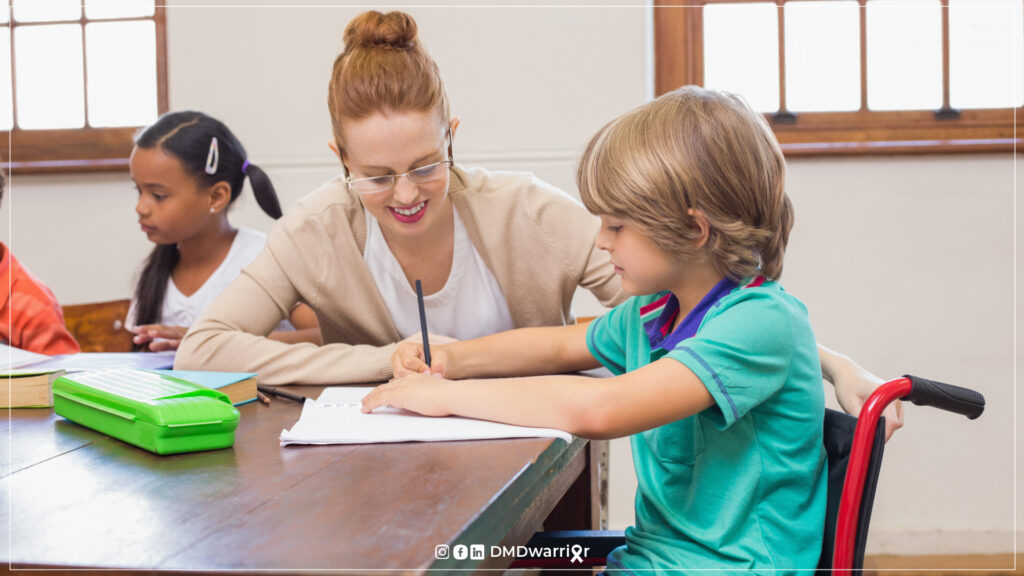
What is Dyslexia in the Context of DMD?
Dyslexia in DMD is primarily characterized by:
- Difficulty recognizing words5
- Poor phonological processing
- Slow reading speed
Unlike typical dyslexia, DMD-related dyslexia often coexists with working memory deficits and attention issues, making it more complex.
Phonological Processing Deficits
Research indicates that children with DMD have:
- Difficulty identifying and manipulating sounds6
- Reduced phonological awareness
- Challenges linking sounds to letters
Reading Fluency and Comprehension Challenges
Children may:
- Read slowly and inaccurately
- Struggle to retain information from text
- Avoid reading tasks due to frustration
These issues are often compounded by fatigue and reduced attention span.
Role of Working Memory in Reading Difficulties
Working memory deficits directly impact:
- Sentence comprehension
- Multi-step reading tasks
- Vocabulary acquisition
Educational Interventions for Dyslexia in DMD
Effective strategies include:
- Structured literacy programs (e.g., Orton-Gillingham approach)
- Multisensory reading techniques
- Assistive technologies (text-to-speech tools)
- Repetition and reinforcement
Dyscalculia (Mathematics Learning Disorder) in Duchenne Muscular Dystrophy
Mathematics-related difficulties are also highly prevalent in DMD and are often underdiagnosed.
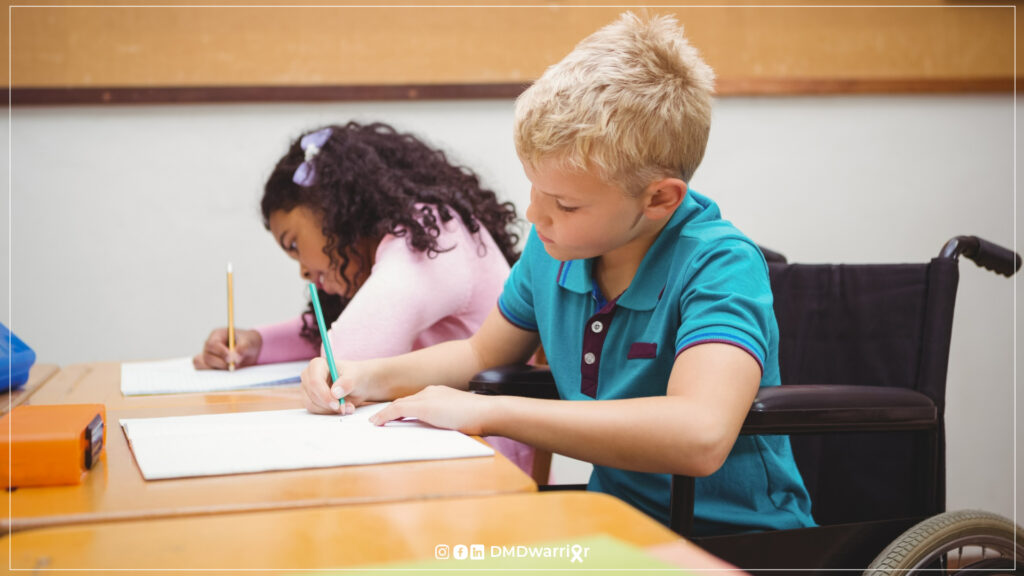
What is Dyscalculia in the Context of DMD?
Children with DMD may struggle with:
- Number sense
- Arithmetic operations
- Mathematical reasoning
Number Processing and Conceptual Understanding
Deficits include:
- Difficulty understanding numerical magnitude
- Trouble recognizing patterns
- Weak conceptual grasp of numbers
Working Memory and Math Performance
Mathematics heavily relies on working memory. In DMD:
- Children forget steps in calculations
- Struggle with mental arithmetic
- Have difficulty solving multi-step problems7
Visual-Spatial Challenges
Some individuals with DMD show:
- Difficulty aligning numbers
- Problems interpreting graphs and charts
Educational Support Strategies for Dyscalculia
Recommended approaches:
- Use of visual aids (number lines, diagrams)
- Breaking tasks into smaller steps
- Repetition and guided practice
- Use of calculators and assistive tools
Dysgraphia (Disorder of Written Expression) in Duchenne Muscular Dystrophy
Dysgraphia in DMD is particularly complex because it involves both motor and cognitive components.
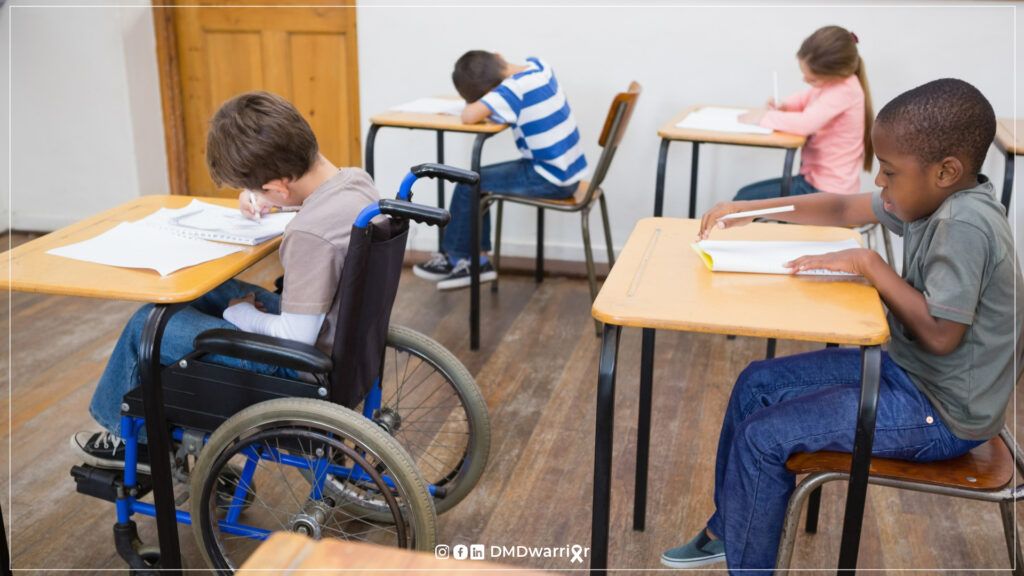
What is Dysgraphia in the Context of DMD?
Dysgraphia includes:
- Poor handwriting
- Difficulty organizing written thoughts
- Spelling errors
Motor vs. Cognitive Dysgraphia
In DMD, writing difficulties stem from:
- Motor impairment (muscle weakness affecting fine motor skills)
- Cognitive deficits (planning and organizing ideas)
Handwriting Challenges
Common issues:
- Slow writing speed
- Illegible handwriting
- Fatigue during writing tasks
Written Expression Difficulties
Children may:
- Struggle to structure sentences
- Have limited vocabulary expression
- Avoid writing assignments
Assistive Technology for Dysgraphia
Highly effective tools include:
- Speech-to-text software
- Keyboarding instead of handwriting
- Word prediction software
Comorbid Neurodevelopmental Conditions in DMD
ADHD in DMD
- Present in up to 30 percent of cases
- Impacts attention, impulse control, and educational performance
Autism Spectrum Traits
- Social communication difficulties
- Repetitive behaviors
Learn More: Autism Spectrum in DMD
Emotional and Behavioral Issues
- Anxiety and depression
- Social withdrawal
Diagnosis and Assessment of Learning Disabilities in DMD
Neuropsychological Evaluation
A comprehensive assessment should include:
- IQ testing
- Memory and attention tests
- Educational success tests
Early Screening Importance
Early identification allows:
- Timely intervention
- Improved educational outcomes
- Better quality of life
Educational Planning and Individualized Support
Individualized Education Programs (IEPs)
IEPs should address:
- Cognitive strengths and weaknesses
- Physical limitations
- Learning accommodations
Classroom Accommodations
Examples include:
- Extra time on tests
- Reduced workload
- Use of assistive technology
Multidisciplinary Approach
Effective care requires:
- Neurologists
- Psychologists
- Educators
- Speech therapists
Learn More: Multidisciplinary Neuromuscular Team in Duchenne
Long-Term Outcomes and Life Impact
Learning disabilities in DMD can affect:
- Educational success
- Employment opportunities
- Social integration
However, with appropriate support, many individuals:
- Complete higher education
- Develop strong adaptive skills
- Lead fulfilling lives
FAQ: Learning Disabilities in Duchenne Muscular Dystrophy
Do all children with Duchenne muscular dystrophy have learning disabilities?
No, not all children with DMD have learning disabilities, but they are significantly more common compared to the general population. Studies suggest that about 30–40 percent of boys with DMD experience specific learning difficulties, particularly in reading, attention, and memory. Even children with normal intelligence may still struggle with specific educational skills due to underlying cognitive processing differences.
What causes learning disabilities in Duchenne muscular dystrophy?
Learning disabilities in DMD are primarily caused by the absence of dystrophin in the brain, not just the muscles. This protein plays an important role in brain regions responsible for memory, attention, and learning. When certain dystrophin isoforms (such as Dp140 and Dp71) are missing, it can affect how the brain processes and stores information. Read More: Brain and Duchenne
At what age do learning difficulties appear in DMD?
Learning difficulties can appear early, often before school age. Delays in speech and language development may be one of the first signs. However, educational challenges usually become more noticeable during early primary school when reading, writing, and math skills are introduced.
Is dyslexia common in children with DMD?
Yes, dyslexia is relatively common in children with DMD. Many children experience difficulties with reading fluency, decoding words, and understanding written text. These challenges are often linked to phonological processing and working memory deficits.
How does DMD affect reading skills?
DMD can affect reading by impairing phonological awareness, verbal memory, and attention. Children may read slowly, struggle to recognize words, and have difficulty understanding what they read. These issues are not due to lack of effort but reflect neurological differences.
What is dyscalculia, and how does it affect children with DMD?
Dyscalculia is a learning disability that affects mathematical abilities. In children with DMD, it may present as difficulty understanding numbers, performing calculations, and solving math problems. These challenges are often related to working memory and executive function deficits.
Why do children with DMD struggle with math?
Math requires strong working memory, attention, and step-by-step reasoning—areas that are often affected in DMD. Children may forget calculation steps, struggle with mental math, and have difficulty understanding abstract numerical concepts.
What is dysgraphia in Duchenne muscular dystrophy?
Dysgraphia refers to difficulties with writing. In DMD, it can be caused by both muscle weakness (affecting fine motor skills) and cognitive challenges (affecting organization and expression). This makes writing physically tiring and mentally demanding.
Can physical weakness affect learning abilities?
Yes, but indirectly. While physical weakness does not cause learning disabilities, it can make tasks like writing more difficult and tiring. Fatigue may also reduce concentration, which can affect educational performance.
Are ADHD symptoms common in DMD?
Yes, ADHD-like symptoms are relatively common in children with DMD. These may include difficulty focusing, impulsivity, and hyperactivity. These symptoms can further impact learning and classroom behavior.
Can children with DMD have normal intelligence?
Yes, many children with DMD have intelligence within the normal range. However, even with normal IQ, they may still experience specific learning disabilities that affect educational performance.
How are learning disabilities diagnosed in DMD?
Diagnosis typically involves a comprehensive neuropsychological evaluation. This includes tests for intelligence, memory, attention, language, and educational skills. Early assessment is important for identifying specific challenges and planning support.
What kind of school support does a child with DMD need?
Children with DMD often benefit from individualized education plans (IEPs), which may include extra time for tasks, reduced workload, assistive technology, and specialized teaching methods tailored to their needs.
What teaching strategies work best for children with DMD?
Effective strategies include:
• Multisensory learning approaches
• Breaking tasks into smaller steps
• Repetition and reinforcement
• Use of visual aids and technology
These methods help compensate for memory and attention difficulties.
Can assistive technology help with learning disabilities in DMD?
Yes, assistive technology is highly beneficial. Tools such as text-to-speech, speech-to-text software, and digital note-taking can significantly improve learning and reduce physical strain.
Are learning disabilities in DMD progressive?
Learning disabilities themselves are not typically progressive in the same way as muscle weakness. However, educational challenges may become more noticeable as school demands increase with age.
Can early intervention improve outcomes?
Absolutely. Early identification and intervention can significantly improve educational performance, confidence, and long-term outcomes. Speech therapy, educational support, and targeted interventions are especially effective when started early.
Do children with DMD need special education schools?
Not necessarily. Many children with DMD can succeed in mainstream schools with the right support and accommodations. The decision depends on the individual child’s needs and the resources available.
How can parents support their child at home?
Parents can:
• Create structured routines
• Provide a quiet study environment
• Use educational apps and tools
• Work closely with teachers and specialists
Emotional support and encouragement are also critical.
What is the long-term outlook for children with DMD and learning disabilities?
With proper support, many individuals with DMD can achieve meaningful educational and personal goals. While challenges exist, early intervention, tailored education, and assistive technologies can greatly enhance independence and quality of life.
Final Thoughts
Learning disabilities in Duchenne muscular dystrophy require early recognition and targeted support. Dyslexia, dyscalculia, and dysgraphia can significantly affect educational progress. These challenges stem from brain involvement, not lack of effort. Early assessment improves outcomes. Individualized education plans are essential. Assistive technologies can enhance learning. Family and school collaboration is key. Evidence-based strategies make a measurable difference. With proper support, children can succeed education. Awareness remains critical for better long-term outcomes.
Sources and Academic References
- Cognitive dysfunction in Duchenne muscular dystrophy: a possible role for neuromodulatory immune molecules ↩︎
- Association Between Loss of Dp140 and Cognitive Impairment in Duchenne and Becker Dystrophies ↩︎
- Duchenne Muscular Dystrophy-Associated Neurobehavioral Difficulties: Insights from Clinical Practice ↩︎
- Duchenne muscular dystrophy: recent insights in brain related comorbidities ↩︎
- Improving the reading skills of young people with Duchenne muscular dystrophy in preparation for adulthood ↩︎
- Investigation of Poor Academic Achievement in Children with Duchenne Muscular Dystrophy ↩︎
- Cerebellar synapse properties and cerebellum-dependent motor and non-motor performance in Dp71-null mice ↩︎