
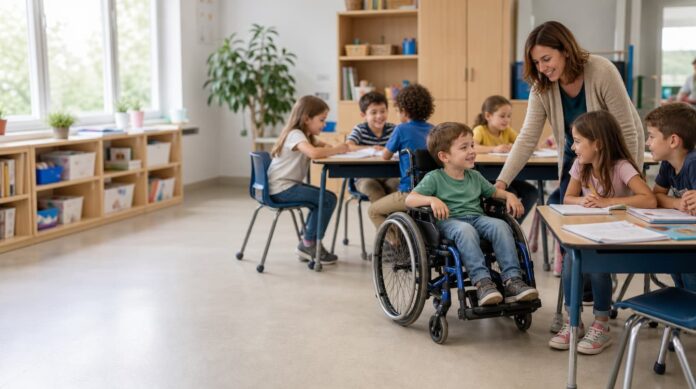
A well-structured guide to DMD for parents and teachers at school is essential for supporting children with Duchenne Muscular Dystrophy (DMD) in educational environments. DMD is a progressive neuromuscular condition that affects muscle strength, endurance, and sometimes cognitive functioning. These challenges directly influence how a child participates in school life—educationally, physically, and socially.
For this reason, school planning must go beyond standard educational approaches. It should integrate safety measures, educational adaptations, emotional support, and coordinated care. When families, teachers, and healthcare professionals work together effectively, children with DMD can thrive in school, maintain independence, and develop confidence in their abilities.
Do you have a student with DMD in your school? Here’s what you need to know.

Table of Contents
Understanding DMD in the School Setting
A Student with DMD Has Joined Your Classroom—What Should You Know?
You have just learned that a student in your classroom has Duchenne Muscular Dystrophy (DMD). This may feel unfamiliar at first, but with the right knowledge and approach, you can create a safe, supportive, and inclusive learning environment for that child.
DMD is a progressive condition that affects muscle strength, endurance, and sometimes attention or learning processes. This means that everyday school activities—such as walking between classes, writing, or participating in physical education—may require adjustments. However, with proper planning, children with DMD can actively participate in school life and achieve educational success.
This is where a structured guide to DMD for parents and teachers at school becomes essential. It helps educators understand not only the medical aspects of the condition but also the practical strategies needed to support the child effectively in a classroom setting.
By learning the basics of Duchenne muscular dystrophy and applying simple but thoughtful adaptations, teachers and school staff can make a meaningful difference in the child’s safety, confidence, and overall school experience. Read More: What is Duchenne?
Physical Accessibility and Safety
Physical accessibility is the foundation of an effective school experience for children with DMD. Without proper environmental adjustments, even simple daily activities can become exhausting or dangerous. This section outlines how schools can create a safe, supportive physical environment.
Classroom Location and Accessibility
The placement of the classroom plays a critical role in reducing fatigue and risk.
Ideally, classrooms should:
- Be located on the ground floor
- Be close to elevators if upper floors are unavoidable
- Minimize the need for long walking distances
Children with DMD expend significantly more energy during movement. Reducing unnecessary walking helps preserve energy for learning and participation.
Stair Safety and Movement Support
Stairs are one of the most challenging and risky elements in a school setting.
Key precautions include:
- Ensuring sturdy handrails are always available
- Encouraging slow, controlled movement
- Providing adult supervision if needed
Whenever possible, alternative options such as elevators or ramps should be prioritized to reduce physical strain.
Fall Prevention Strategies
Children with DMD have an increased risk of falling due to muscle weakness and balance issues.
To minimize this risk:
- Keep floors dry and non-slippery
- Remove unnecessary objects and clutter
- Ensure clear walking paths
- Use appropriate footwear
Even minor environmental hazards can lead to serious injuries, making prevention essential.
Safety During Recess and Transitions
Recess and class transitions often involve crowded, unpredictable environments.
To enhance safety:
- Avoid placing the child in high-density student areas
- Provide quiet or supervised zones
- Allow extra time for movement between classes
This helps prevent accidental collisions and reduces physical stress.
Accessible Restrooms and Facilities
Accessible restrooms are not optional—they are essential for independence and dignity.
Schools should ensure:
- Presence of grab bars
- Wide doorways for mobility aids
- Adequate space for maneuvering
These adjustments empower children to manage their needs safely and independently.
Importance of Spare Clothing and Orthopedic Footwear
Daily preparedness is an often overlooked but critical component of supporting children with DMD in school environments. Within a comprehensive guide to DMD for parents and teachers at school, attention to practical needs such as clothing and footwear can significantly improve comfort, safety, and independence throughout the day.
Spare Clothing: Comfort and Practical Preparedness
Children with DMD may experience increased fatigue, sweating, or occasional accidents during the school day. Having spare clothing available ensures that the child can remain comfortable and confident without unnecessary disruption.
Key benefits of keeping spare clothing at school include:
- Maintaining hygiene and comfort throughout the day
- Preventing discomfort due to sweating or spills
- Reducing anxiety related to unexpected situations
- Supporting uninterrupted participation in classroom activities
It is recommended that families provide a small, easily accessible bag with extra clothes, including a t-shirt, pants, and undergarments. Learn More: Stress and Anxiety in Duchenne
Orthopedic Footwear: Stability and Fall Prevention
Proper footwear plays a crucial role in mobility and safety. Orthopedic shoes are specifically designed to support posture, balance, and walking efficiency—key concerns in DMD.
The importance of orthopedic footwear includes:
- Improving balance and walking stability
- Reducing the risk of falls and injuries
- Supporting proper foot alignment and posture
- Enhancing overall mobility efficiency
Shoes should be:
- Non-slip
- Lightweight
- Easy to put on and remove
- Properly fitted to avoid pressure points
School Bag Weight and Load Management
Carrying excessive weight can place unnecessary strain on muscles that are already weakened in children with Duchenne Muscular Dystrophy (DMD). Within a well-structured guide to DMD for parents and teachers at school, managing the weight of school materials is an important yet often overlooked factor in protecting physical health and preventing fatigue.
Children with DMD should avoid carrying heavy school bags whenever possible. Even moderate weight can increase the risk of muscle overuse, fatigue, and loss of balance. For this reason, school bags should be kept as light as possible and tailored to the child’s daily needs.
To reduce physical strain, it is recommended that:
- Only the materials required for that specific day are brought to school
- Unnecessary books and supplies are removed from the bag
- Lightweight bags with ergonomic support are preferred
If the school provides storage options such as lockers or designated cabinets, these should be actively used. Keeping books and materials at school significantly reduces the need for carrying weight throughout the day.
Teachers and school staff should also support this process by planning lessons in a way that minimizes the number of materials students need to carry. Families can collaborate with schools to create a consistent system for organizing and storing materials.
A simple adjustment like reducing school bag weight, as emphasized in any effective guide to DMD for parents and teachers at school, can make a substantial difference in a child’s comfort, safety, and ability to participate fully in school activities.
Integration into Daily School Routine
Both spare clothing and appropriate footwear should be integrated into the child’s daily school plan. Teachers and staff should be aware of where these items are stored and when they may be needed.
A well-prepared environment, as emphasized in any effective guide to DMD for parents and teachers at school, ensures that small practical details contribute to a safer, more inclusive, and stress-free school experience.
Fatigue Management (Energy Conservation)
Fatigue is one of the most significant daily challenges in DMD. Effective energy management is crucial for maintaining both educational performance and physical well-being throughout the school day.
Understanding Fatigue in DMD
Fatigue in DMD is not typical tiredness. It results from muscle degeneration and reduced energy efficiency.
This means:
- Activities require more effort than usual
- Energy is depleted quickly
- Recovery takes longer
Recognizing this helps educators and parents set realistic expectations.
Structuring the School Day
The timing of activities has a direct impact on performance.
Best practices include:
- Scheduling demanding subjects in the morning
- Planning lighter activities in the afternoon
- Avoiding back-to-back physically demanding tasks
This approach ensures optimal use of available energy.
Incorporating Rest Breaks
Regular breaks are essential—not optional.
Effective strategies:
- Short breaks every 30–45 minutes
- Flexible rest opportunities when needed
- Access to a quiet resting area
These breaks help prevent exhaustion and improve concentration.
Managing Fatigue During Breaks and Recess
Ironically, break times can be more exhausting than classes.
To manage this:
- Encourage low-energy activities
- Avoid excessive running or standing
- Provide seating options
This ensures that breaks serve their intended purpose—recovery.
Adapting Physical Activities
Physical activity should be adjusted, not eliminated.
Appropriate modifications:
- Replace high-intensity exercises with low-impact alternatives
- Focus on flexibility and gentle movement
- Avoid competitive or strenuous activities
The goal is to maintain mobility without causing harm.
Educational Accommodations and Learning Support
Educational success for children with DMD depends on thoughtful adjustments that address both physical and cognitive challenges. This section provides practical strategies to support learning effectively.
Individualized Education Plans (IEP/BEP)
Every child with DMD has unique needs.
An effective plan should include:
- Educational goals tailored to ability
- Physical accommodations
- Cognitive and behavioral support
Individualized plans ensure that support is structured and consistent.
Writing Difficulties and Assistive Technology
Writing can be physically demanding due to muscle weakness.
Recommended solutions:
- Reduce excessive handwriting requirements
- Use tablets or laptops
- Implement speech-to-text tools
Teachers should be informed not to overload the student with written tasks.
Exam and Assessment Adaptations
Standard exams may not accurately reflect a child’s abilities.
Necessary adjustments:
- Extended time
- Alternative formats (oral exams, projects)
- Flexible testing conditions
These adaptations ensure fair evaluation.
Ergonomic Seating and Classroom Comfort
Sitting for long periods can cause discomfort and fatigue.
Improvements include:
- Adjustable chairs
- Proper back support
- Footrests if needed
Good posture reduces strain and improves focus.
Cognitive and Learning Considerations
Some children with DMD may experience:
- Attention difficulties
- Slower processing speed
- Language challenges
Support strategies:
- Use clear and simple instructions
- Provide visual aids
- Break tasks into smaller steps
Learn More: Learning Disabilities in Duchenne
Social Participation and Psychological Support
School is not only about educations—it is also a critical environment for social development. Emotional well-being must be actively supported.
Educating Peers About DMD
Awareness reduces misunderstanding and stigma.
Effective approaches:
- Age-appropriate explanations
- Open discussions about differences
- Encouraging empathy
This fosters a more inclusive classroom culture.
Encouraging Social Interaction
Children with DMD should be included in group activities.
Strategies:
- Assign adapted roles in group work
- Encourage peer collaboration
- Facilitate inclusive play
Preventing Social Exclusion
Isolation can negatively affect mental health.
To prevent this:
- Promote inclusive classroom activities
- Monitor peer interactions
- Encourage friendships
Psychological Support and Counseling
Emotional challenges such as anxiety or low self-esteem may arise.
Support includes:
- Access to a school psychologist
- Regular emotional check-ins
- Confidence-building activities
Addressing Bullying
Children with DMD may be vulnerable to bullying.
They should be taught:
- How to report incidents
- Who to seek help from
- Basic assertiveness skills
Schools must enforce clear anti-bullying policies.
Promoting Independence
Overprotection can limit development.
Encourage:
- Decision-making
- Self-expression
- Responsibility within safe limits
Health Monitoring and Emergency Planning
Health management is essential for ensuring safety and rapid response to potential issues during school hours.
Teacher Awareness and Training
Teachers should understand:
- Basic DMD characteristics
- Signs of fatigue
- Mobility limitations
Training improves confidence and response quality.
Emergency Response Planning
Schools must have clear protocols for:
- Falls
- Severe fatigue
- Breathing difficulties
Staff should know exactly what to do in each scenario.
Learn More: Emergency Care in Duchenne
Medication Awareness
Many children with DMD use medications such as corticosteroids.
Schools should be informed about:
- Dosage schedules
- Side effects
- Emergency considerations
Nutrition and School Cafeteria
Diet plays an important role in overall health.
Schools should:
- Be informed about restricted foods
- Provide appropriate alternatives
- Encourage hydration
Learn More: Best Foods and Nutrition for Duchenne
Family-School Communication
Consistent communication ensures continuity of care.
Recommended practices:
- Regular updates
- Shared observations
- Immediate reporting of concerns
Infection Prevention: Hand Hygiene and Avoiding Sick Peers
Infection prevention is a critical yet often underestimated aspect of daily school life for children with DMD. Within a well-structured guide to DMD for parents and teachers at school, proactive measures to reduce exposure to infections play a key role in protecting overall health and preventing complications.
Children with DMD may be more vulnerable to infections, especially if they are receiving corticosteroid treatment, which can suppress the immune system. For this reason, minimizing exposure to contagious illnesses in the school environment is essential.
Learn More: Infection in Duchenne
Avoiding Contact with Sick Students
Children with DMD should be encouraged to maintain a safe distance from classmates who are visibly ill or suspected of being unwell.
Practical strategies include:
- Avoiding close contact with students who show symptoms such as coughing, sneezing, or fever
- Informing teachers if a nearby student appears sick
- Adjusting seating arrangements when necessary
- Encouraging a classroom culture where illness is taken seriously
Teachers should also be proactive in identifying potentially sick students and minimizing exposure risks within the classroom.
Learn More: Vaccinations in Duchenne
Importance of Hand Hygiene
Proper hand hygiene is one of the most effective ways to prevent infections. Children with DMD should be guided and reminded to wash their hands regularly throughout the school day.
Key moments for handwashing include:
- After using the restroom
- Before eating
- After coughing, sneezing, or touching shared surfaces
- After returning from recess
Effective handwashing should involve soap and water for at least 20 seconds.
Ensuring Hygiene Supplies at School
Schools must provide essential hygiene materials in restrooms, including:
- Soap
- Paper towels or disposable drying materials
However, in cases where these supplies are not consistently available, families should consider providing personal hygiene kits for the child.
Recommended personal items include:
- A small bottle of liquid soap
- Disposable paper towels or tissues
- Hand sanitizer (when appropriate)
Having these items readily accessible ensures that hygiene practices can be maintained consistently.
Building Routine and Awareness
Infection prevention should be integrated into the child’s daily routine. Teachers, parents, and school staff should reinforce hygiene habits regularly and model appropriate behaviors.
As emphasized in any comprehensive guide to DMD for parents and teachers at school, simple preventive measures—such as hand hygiene and avoiding sick peers—can significantly reduce health risks and support uninterrupted school participation. Learn More: Infection in Duchenne
Physical Education and Safe Activity Participation
Physical activity remains important but must be carefully adapted.
Importance of Movement
Complete inactivity can accelerate muscle decline.
Safe movement helps:
- Maintain flexibility
- Prevent stiffness
- Support overall well-being
Recommended Activities
Suitable activities include:
- Stretching exercises
- Gentle movements
- Low-impact physical tasks
Activities to Avoid
Avoid:
- Running competitions
- High-impact sports
- Overexertion
Goals of Physical Activity
The goal is balance:
- Maintain mobility
- Avoid injury
- Support health
Communication and Team Collaboration
Collaboration is the backbone of effective support for children with DMD in school settings.
Multidisciplinary Team Approach
A successful approach includes:
- Parents
- Teachers
- Physiotherapists
- Doctors
Each plays a critical role.
Read More: Multidisciplinary Neuromuscular Team in Duchenne
Regular Meetings and Updates
Consistent communication ensures alignment.
This includes:
- Scheduled meetings
- Progress reviews
- Strategy adjustments
Assigning a School Coordinator
A designated contact person improves efficiency.
Responsibilities include:
- Coordinating communication
- Monitoring progress
- Managing updates
How Classmates Can Support a Student with DMD (Simple Do’s and Don’ts)
Having a classmate with Duchenne Muscular Dystrophy (DMD) means we all have a chance to be more understanding, kind, and supportive. DMD affects muscles, so some activities can be harder or more tiring—but your classmate is still just like you in many ways. The most important thing is to treat them with respect and help create a friendly, safe environment.
Below are simple and clear ways students can support their classmate.
What You Should Do ✅
- Be kind and include them
Invite your classmate to join games, group work, or conversations. - Treat them like everyone else
Don’t act differently or make them feel “separate.” - Ask before helping
It’s okay to help, but first ask: “Do you want help?” - Be patient
They may move slower or need more time—this is okay. - Support during activities
Choose games or roles that everyone can enjoy together. - Respect personal space and equipment
Don’t touch wheelchairs, braces, or devices without permission. - Speak normally and directly
Talk to your classmate, not about them. - Stand up for them
If you see teasing or bullying, tell a teacher or support your friend.
Things You Should Avoid ❌
- Don’t make fun or stare
Differences are normal—be respectful. - Don’t exclude them
Avoid leaving them out of games or group activities. - Don’t push or rush them
Moving quickly or being pushed can be unsafe. - Don’t assume they can’t do things
Everyone has abilities—let them try. - Don’t touch their belongings without asking
Especially mobility aids or medical devices.
Questions to Be Careful About ⚠️
It’s okay to be curious, but some questions can make your classmate uncomfortable.
- Avoid asking things like:
- “What’s wrong with you?”
- “Will you get worse?”
- “Why can’t you walk/run like us?”
- Instead, if you’re unsure, you can say:
👉 “Let me know if I can help.”
👉 “Do you want to join us?” - Remember:
👉 Your classmate may not want to talk about their illness—and that’s okay.
The Most Important Things You Should Do 💛
Being a good classmate means being:
- Kindness
- Respectful
- Inclusive
Small actions—like inviting someone to play, waiting for them, or simply being friendly—can make a big difference.
Everyone deserves to feel safe, included, and happy at school.
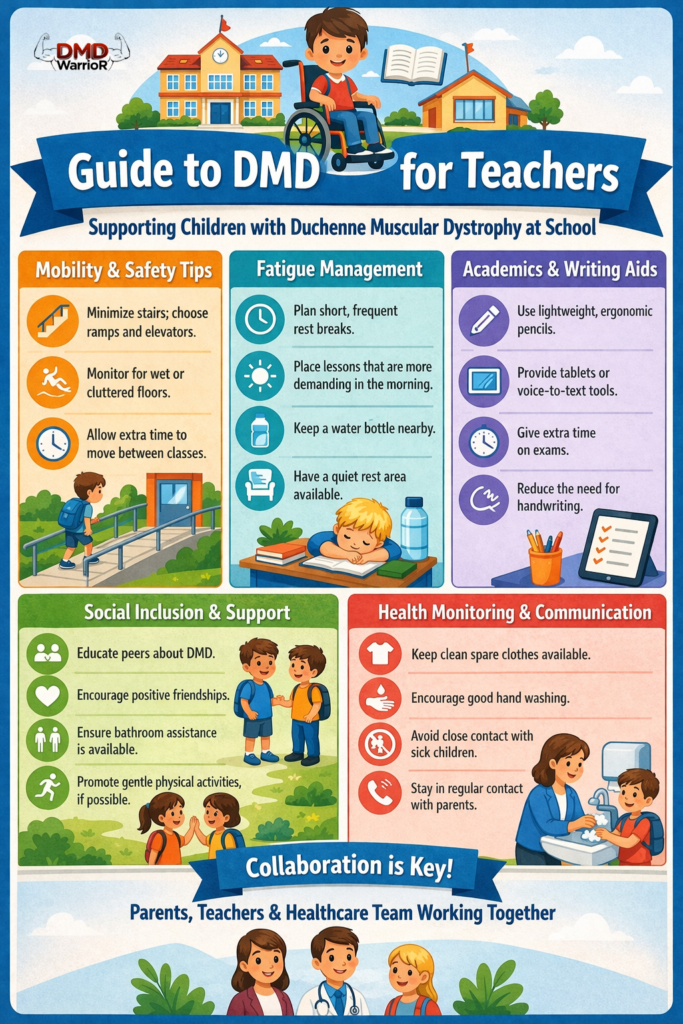
Frequently Asked Questions for Teachers of Students with DMD
Can children with DMD attend regular schools?
Yes, most children with DMD can attend regular schools with appropriate accommodations. Inclusive education is highly recommended, as it supports both educational development and social integration. With proper planning—such as accessible classrooms, educational adjustments, and fatigue management—students with DMD can successfully participate in mainstream education.
What are the main challenges for children with DMD at school?
The main challenges include physical fatigue, difficulty with mobility, writing limitations, and sometimes attention or learning difficulties. Additionally, social inclusion and emotional well-being can be affected. These challenges require a structured approach involving environmental adjustments and individualized support strategies.
Why is fatigue management important in DMD?
Fatigue management is critical because children with DMD experience rapid muscle exhaustion. Without proper energy conservation, they may struggle to complete tasks or participate in class. Structured rest breaks, balanced scheduling, and reduced physical demands help maintain both educational performance and overall well-being.
How can teachers support students with DMD in class?
Teachers can support students by adapting tasks, allowing extra time, reducing physical strain, and using assistive technologies. Clear instructions, flexible expectations, and regular monitoring of fatigue levels are also essential. A supportive teacher plays a key role in ensuring both educational success and emotional comfort.
What classroom adjustments are necessary for DMD?
Essential adjustments include ground-floor classrooms or elevator access, ergonomic seating, uncluttered spaces, and accessible restrooms. These changes reduce physical strain and improve safety. The goal is to create an environment where the child can move freely and safely.
Should children with DMD participate in physical education?
Yes, but activities must be adapted. Low-impact exercises such as stretching and gentle movement are recommended, while high-intensity or competitive sports should be avoided. The aim is to maintain mobility without causing muscle damage.
What educational accommodations are recommended?
Common accommodations include extended exam time, reduced writing requirements, use of computers or tablets, and alternative assessment methods. Individualized education plans (IEPs/BEPs) are highly beneficial in tailoring support to each child’s needs.
Do children with DMD have learning difficulties?
Some children with DMD may experience attention deficits, slower processing speed, or language challenges. However, many have normal intelligence. With appropriate teaching strategies, they can achieve strong educational outcomes. Learn More: Orton-Gillingham Approach in Duchenne
How can writing difficulties be managed?
Writing difficulties can be managed by reducing handwriting demands and using assistive tools such as laptops or speech-to-text software. Teachers should prioritize content over the physical act of writing.
How can schools prevent bullying of children with DMD?
Schools can prevent bullying by promoting awareness, fostering inclusive environments, and implementing strict anti-bullying policies. Teaching empathy and encouraging peer support are also effective strategies.
Why is peer awareness important?
Peer awareness helps classmates understand DMD, reducing stigma and encouraging inclusion. When students are informed, they are more likely to support their peers and create a positive social environment.
What should be included in an emergency plan?
An emergency plan should include clear steps for handling falls, severe fatigue, and breathing difficulties. Staff should know who to contact, what actions to take, and how to provide immediate support.
Are mobility aids necessary at school?
Mobility aids such as wheelchairs or walkers may become necessary as DMD progresses. They help conserve energy, increase independence, and improve safety during school activities.
How often should schools communicate with families?
Communication should be regular and ongoing. Daily or weekly updates can help monitor fatigue, educational progress, and any concerns. Strong communication ensures consistent support.
What role do parents play in school planning?
Parents provide essential insights into the child’s medical condition, energy levels, and needs. They collaborate with teachers and healthcare professionals to ensure appropriate accommodations are in place.
How can independence be encouraged in children with DMD?
Independence can be encouraged by allowing children to make decisions, participate in activities, and take responsibility within their limits. Avoiding overprotection is key to building confidence.
What dietary considerations should schools follow?
Schools should be aware of any dietary restrictions and ensure that appropriate food options are available. Balanced nutrition and proper hydration support overall health and energy levels.
Can children with DMD succeed educationally?
Yes, children with DMD can achieve strong educational success with the right support. Their intellectual abilities are often unaffected, and with proper accommodations, they can reach their full potential.
What is the most important factor for success at school?
The most important factor is collaboration. When parents, teachers, and healthcare professionals work together, children with DMD receive consistent, effective support that enables them to thrive educationally and socially.
Is DMD contagious?
No, DMD is not contagious. It cannot be caught from another person.
Please also review this document: Advice for teachers
Final Thoughts
A comprehensive guide to DMD for parents and teachers at school must balance safety, educational support, and emotional well-being. With thoughtful planning and collaboration, children with Duchenne Muscular Dystrophy can fully participate in school life and achieve meaningful success.
The key lies in understanding individual needs, adapting the environment, and maintaining open communication between all stakeholders. When these elements come together, school becomes not just accessible—but empowering.
Discover More: Complete Care Guidelines for DMD
Academic Sources and References
- Birnkrant DJ, Bushby K, Bann CM, et al. Diagnosis and management of Duchenne muscular dystrophy, Part 1–3. The Lancet Neurology, 2018.
- Bushby K, Finkel R, Birnkrant DJ, et al. Diagnosis and management of Duchenne muscular dystrophy. The Lancet Neurology, 2010.
- Pane M, Lombardo ME, Alfieri P, et al. Attention deficit and cognitive function in Duchenne muscular dystrophy. Neuromuscular Disorders, 2012.
- Ricotti V, Ridout DA, Scott E, et al. Long-term benefits and adverse effects of corticosteroids in Duchenne muscular dystrophy. The Lancet Neurology, 2013.
- McDonald CM, Henricson EK, Han JJ, et al. The 6-minute walk test in Duchenne muscular dystrophy. Muscle & Nerve, 2010.
- Eagle M, Baudouin SV, Chandler C, et al. Survival in Duchenne muscular dystrophy. Neuromuscular Disorders, 2002.