

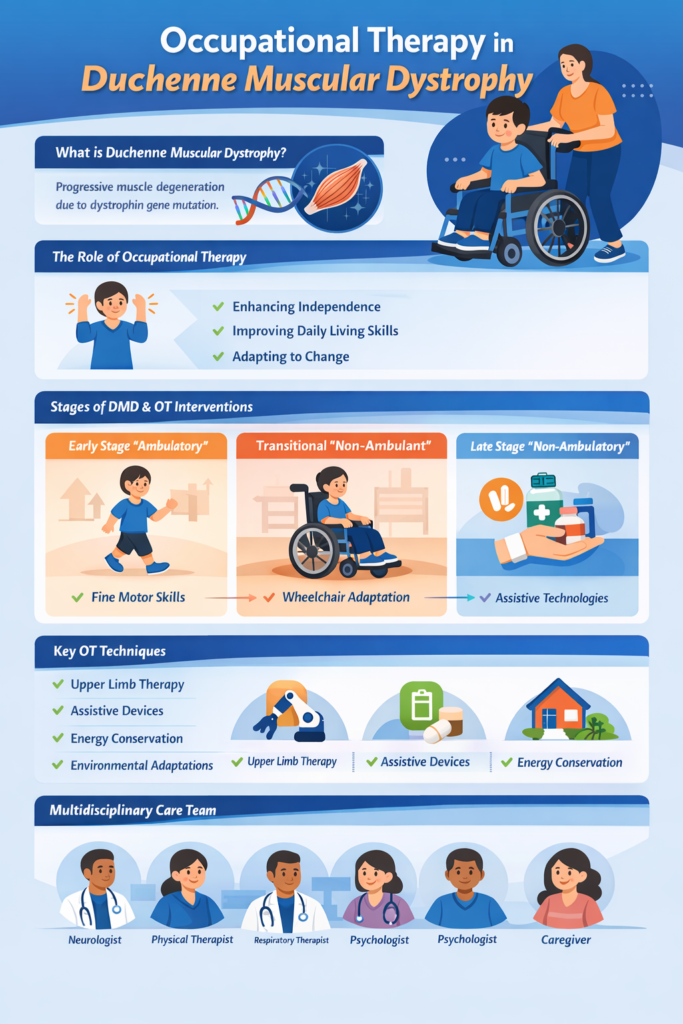
Occupational therapy in Duchenne muscular dystrophy (DMD) plays a critical role in preserving independence, improving quality of life, and supporting daily functioning for individuals affected by this progressive neuromuscular disorder. Duchenne muscular dystrophy (DMD) is characterized by gradual muscle degeneration, making everyday tasks increasingly challenging. Through personalized interventions, adaptive strategies, and assistive technologies, occupational therapy (OT for DMD, DMD rehabilitation therapy, and functional therapy in Duchenne) helps patients maintain autonomy for as long as possible.
This article provides a comprehensive, evidence-based exploration of occupational therapy in Duchenne muscular dystrophy, including its clinical importance, techniques, benefits, and evolving role in multidisciplinary care.
Table of Contents
What Is Duchenne Muscular Dystrophy?
Duchenne muscular dystrophy is a genetic disorder caused by mutations in the dystrophin gene, leading to progressive muscle weakness. It primarily affects boys and typically presents in early childhood. Read More: What is Duchenne?

Key Clinical Features
- Progressive proximal muscle weakness
- Loss of ambulation (usually by early adolescence)
- Cardiomyopathy and respiratory decline
- Functional limitations in daily living activities
As the disease progresses, the need for structured interventions like occupational therapy in Duchenne muscular dystrophy becomes increasingly essential.
The Role of Occupational Therapy in Duchenne Muscular Dystrophy
Core Objectives of Occupational Therapy
Occupational therapy in Duchenne muscular dystrophy focuses on enabling patients to participate in meaningful daily activities despite physical limitations. The primary goals include:
- Maintaining independence in Activities of Daily Living (ADLs)
- Preventing joint contractures and deformities
- Supporting upper limb function
- Enhancing participation in school, work, and social life
- Promoting psychological well-being
Occupational therapists tailor interventions to disease stage, ensuring that therapy evolves alongside patient needs.
Why Occupational Therapy Is Essential in DMD Management
Unlike curative treatments, occupational therapy addresses functional decline directly. In Duchenne muscular dystrophy, early intervention with OT has been shown to delay disability progression and improve life quality.
Evidence-Based Benefits
- Improved hand and upper limb function
- Delayed loss of independence
- Reduced caregiver burden
- Better adaptation to assistive technologies
A study published in Neuromuscular Disorders Journal (Bushby et al., 2010) emphasizes that early rehabilitation strategies, including OT, significantly enhance long-term outcomes.

Stages of Duchenne Muscular Dystrophy and Occupational Therapy Interventions
Early Stage (Ambulatory Phase)
During early stages, children can still walk but may show signs of weakness.
OT Focus Areas
- Fine motor skill development
- Energy conservation techniques
- Adaptive play strategies
- Early ergonomic education
Occupational therapy in Duchenne muscular dystrophy at this stage aims to prolong independence and delay functional decline.
Transitional Stage (Loss of Ambulation)
As walking becomes difficult or impossible, therapy shifts focus.
Key Interventions
- Wheelchair adaptation and training
- Upper limb strengthening and positioning
- Environmental modifications at home and school
- Assistive device introduction
Late Stage (Non-Ambulatory Phase)
At advanced stages, patients require significant support.
OT Goals
- Maintaining residual hand function
- Preventing contractures
- Enhancing communication abilities
- Supporting caregiver strategies
Occupational therapy in Duchenne muscular dystrophy becomes highly specialized at this stage, integrating advanced assistive technologies.
Occupational Therapy Techniques Used in DMD
1. Upper Limb Rehabilitation
Maintaining arm and hand function is critical.
- Passive and active range-of-motion exercises
- Splinting to prevent deformities
- Task-specific training
2. Assistive Technology Integration
Modern OT heavily relies on assistive tools.
Examples
- Powered wheelchairs
- Robotic feeding devices
- Voice-activated systems
- Computer accessibility tools
A study in Developmental Medicine & Child Neurology (Pane et al., 2018) highlights the role of assistive technologies in improving independence in DMD patients.
3. Environmental Modifications
Adapting living spaces is essential.
- Accessible bathrooms
- Adjustable beds and desks
- Smart home systems
Occupational therapy in Duchenne muscular dystrophy ensures that environments evolve with patient needs.
4. Energy Conservation Techniques
Fatigue management is critical.
- Task simplification
- Scheduled rest periods
- Adaptive equipment use
5. Splinting and Positioning
Proper positioning prevents complications.
- Night splints for contracture prevention
- Custom seating systems
- Postural alignment strategies
Psychological and Social Impact of Occupational Therapy
Occupational therapy in Duchenne muscular dystrophy is not limited to physical care. It also addresses emotional and social dimensions.
Key Benefits
- Improved self-esteem
- Increased participation in social activities
- Reduced anxiety and depression
Research from The Lancet Neurology (Mercuri et al., 2019) emphasizes holistic care approaches, including psychosocial support.
Multidisciplinary Approach in DMD Care
Occupational therapy works best as part of a broader care team.
Team Members
- Neurologists
- Physiotherapists
- Respiratory therapists
- Cardiologists
- Psychologists
Occupational therapy in Duchenne muscular dystrophy integrates seamlessly with these disciplines to provide comprehensive care.
Learn More: Multidisciplinary Team in Duchenne
Occupational Therapy and Emerging Treatments
With advances in gene therapy and exon-skipping treatments, the role of OT is evolving.
Key Considerations
- Supporting functional gains from new therapies
- Adapting rehabilitation goals
- Monitoring long-term outcomes
Even with medical breakthroughs, occupational therapy in Duchenne muscular dystrophy remains indispensable.
Challenges in Occupational Therapy for DMD
Common Barriers
- Limited access to specialized therapists
- High cost of assistive devices
- Lack of awareness in some regions
Addressing these barriers is crucial for improving global DMD care.
Future Directions in Occupational Therapy for DMD
Innovations
- AI-driven assistive devices
- Robotic rehabilitation
- Tele-rehabilitation platforms
These advancements will redefine occupational therapy in Duchenne muscular dystrophy in the coming years.
Practical Tips for Families and Caregivers
- Start occupational therapy early
- Regularly reassess therapy goals
- Invest in adaptive technologies
- Collaborate with healthcare teams
FAQ: Occupational Therapy in Duchenne Muscular Dystrophy
What does occupational therapy do for Duchenne muscular dystrophy?
Occupational therapy in Duchenne muscular dystrophy helps individuals maintain independence in daily activities such as eating, dressing, writing, and using devices. It focuses on preserving upper limb function, preventing joint contractures, and introducing assistive technologies. Occupational therapists also adapt environments and teach energy conservation techniques, ensuring patients can participate in school, social life, and family routines despite progressive muscle weakness.
When should occupational therapy start in DMD?
Occupational therapy in Duchenne muscular dystrophy should begin as early as possible, ideally at the time of diagnosis. Early intervention allows therapists to establish baseline function, introduce preventive strategies, and delay complications such as stiffness and loss of mobility. Starting early also helps families learn how to support independence and adapt daily routines proactively rather than reactively.
How often should a child with DMD receive occupational therapy?
The frequency of occupational therapy in Duchenne muscular dystrophy depends on disease stage and individual needs. Typically, children benefit from sessions 1–2 times per week, combined with daily home-based exercises and routines. As the condition progresses, therapy may shift toward consultation, equipment adjustments, and caregiver training rather than intensive physical sessions.
Can occupational therapy slow the progression of Duchenne muscular dystrophy?
Occupational therapy in Duchenne muscular dystrophy does not stop the genetic progression of the disease, but it can significantly slow functional decline. By maintaining joint flexibility, supporting muscle use, and preventing secondary complications, OT helps extend independence and improve quality of life over time. It is a key component of comprehensive disease management.
What assistive devices are commonly used in DMD occupational therapy?
Occupational therapy in Duchenne muscular dystrophy often includes assistive devices such as powered wheelchairs, adaptive utensils, arm supports, communication devices, and voice-controlled technologies. These tools are selected based on the patient’s abilities and needs, helping them perform daily tasks more easily and safely while reducing caregiver burden.
How does occupational therapy help with daily living activities?
Occupational therapy in Duchenne muscular dystrophy focuses on optimizing Activities of Daily Living (ADLs) by teaching adaptive techniques and introducing supportive equipment. Therapists may modify how a child dresses, eats, or writes, ensuring tasks remain achievable. They also recommend environmental changes, such as accessible furniture and smart home tools, to improve independence.
Is occupational therapy different from physical therapy in DMD?
Yes, occupational therapy in Duchenne muscular dystrophy differs from physical therapy in its primary focus. While physical therapy targets strength, mobility, and gross motor skills, occupational therapy emphasizes functional independence, fine motor skills, and daily task performance. Both therapies are complementary and essential in a multidisciplinary care approach.
Can occupational therapy help in the later stages of DMD?
Occupational therapy in Duchenne muscular dystrophy remains highly valuable in later stages. It focuses on maintaining hand function, preventing deformities, improving comfort, and supporting communication. Therapists also guide caregivers on safe handling techniques and recommend advanced assistive technologies to maximize quality of life.
What role do caregivers play in occupational therapy for DMD?
Caregivers are central to the success of occupational therapy in Duchenne muscular dystrophy. Therapists train family members to implement daily routines, use assistive devices correctly, and monitor changes in function. Consistent caregiver involvement ensures that therapeutic strategies are applied effectively at home, enhancing long-term outcomes.
Is occupational therapy covered by insurance for DMD patients?
Coverage for occupational therapy in Duchenne muscular dystrophy varies by country and insurance provider. In many healthcare systems, OT is partially or fully covered when prescribed by a physician. However, access to specialized services and advanced assistive technologies may require additional funding, advocacy, or support from patient organizations.
Conclusion
Occupational therapy in Duchenne muscular dystrophy is a cornerstone of patient-centered care. It bridges the gap between medical treatment and daily living, ensuring that individuals with DMD can maintain dignity, independence, and quality of life for as long as possible. As therapies evolve, the importance of occupational therapy will only continue to grow, making it an essential component of comprehensive DMD management.
Read More: Hydrotherapy in Duchenne Muscular Dystrophy (DMD)