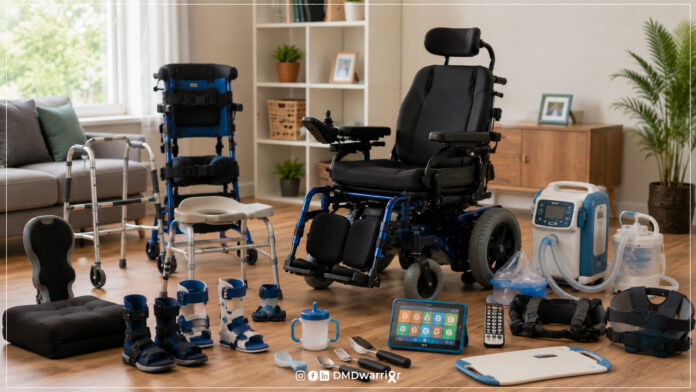
Age-based assistive devices for Duchenne muscular dystrophy (DMD) plays a critical role in preserving mobility, independence, respiratory health, posture, communication, and quality of life throughout every stage of Duchenne muscular dystrophy. Because DMD is a progressive neuromuscular disorder, the equipment needs of a child, teenager, or adult with Duchenne muscular dystrophy evolve over time. Early intervention with the right assistive devices can reduce complications, improve participation in school and community life, and support safer long-term care.
Modern Duchenne care standards emphasize anticipatory and multidisciplinary management. Rather than waiting until a child loses function, clinicians increasingly recommend introducing assistive devices proactively. Orthotic devices, standing systems, respiratory support tools, mobility aids, power wheelchairs, environmental controls, adaptive utensils, communication technologies, and home accessibility modifications all form part of a comprehensive age-based assistive devices for Duchenne muscular dystrophy strategy. According to the 2018 Duchenne care considerations published in The Lancet Neurology and endorsed by organizations such as the Muscular Dystrophy Association (MDA) and Parent Project Muscular Dystrophy (PPMD), assistive devices should be matched to the patient’s functional stage rather than age alone.
This guide explains which assistive devices may become necessary at different stages of Duchenne muscular dystrophy, why they matter, and how families can plan ahead.

Table of Contents
Duchenne muscular dystrophy assistive devices
Duchenne muscular dystrophy assistive devices encompass a broad range of tools designed to preserve function, comfort, safety, and participation. These devices can support walking, positioning, breathing, communication, feeding, school participation, and daily living activities.
The most effective age-based assistive devices for Duchenne muscular dystrophy programs are individualized. Two children of the same age may require very different support systems depending on steroid use, disease progression, upper-limb strength, contractures, scoliosis severity, and respiratory function.
The major categories of assistive devices in DMD include:
- Orthotic devices
- Mobility aids
- Standing equipment
- Respiratory support devices
- Communication technologies
- Seating and positioning systems
- Daily living aids
- Environmental control systems
- Bathroom and transfer equipment
- Home accessibility modifications
Research published in The Lancet Neurology emphasizes that assistive equipment should be introduced proactively to preserve independence and reduce secondary complications.
DMD mobility aids
DMD mobility aids are often introduced gradually as walking endurance decreases. In early ambulatory stages, many children with Duchenne muscular dystrophy can still walk independently but may struggle with long distances, stairs, fatigue, or falls.
At this stage, lightweight mobility aids can preserve energy and reduce injury risk. These may include:
- Lightweight manual wheelchairs for long outings
- Pediatric walkers
- Scooters for school or community mobility
- Portable transport chairs
According to Parent Project Muscular Dystrophy, introducing mobility aids before walking becomes unsafe can significantly improve quality of life and social participation.
As disease progression continues, mobility aids become more advanced. Children transitioning into late ambulatory or early non-ambulatory stages often require powered mobility solutions with advanced positioning systems.
Signs That a Child May Need Mobility Support
- Increased falls
- Difficulty climbing stairs
- Reduced walking endurance
- Fatigue during school activities
- Trouble keeping up with peers
- Pain from overexertion
Why Early Mobility Support Matters
Early mobility support can:
- Conserve energy
- Reduce fall-related injuries
- Preserve participation in social activities
- Improve school access
- Delay overuse fatigue
Assistive technology for Duchenne muscular dystrophy
Assistive technology for Duchenne muscular dystrophy extends beyond wheelchairs and braces. Modern assistive technologies allow individuals with DMD to maintain communication, education access, environmental control, and independence even after significant muscle weakness develops.
Common assistive technologies include:
- Voice-activated systems
- Eye-gaze communication devices
- Computer accessibility tools
- Adaptive gaming systems
- Smart home controls
- Electronic page turners
- Adaptive keyboards and mice
- Mounting systems for tablets and laptops
Assistive technology becomes especially important during teenage and adult years, when upper-limb weakness progresses.
School-Based Assistive Technology
Students with Duchenne muscular dystrophy may benefit from:
- Speech-to-text software
- Adjustable desks
- Adaptive writing tools
- Touchscreen devices
- Accessible transportation
Learn More: Guide to DMD for Parents and Teachers at School
Environmental Control Systems
Environmental controls allow individuals with DMD to independently operate:
- Lights
- Doors
- Televisions
- Thermostats
- Computers
- Smartphones
These systems improve independence and reduce caregiver burden.
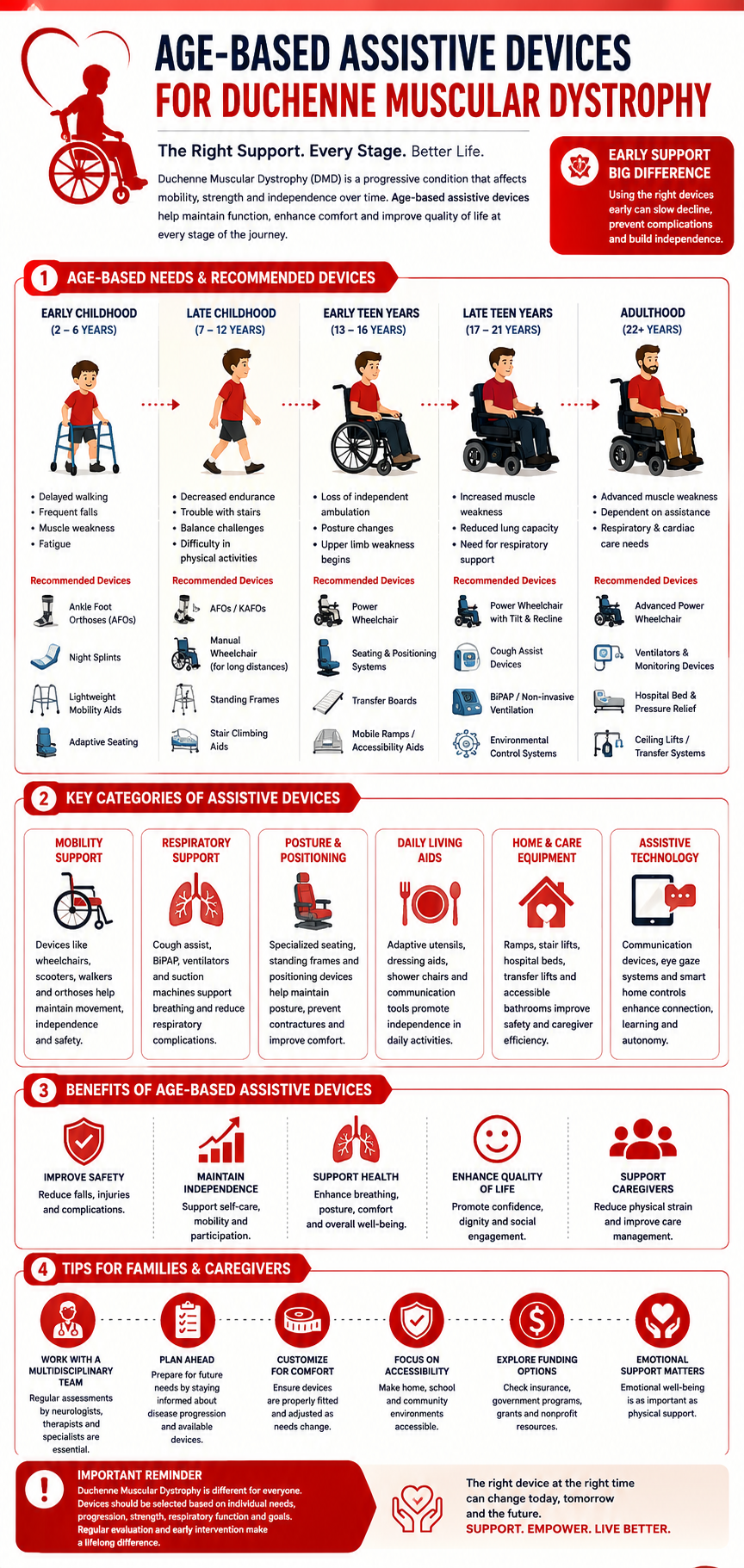
DMD support equipment by age
DMD support equipment by age is best understood as a functional progression.
Early Childhood (Ages 3–7)
During early childhood, most children remain ambulatory. Equipment goals focus on preserving range of motion, maintaining participation, and reducing fatigue.
Common devices include:
- Night splints
- Stretching orthoses
- Lightweight strollers
- Adaptive seating
- Bathroom safety supports
- School accessibility modifications
Middle Childhood (Ages 8–12)
As endurance declines, mobility support becomes increasingly important.
Typical devices may include:
- Scooters
- Manual wheelchairs
- Standing frames
- Adjustable seating systems
- Adaptive computer devices
- Bathroom transfer aids
Adolescence (Ages 13–18)
Many individuals transition to full-time wheelchair use during adolescence.
Equipment commonly needed includes:
- Power wheelchairs
- Pressure-relief cushions
- Respiratory support devices
- Hospital-style beds
- Transfer systems
- Environmental controls
Adulthood
Adult support systems often include:
- Advanced respiratory devices
- Ceiling lifts
- Specialized communication systems
- Complex seating systems
- Accessible home modifications
Adaptive equipment for Duchenne muscular dystrophy
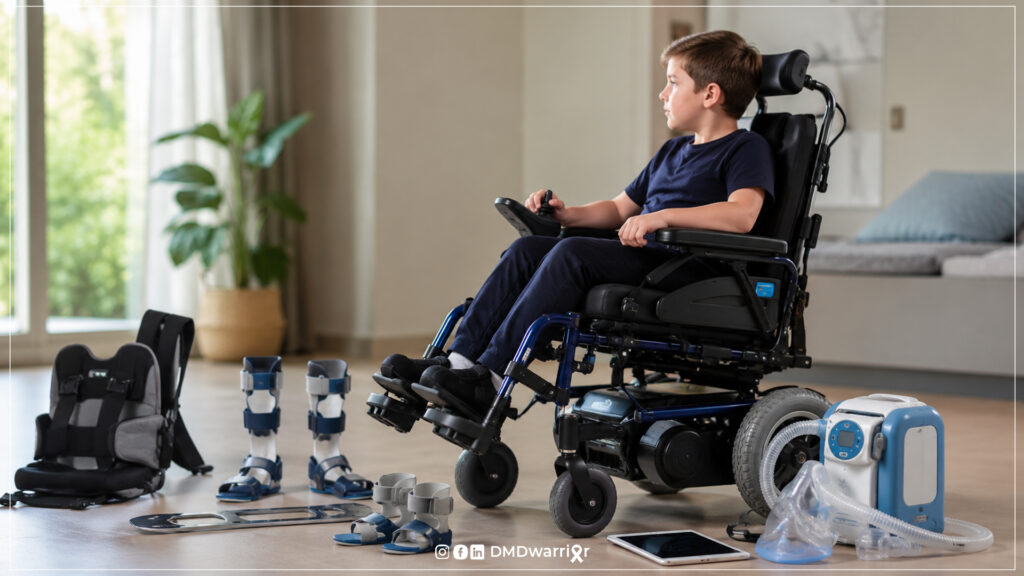
Adaptive equipment for Duchenne muscular dystrophy supports activities of daily living and improves independence.
These tools are often overlooked compared to wheelchairs or respiratory equipment, but they can dramatically improve quality of life.
Examples include:
- Adaptive utensils
- Dressing aids
- Shower chairs
- Toilet support rails
- Transfer boards
- Electric beds
- Pressure-relief mattresses
- Adaptive writing tools
Occupational therapists play a central role in selecting adaptive equipment appropriate for each functional stage.
Learn More: Occupational Therapy in Duchenne
Bathroom Adaptations
Bathroom safety is especially important in DMD because falls frequently occur during transfers.
Helpful devices include:
- Roll-in showers
- Shower commodes
- Grab bars
- Raised toilet seats
- Bidet systems
Feeding and Eating Supports
Upper-limb weakness may eventually interfere with feeding.
Adaptive feeding tools include:
- Angled utensils
- Lightweight cups
- Mobile arm supports
- Stabilizing plates
Duchenne muscular dystrophy wheelchair guide
In DMD, wheelchairs become comprehensive positioning and health-management systems.
Manual Wheelchairs
Manual wheelchairs may be appropriate for:
- Long-distance travel
- Temporary fatigue management
- Early mobility assistance
Power Wheelchairs
Power wheelchairs become increasingly important during adolescence.
Important features may include:
- Power tilt
- Power recline
- Elevating leg rests
- Standing functions
- Seat elevation
- Customized joystick systems
Custom Seating Systems
Custom seating systems can:
- Reduce scoliosis progression
- Improve comfort
- Prevent pressure injuries
- Improve respiratory positioning
Research from the CDC-supported Duchenne care considerations highlights the importance of customized seating in preserving posture and respiratory function.
Best mobility devices for DMD patients
The best mobility devices for DMD patients vary according to disease stage and individual goals.
Early Ambulatory Stage
Best devices may include:
- Lightweight strollers
- Portable scooters
- Adaptive bicycles
- Manual wheelchairs for distance
Late Ambulatory Stage
Recommended options may include:
- Power scooters
- Pediatric power wheelchairs
- Standing devices
Non-Ambulatory Stage
Best mobility solutions often include:
- Advanced power wheelchairs
- Positioning systems
- Ceiling lift systems
- Pressure management cushions
Choosing the Right Device
Important factors include:
- Growth
- School accessibility
- Transportation
- Home accessibility
- Caregiver support
- Respiratory status
Respiratory support devices for DMD
Respiratory support devices for DMD become increasingly important as respiratory muscle weakness progresses.
Respiratory decline is a major cause of complications in Duchenne muscular dystrophy. Proactive respiratory monitoring and early intervention can significantly improve survival and quality of life.
Common Respiratory Devices
- Cough assist devices
- Non-invasive ventilation (BiPAP)
- Pulse oximeters
- Suction machines
- Lung volume recruitment bags
- Nebulizers
When Respiratory Support Begins
According to the 2018 Duchenne care considerations, respiratory support may become necessary when pulmonary function tests decline below certain thresholds. Learn More: Breathing Exercises in Duchenne
Benefits of Early Respiratory Care
Early respiratory intervention can:
- Reduce hospitalizations
- Improve sleep quality
- Prevent respiratory infections
- Improve energy levels
- Extend survival
DMD power wheelchair recommendations
DMD power wheelchair recommendations should always prioritize long-term positioning, comfort, and independence.
Modern power wheelchairs can include sophisticated features that dramatically improve quality of life.
Important Power Wheelchair Features
- Tilt-in-space
- Recline systems
- Standing functionality
- Elevating seats
- Specialized controls
- Head supports
- Lateral trunk supports
Why Tilt and Recline Matter
These features help:
- Prevent pressure sores
- Improve circulation
- Reduce fatigue
- Support breathing
- Improve comfort during long sitting periods
Transportation Considerations
Families should also consider:
- Vehicle accessibility
- Portable ramps
- Lift systems
- School transportation
Orthotic devices for Duchenne muscular dystrophy
Orthotic devices for Duchenne muscular dystrophy help preserve joint range of motion and delay contractures.
Common Orthotic Devices
- Ankle-foot orthoses (AFOs)
- Night splints
- Knee-ankle-foot orthoses (KAFOs)
- Wrist splints
- Hand splints
Night Splints
Night splints are commonly prescribed to:
- Maintain ankle flexibility
- Reduce contracture progression
- Support stretching programs
Standing Orthoses
Some individuals may benefit from standing orthoses combined with standing frames.
Evidence and Research
Although clinical practice strongly supports orthotic use, research evidence remains limited in some areas. A Cochrane review noted insufficient randomized trials evaluating standing devices in Duchenne muscular dystrophy.
What equipment is needed at different stages of DMD
What equipment is needed at different stages of DMD depends on disease progression and functional decline.
Early Stage Equipment
- Stretching devices
- Adaptive seating
- Orthoses
- School accommodations
Middle Stage Equipment
- Scooters
- Standing frames
- Bathroom supports
- Manual wheelchairs
Advanced Stage Equipment
- Power wheelchairs
- Respiratory support devices
- Transfer lifts
- Communication technologies
- Hospital beds
Late-Stage Equipment
- Advanced ventilation systems
- Pressure-relief systems
- Full environmental controls
- Eye-gaze communication devices
Age-appropriate assistive devices for Duchenne muscular dystrophy
Age-appropriate assistive devices for Duchenne muscular dystrophy should align with developmental goals, educational participation, emotional well-being, and physical function.
A younger child may prefer lightweight and discreet devices that encourage peer interaction, while teenagers may prioritize independence and technology integration.
Psychological Considerations
Families sometimes delay equipment introduction because they fear it symbolizes disease progression.
However, proactive assistive support often:
- Preserves independence
- Reduces isolation
- Improves confidence
- Increases social participation
Read More: Psychological Support in DMD
Social Participation Benefits
Proper assistive equipment can improve:
- School attendance
- Friendships
- Community participation
- Recreational activities
When do DMD patients need a wheelchair
When do DMD patients need a wheelchair is one of the most frequently searched questions related to Duchenne muscular dystrophy.
The answer depends on functional decline rather than a specific age.
Common Signs That a Wheelchair May Be Needed
- Frequent falls
- Inability to walk long distances
- Severe fatigue
- Difficulty rising from the floor
- Increased dependence at school
Benefits of Earlier Transition
Transitioning earlier to a wheelchair may:
- Preserve energy
- Improve participation
- Reduce injury risk
- Improve emotional well-being
According to MDA guidance, many boys with Duchenne muscular dystrophy require wheelchairs during adolescence.
Duchenne muscular dystrophy home care equipment
Duchenne muscular dystrophy home care equipment helps families provide safer and more efficient daily care.
Bedroom Equipment
Helpful equipment includes:
- Adjustable beds
- Pressure-relief mattresses
- Ceiling lifts
- Positioning pillows
Bathroom Equipment
Important bathroom supports include:
- Roll-in showers
- Shower chairs
- Lift systems
- Toilet transfer aids
Accessibility Modifications
Common home modifications include:
- Ramps
- Widened doorways
- Accessible kitchens
- Stair lifts
Caregiver Safety
Home equipment can also reduce caregiver injuries related to lifting and transfers.
Best assistive devices for non-ambulatory DMD patients
The best assistive devices for non-ambulatory DMD patients focus on comfort, respiratory support, positioning, communication, and caregiver efficiency.
Essential Devices
- Power wheelchairs
- Pressure-relief cushions
- Ventilation systems
- Ceiling lifts
- Adjustable beds
- Environmental controls
Pressure Injury Prevention
Pressure management is critical in non-ambulatory stages.
Helpful interventions include:
- Tilt systems
- Specialized cushions
- Frequent repositioning
- Pressure-relief mattresses
Upper-Limb Support
As arm weakness progresses, individuals may benefit from:
- Mobile arm supports
- Adaptive computer systems
- Voice control technologies
DMD standing frames and orthoses
DMD standing frames and orthoses may help preserve posture, stretching tolerance, and bone health.
Types of Standing Devices
- Standing frames
- Standing wheelchairs
- Supine standers
- Sit-to-stand systems
Potential Benefits
Standing devices may:
- Promote stretching
- Support circulation
- Improve positioning
- Reduce prolonged sitting
Current Evidence
Although many clinicians support standing programs, high-quality clinical evidence remains limited.
The Cochrane review on standing devices in Duchenne muscular dystrophy concluded that more research is needed.
Respiratory care equipment for Duchenne patients
Respiratory care equipment for Duchenne patients should be integrated into long-term care planning.
Pulmonary Monitoring Tools
Important monitoring tools include:
- Pulse oximeters
- Spirometry testing
- Sleep studies
Airway Clearance Equipment
Airway clearance devices include:
- Mechanical insufflation-exsufflation devices
- Suction machines
- Assisted cough systems
Non-Invasive Ventilation
Non-invasive ventilation is commonly introduced when nighttime hypoventilation develops.
Benefits may include:
- Better sleep
- Improved daytime energy
- Reduced headaches
- Reduced respiratory complications
Duchenne muscular dystrophy daily living aids
Duchenne muscular dystrophy daily living aids support independence in self-care, communication, school participation, and recreation.
Common Daily Living Aids
- Adaptive utensils
- Writing aids
- Electronic feeders
- Dressing tools
- Accessible gaming systems
Educational Supports
Helpful educational devices may include:
- Speech recognition software
- Tablet mounts
- Adjustable desks
- Alternative keyboards
Recreational Accessibility
Adaptive recreational tools may include:
- Adaptive sports equipment
- Accessible gaming systems
- Modified bicycles
Assistive devices for teenagers with Duchenne muscular dystrophy
Assistive devices for teenagers with Duchenne muscular dystrophy often combine mobility, communication, respiratory support, and educational technology.
Teenage years are a major transition period because independence, education, and social participation become especially important.
School Accessibility
Teenagers may require:
- Accessible transportation
- Power wheelchairs
- Elevator access
- Adaptive computer systems
Communication Technologies
Communication supports may include:
- Voice-control systems
- Eye-gaze technology
- Adaptive tablets
Learn More: Learning Disabilities in DMD
Social Independence
Assistive technology can help teenagers maintain:
- Friendships
- Educational goals
- Gaming and recreation
- Online communication
Progressive mobility support in Duchenne muscular dystrophy
Progressive mobility support in Duchenne muscular dystrophy should evolve continuously with disease progression.
The goal is not simply preserving mobility. The broader goal is preserving participation, health, comfort, communication, and emotional well-being.
The Importance of Long-Term Planning
Families benefit from planning ahead for:
- Future wheelchair needs
- Home accessibility
- Respiratory support
- Transportation changes
- Educational accommodations
Multidisciplinary Care Teams
Optimal equipment management often involves:
- Neurologists
- Pulmonologists
- Physical therapists
- Occupational therapists
- Seating specialists
- Respiratory therapists
Learn More: Multidisciplinary Neuromuscular Team in Duchenne
Quality of Life Outcomes
Proper assistive support can improve:
- Independence
- Comfort
- School participation
- Respiratory health
- Social engagement
- Caregiver safety
FAQs: Age-Based Assistive Devices for Duchenne Muscular Dystrophy
What assistive devices are used in Duchenne muscular dystrophy?
Assistive devices used in Duchenne muscular dystrophy include orthoses, mobility scooters, manual wheelchairs, power wheelchairs, standing frames, cough assist devices, BiPAP machines, adaptive utensils, shower chairs, transfer lifts, and communication technologies. The recommended equipment depends on the patient’s age, mobility level, respiratory function, and daily living needs.
At what age do children with DMD usually need a wheelchair?
Many children with Duchenne muscular dystrophy begin using wheelchairs during late childhood or adolescence, although the exact age varies. Some children first use manual wheelchairs for long distances before transitioning to a power wheelchair when walking becomes unsafe, exhausting, or limited by falls and muscle weakness.
What is the best wheelchair for Duchenne muscular dystrophy?
The best wheelchair for Duchenne muscular dystrophy is usually a customized power wheelchair with tilt, recline, pressure relief, and positioning features. These wheelchairs improve comfort, posture, independence, respiratory support, and long-term mobility. Manual wheelchairs may still be useful for short-term or backup transportation.
When should respiratory support begin in DMD?
Respiratory support in Duchenne muscular dystrophy should begin when pulmonary function starts declining or symptoms such as poor sleep, fatigue, headaches, or weak cough appear. Many patients eventually require cough assist devices and non-invasive ventilation such as BiPAP to maintain respiratory health and reduce complications.
Are standing frames helpful for Duchenne muscular dystrophy?
Standing frames may help improve positioning, stretching tolerance, circulation, and comfort in Duchenne muscular dystrophy. They are commonly used during late ambulatory and early non-ambulatory stages. Although clinical evidence is still limited, many specialists recommend standing programs as part of comprehensive DMD care.
What equipment helps non-ambulatory DMD patients most?
Non-ambulatory DMD patients often benefit most from power wheelchairs, pressure-relief cushions, respiratory support systems, ceiling lifts, hospital-style beds, communication technologies, and environmental control systems. These devices improve comfort, safety, caregiver efficiency, and independence.
What home modifications are needed for Duchenne muscular dystrophy?
Common home modifications for Duchenne muscular dystrophy include wheelchair ramps, widened doorways, roll-in showers, stair lifts, ceiling lift systems, accessible bathrooms, and adjustable beds. These modifications help improve safety, accessibility, and caregiver support as mobility declines.
What are the best daily living aids for Duchenne muscular dystrophy?
The best daily living aids for Duchenne muscular dystrophy include adaptive utensils, dressing aids, shower chairs, transfer boards, tablet mounts, voice-control devices, and writing supports. These tools help individuals maintain independence in eating, grooming, communication, and education.
How do power wheelchairs help DMD patients?
Power wheelchairs help DMD patients maintain mobility, independence, posture, respiratory positioning, and social participation. Advanced features such as tilt, recline, standing functions, and seat elevation can reduce pressure injuries, improve comfort, and support daily activities.
What respiratory devices are commonly used in Duchenne muscular dystrophy?
Common respiratory devices used in Duchenne muscular dystrophy include cough assist machines, BiPAP devices, suction machines, pulse oximeters, nebulizers, and lung volume recruitment systems. These devices help clear airways, improve breathing, and reduce respiratory complications.
Which orthotic devices are used in Duchenne muscular dystrophy?
Orthotic devices commonly used in Duchenne muscular dystrophy include ankle-foot orthoses (AFOs), night splints, wrist splints, hand splints, and knee-ankle-foot orthoses (KAFOs). These devices help preserve joint flexibility, improve positioning, and reduce contractures.
How can assistive technology improve life with DMD?
Assistive technology can improve life with DMD by supporting communication, education, environmental control, and independence. Eye-gaze systems, speech-to-text software, adaptive gaming systems, and smart home devices allow individuals with Duchenne muscular dystrophy to remain active and connected.
What equipment is needed during the early stages of DMD?
During the early stages of Duchenne muscular dystrophy, common equipment may include night splints, lightweight mobility aids, adaptive seating, stretching devices, bathroom supports, and school accommodations. Early assistive support can help reduce fatigue and improve participation.
How often should assistive devices be updated in DMD?
Assistive devices for Duchenne muscular dystrophy should be reviewed regularly because the disease progresses over time. Equipment updates may be needed every few years or sooner depending on growth, posture changes, respiratory decline, and mobility needs. Regular evaluations by therapists and rehabilitation specialists are recommended.
Why is early assistive support important in Duchenne muscular dystrophy?
Early assistive support is important in Duchenne muscular dystrophy because it helps preserve mobility, reduce falls, improve posture, support breathing, and maintain independence longer. Proactive use of assistive devices can also improve school participation, comfort, emotional well-being, and overall quality of life.
Conclusion
Age-based assistive devices for Duchenne muscular dystrophy is essential for preserving independence, comfort, safety, respiratory health, and participation throughout every stage of Duchenne muscular dystrophy. From orthotic devices and mobility aids to respiratory support systems and advanced communication technologies, assistive devices should be introduced proactively and tailored to each individual’s functional needs.
Modern Duchenne care standards emphasize multidisciplinary planning and anticipatory intervention. Families who understand how assistive support evolves across childhood, adolescence, and adulthood are often better prepared to improve long-term quality of life and reduce preventable complications.
The best outcomes are typically achieved when mobility support, respiratory care, adaptive technology, environmental accessibility, and daily living aids are integrated into a coordinated long-term care strategy.
Academic Sources and References
- Birnkrant DJ, Bushby K, Bann CM, et al. Diagnosis and management of Duchenne muscular dystrophy, part 1: diagnosis, and neuromuscular, rehabilitation, endocrine, and gastrointestinal and nutritional management. The Lancet Neurology. 2018;17(3):251–267.
- Birnkrant DJ, Bushby K, Bann CM, et al. Diagnosis and management of Duchenne muscular dystrophy, part 2: respiratory, cardiac, bone health, and orthopaedic management. The Lancet Neurology. 2018;17(4):347–361.
- Bushby K, Finkel R, Birnkrant DJ, et al. Diagnosis and management of Duchenne muscular dystrophy: a multidisciplinary approach to care. The Lancet Neurology. 2010;9(1):77–93.
- Eagle M, Baudouin SV, Chandler C, Giddings DR, Bullock R, Bushby K. Survival in Duchenne muscular dystrophy: improvements in life expectancy since 1967. Neuromuscular Disorders. 2002;12(10):926–929.
- Finder JD, Birnkrant D, Carl J, et al. Respiratory care of the patient with Duchenne muscular dystrophy: ATS consensus statement. American Journal of Respiratory and Critical Care Medicine. 2004;170(4):456–465.
- McDonald CM, Henricson EK, Abresch RT, et al. The 6-minute walk test and other endpoints in Duchenne muscular dystrophy: longitudinal natural history observations. Muscle & Nerve. 2013;48(3):343–356.
- Koeks Z, Bladen CL, Salgado D, et al. Clinical outcomes in Duchenne muscular dystrophy: a study of 5345 patients from the TREAT-NMD DMD Global Database. Journal of Neuromuscular Diseases. 2017;4(4):293–306.
- Bushby K, Connor E. Clinical outcome measures for trials in Duchenne muscular dystrophy: report from International Working Group meetings. Clinical Investigation. 2011;1(9):1217–1235.
- Pane M, Mazzone ES, Sormani MP, et al. 6 minute walk test in Duchenne MD patients with different mutations: 12 month changes. PLoS ONE. 2014;9(1):e83400.
- Scully MA, Ciafaloni E, Eichinger K, et al. Respiratory management in Duchenne muscular dystrophy: current perspectives. Degenerative Neurological and Neuromuscular Disease. 2017;7:45–59.
- Almuklass AM, Davis CS, Henderson GC, et al. Physical therapy and rehabilitation care for Duchenne muscular dystrophy. Physical Medicine and Rehabilitation Clinics of North America. 2022;33(4):767–786.
- Rodger S, Woods K, Ziviani J. Occupational therapy with children with Duchenne muscular dystrophy: maintaining engagement and participation. Australian Occupational Therapy Journal. 2006;53(4):277–286.
- Klingels K, Mayhew AG, Mazzone ES, et al. Development of upper limb function in Duchenne muscular dystrophy. Developmental Medicine & Child Neurology. 2012;54(11):1036–1045.
- LoMauro A, D’Angelo MG, Aliverti A. Assessment and management of respiratory function in patients with Duchenne muscular dystrophy: current and emerging options. Therapeutics and Clinical Risk Management. 2015;11:1475–1488.
- Mayer OH, Finkel RS, Rummey C, et al. Characterization of pulmonary function in Duchenne muscular dystrophy. Pediatric Pulmonology. 2015;50(5):487–494.
- Bushby K, Muntoni F, Urtizberea JA, et al. Report on the 124th ENMC International Workshop: treatment of Duchenne muscular dystrophy. Neuromuscular Disorders. 2004;14(7):471–479.
- Humbertclaude VT, Hamroun D, Bezzou K, et al. Motor and respiratory heterogeneity in Duchenne patients: implication for clinical trials. European Journal of Paediatric Neurology. 2012;16(2):149–160.
- Passamano L, Taglia A, Palladino A, et al. Improvement of survival in Duchenne muscular dystrophy: retrospective analysis of 835 patients. Acta Myologica. 2012;31(2):121–125.