
Bone & joint health in Duchenne muscular dystrophy is a critical yet often under-recognized component of long-term disease management. As muscle degeneration progresses, skeletal complications such as osteoporosis, fractures, scoliosis, and contractures become increasingly prevalent. These complications are further exacerbated by corticosteroid therapy, reduced mobility, and nutritional deficiencies.
Effective bone and joint care in Duchenne muscular dystrophy requires a multidisciplinary approach involving neurologists, orthopedic specialists, endocrinologists, and rehabilitation teams. Early monitoring and intervention can significantly reduce fracture risk, preserve mobility, and improve quality of life.
Table of Contents
Understanding Bone Health in Duchenne Muscular Dystrophy
Why Bone Health Is Compromised
Patients with Duchenne muscular dystrophy often develop low bone mineral density due to multiple factors:

- Progressive muscle weakness reducing mechanical bone loading
- Long-term corticosteroid use
- Delayed puberty and hormonal imbalance
- Reduced physical activity
This leads to osteoporosis in Duchenne muscular dystrophy, a condition characterized by fragile bones and increased fracture susceptibility.
Steroid-Induced Osteoporosis in DMD
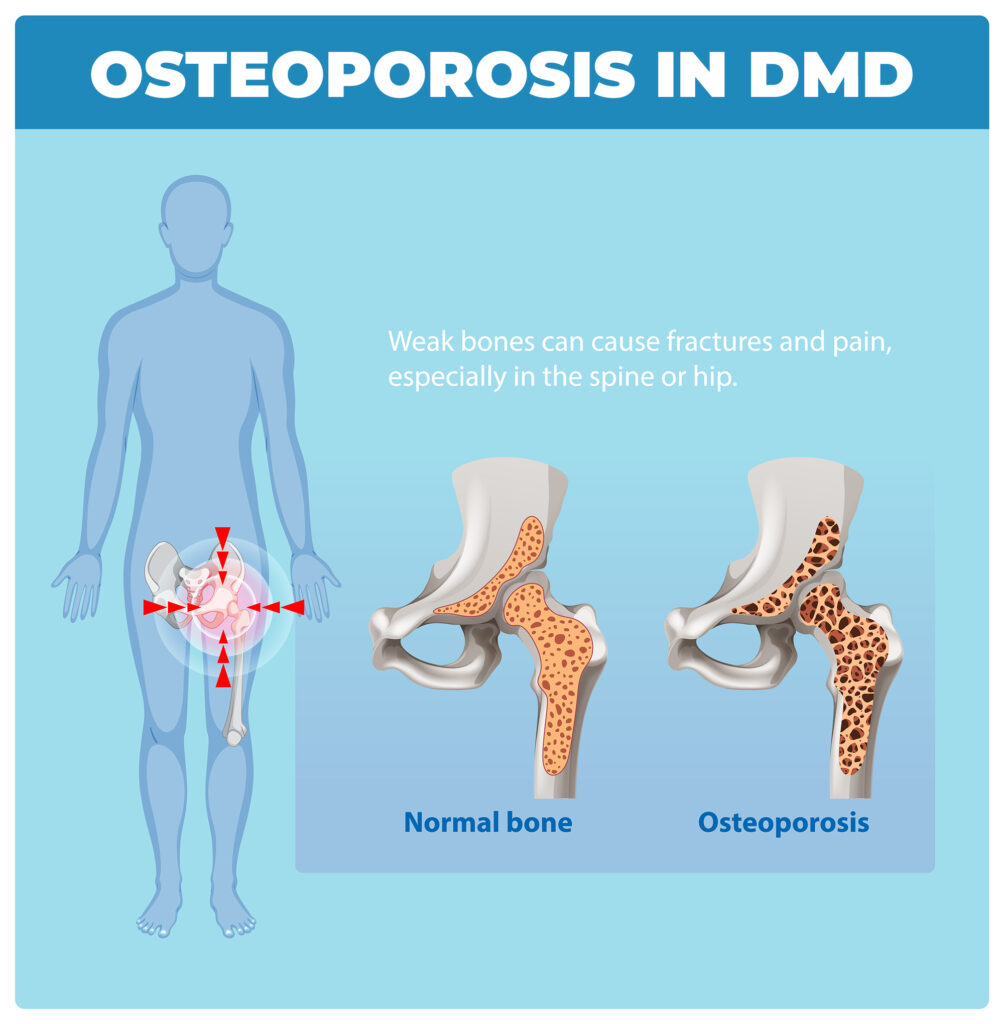
Corticosteroids such as prednisone and deflazacort are standard treatments in Duchenne. While they slow muscle degeneration, they significantly impact bone metabolism by:
- Decreasing calcium absorption
- Increasing bone resorption
- Suppressing osteoblast activity
This results in steroid-induced osteoporosis in DMD, making proactive bone monitoring essential. Read More: Steroids (Cortisone) for Duchenne
Bone Mineral Density and Monitoring
DEXA or DXA Scan for Status Bone Health
A DEXA (DXA) scan is the gold standard for evaluating bone mineral density in Duchenne muscular dystrophy. It:
- Quantifies bone density
- Identifies early osteoporosis
- Helps assess fracture risk
Recommended frequency:
- Annually after initiation of steroid therapy
- More frequently in high-risk patients
If DEXA access is limited, lateral spine X-rays should be prioritized.
Imaging and Laboratory Monitoring
Routine surveillance includes:
- Annual spinal X-rays during growth
- Lateral spine imaging every 1–2 years
- Blood tests for vitamin D (25-hydroxyvitamin D)
- Calcium and bone metabolism markers
These tools help detect vertebral compression fractures, often asymptomatic but clinically significant.
Fracture Risk in Duchenne Muscular Dystrophy Patients
Types of Fractures
Long Bone Fractures
- Common in femur and lower limbs
- Often occur after minor trauma
- Increased risk after loss of ambulation
Vertebral Compression Fractures
- Caused by weakened vertebrae
- May be silent or present with back pain
- Strongly associated with steroid use
Learn More: Bone Fractures in Duchenne
Fat Embolism Syndrome (FES)
Although rare, fat embolism syndrome is a life-threatening complication following fractures or trauma. Symptoms include:
- Sudden respiratory distress
- Confusion or neurological changes
Immediate medical attention is critical.
Learn More: Fat Embolism Syndrome in DMD
Prevention Strategies for Bone Health
Vitamin D and Calcium for Duchenne Muscular Dystrophy
Adequate intake of vitamin D and calcium is essential to:
- Improve bone mineralization
- Reduce fracture risk
- Support overall skeletal health
Clinical recommendations:
- Annual vitamin D level checks
- Supplementation as needed
- Diet rich in dairy, leafy greens, and fortified foods
Weight-Bearing and Physical Therapy
Weight-bearing activities (as tolerated) are crucial (such as walking and standing as tolerated; not to be confused with weight-lifting exercises) for maintaining bone strength:
- Standing programs
- Assisted walking
- Regular stretching (4–6 times per week)
Stretching helps prevent contractures in Duchenne muscular dystrophy, which limit joint mobility.
Fall Prevention and Safety Measures
Reducing fall risk is a key component of fracture prevention:
- Keep living spaces clutter-free
- Use appropriate footwear
- Utilize mobility aids when needed
- Ensure safe transfers for non-ambulatory patients
Keep in mild some falls cannot be prevented despite every effort you make.
Orthopedic Complications in Duchenne Muscular Dystrophy
Contractures and Scoliosis in Duchenne Muscular Dystrophy
Contractures
- Permanent shortening of muscles and tendons
- Common in ankles, knees, and hips
- Managed through stretching, splints, and positioning
Scoliosis
- Progressive spinal curvature
- Often develops after loss of ambulation
- Requires regular monitoring via imaging
Severe scoliosis may require surgical intervention.
Orthopedic Management in Duchenne Muscular Dystrophy
Fracture Management
Management depends on the patient’s ambulatory status:
- Surgical fixation preferred for ambulatory patients
- Casting may be used but risks muscle loss
Early mobilization is critical to preserve function.
Bisphosphonate Therapy for DMD Bone Health
Bisphosphonates are first-line treatments for osteoporosis in Duchenne muscular dystrophy.
Common Agents:
- Pamidronate
- Zoledronic acid
- Neridronate
Benefits:
- Increase bone mineral density
- Reduce fracture risk
- Improve vertebral integrity
Intravenous administration is generally more effective than oral therapy in pediatric populations.
Advanced Therapies (Emerging Options)
For adult patients or severe cases:
- Denosumab (reduces bone resorption)
- Teriparatide (stimulates bone formation)
These therapies are used selectively and require specialist oversight.
Multidisciplinary Approach to Care
Effective bone and joint care in Duchenne muscular dystrophy requires:
- Neuromuscular specialists
- Orthopedic surgeons
- Endocrinologists
- Physical therapists
- Dietitians
This coordinated care model improves outcomes and minimizes complications. Learn More: Multidisciplinary Neuromuscular Team in Duchenne
Key Takeaways
- Osteoporosis is highly prevalent in Duchenne muscular dystrophy
- Steroid therapy significantly impacts bone health
- Regular DEXA scans and imaging are essential
- Vitamin D and calcium supplementation is critical
- Early intervention reduces fracture risk and improves quality of life
FAQ: Bone & Joint Health in Duchenne Muscular Dystrophy
Why is bone health important in Duchenne muscular dystrophy?
Bone health is critical because weakened bones increase fracture risk, reduce mobility, and can lead to serious complications like spinal deformities.
How often should a DEXA scan be done?
Typically once a year after starting steroids, but frequency may increase depending on risk factors.
What causes osteoporosis in Duchenne muscular dystrophy?
It is caused by reduced mobility, steroid use, hormonal factors, and inadequate vitamin D and calcium levels.
Can fractures occur without major trauma?
Yes, especially after loss of ambulation. Even minor movements can cause fractures due to fragile bones.
What are the signs of vertebral fractures?
Back pain, posture changes, or sometimes no symptoms at all—making regular imaging essential.
How can fractures be prevented?
Through proper nutrition, vitamin supplementation, physical therapy, fall prevention, and regular monitoring.
What is the role of bisphosphonates?
They help increase bone density and significantly reduce fracture risk in patients with osteoporosis.
Are scoliosis and contractures preventable?
They can be delayed or minimized with early intervention, stretching, proper positioning, and monitoring.
What should families do after a fall?
Monitor for pain, swelling, or behavioral changes, and seek immediate medical care if symptoms arise.
Is multidisciplinary care necessary?
Yes, coordinated care significantly improves outcomes and helps manage complex complications effectively.
Final Thoughts
Bone & joint health in Duchenne muscular dystrophy is vital for long-term outcomes. Early monitoring helps detect risks. Regular DEXA or DXA scans guide timely care. Vitamin D and calcium support stronger bones. Steroid effects must be carefully managed. Preventing fractures preserves mobility. Physical therapy reduces contractures and stiffness. Orthopedic care addresses scoliosis effectively. Bisphosphonates can improve bone strength. A proactive, multidisciplinary approach improves quality of life.
Sources and Academic References
- Birnkrant DJ et al. Duchenne Muscular Dystrophy Care Considerations (2018) – Lancet Neurology
- Michelle A Farrar. Bone Health in Children with Duchenne Muscular Dystrophy: A Review
- Guiti Eghbali-Fatourechi. Bisphosphonate therapy in pediatric patients
- International DMD Care Guidelines (CDC-supported care standards)