
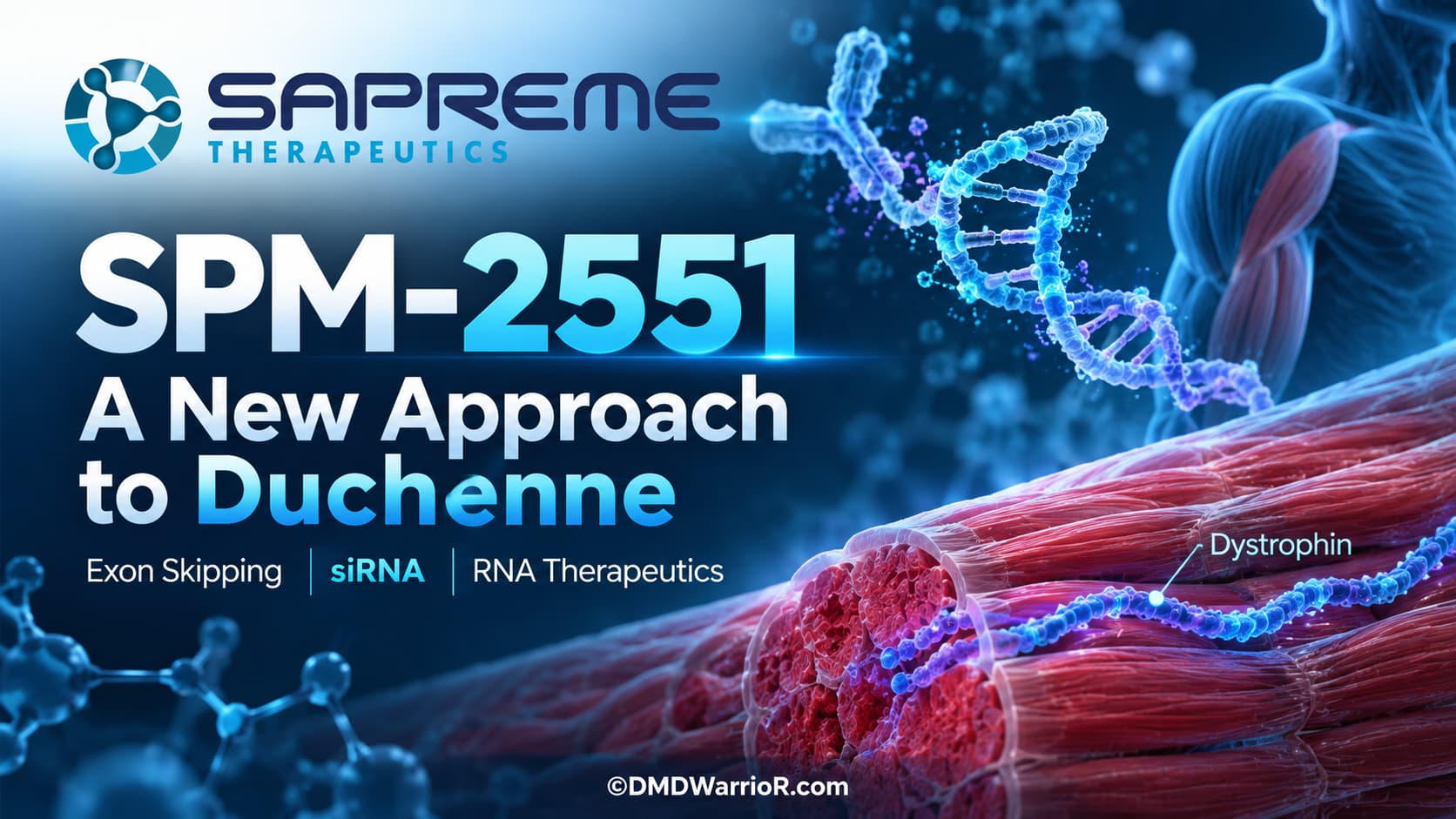
Sapreme Therapeutics has announced promising preclinical results for SPM-2551, an experimental treatment for Duchenne muscular dystrophy (Duchenne) that uses exon-skipping technology and RNA-based medicines, including antisense oligonucleotides (ASOs). The company presented the new findings at the 22nd Annual Meeting of the Oligonucleotide Therapeutics Society (OTS) 2026. The results showed substantial increases in dystrophin production following a single low dose in a preclinical Duchenne model.
Table of Contents
How Does SPM-2551 Work?
Duchenne is caused by genetic changes that prevent the body from producing enough functional dystrophin, a protein essential for maintaining muscle strength and structure.
SPM-2551 combines three components: an antibody that targets muscle tissue, an exon-skipping antisense oligonucleotide designed to help restore dystrophin production, and Sapreme’s proprietary SPT technology.
The SPT technology aims to solve a major challenge for RNA-based medicines. After entering a cell, these medicines can become trapped inside small structures called endosomes, preventing them from reaching their intended target. Sapreme’s technology is designed to help more of the medicine escape from these structures and work inside the cell.
Dystrophin Increased to More Than 35% and 55% of Normal Levels
The most notable findings came from a humanised Duchenne mouse model developed in the laboratories of Professor Annemieke Aartsma-Rus.
SPM-2551 achieved 5–10 times more exon skipping than the comparator oligonucleotides, even when using an antisense oligonucleotide dose approximately ten times lower.
The dystrophin results were particularly encouraging:
- At 1 mg/kg: Dystrophin reached more than 35% of normal levels.
- At 3 mg/kg: Dystrophin reached more than 55% of normal levels.
These results were measured 56 days after a single administration. The findings indicate that higher doses produced greater dystrophin restoration and that the effect was sustained over the observation period.
Sapreme has stated that its development goal is to restore dystrophin to more than 15% of normal levels. The reported preclinical results exceeded that target at both tested doses. However, these findings come from an animal model and do not establish how the treatment will perform in people.
When Will Human Trials Begin?
Sapreme is preparing for IND-enabling studies for SPM-2551 in 2027. These studies are intended to generate the data needed to support a potential application to begin clinical trials.
The company has not announced a specific date for the start of human trials. Its current plan is to advance the candidate toward clinical development, beginning with the necessary preclinical preparations.
What Do These Results Mean for Duchenne?
SPM-2551 has demonstrated substantial dystrophin restoration after a single low dose in a preclinical model. Its targeted delivery and endosomal escape technology may also help achieve effects with lower doses and potentially longer intervals between administrations.
The next important step will be determining whether these results can be reproduced safely and effectively in humans. Until clinical trials provide that evidence, SPM-2551 remains an investigational treatment, and its potential benefits for people living with Duchenne are not yet established.
Discover More: Duchenne Clinical Trial Locations Map