
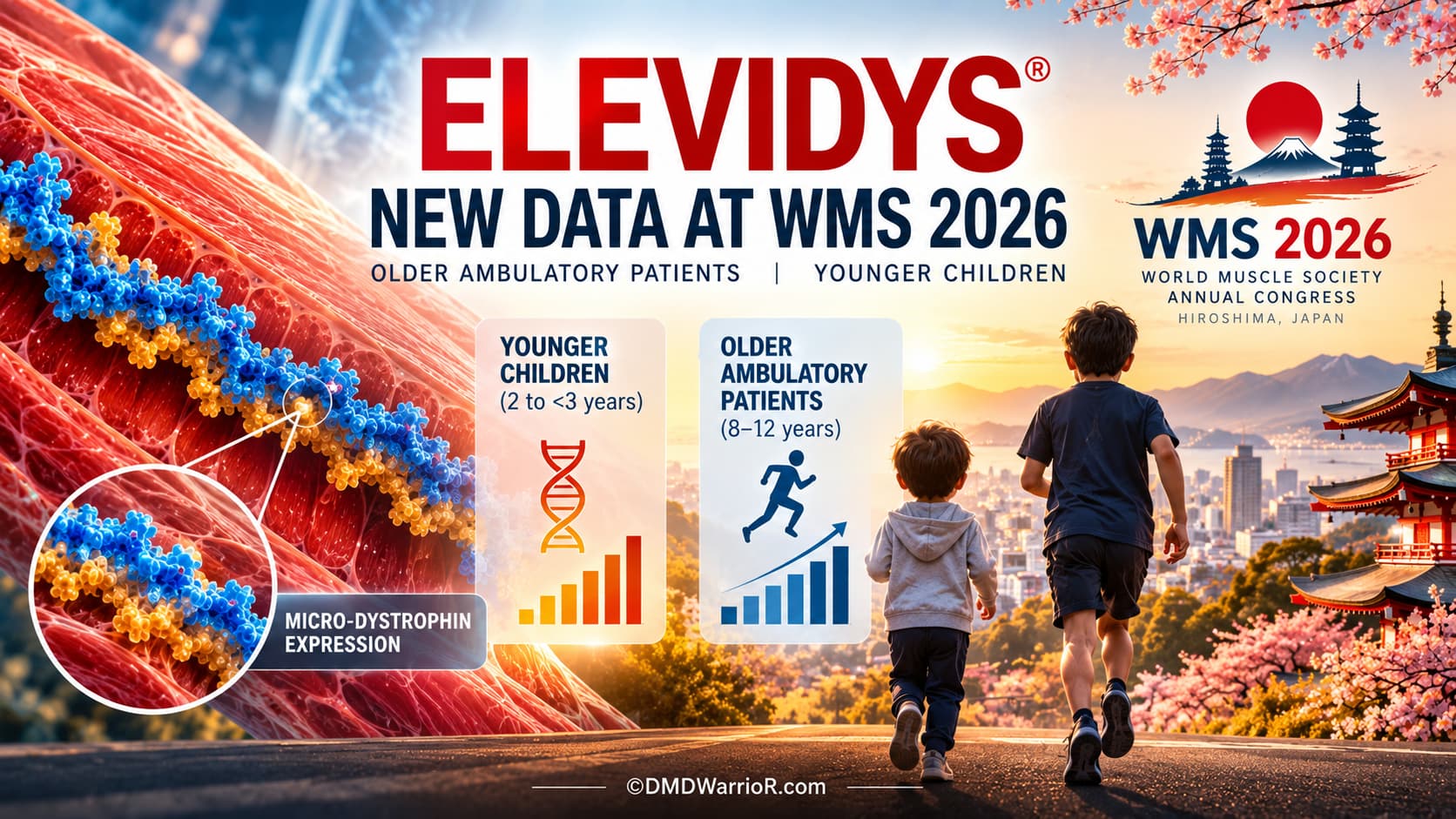
Sarepta Therapeutics has presented new data on ELEVIDYS (delandistrogene moxeparvovec) at the 2026 World Muscle Society Annual Congress in Hiroshima, Japan. The company reported functional results from older ambulatory patients with Duchenne muscular dystrophy (DMD), together with micro-dystrophin expression data from younger children. One important limitation is that the new analysis does not report CK, AST, or ALT results as measures of treatment effectiveness. ALT is mentioned in the context of the known risk of liver injury, but the release does not provide a new CK/AST/ALT efficacy dataset. Read More: NSAA Alone Is Not Enough
Functional Results in Patients Aged 8–12
The main new analysis focused on 25 patients with DMD who were between 8 and 12 years old when they received ELEVIDYS. These patients came from the EMBARK and ENDEAVOR studies and were compared with 99 patients from external natural-history datasets.
According to Sarepta, the external control group was selected and balanced using factors that can affect disease progression. The purpose was to create a more comparable group for evaluating functional outcomes after treatment.
Over two years, the ELEVIDYS-treated patients showed differences compared with the external control group across several functional measures.
The North Star Ambulatory Assessment (NSAA), a commonly used measure of motor function in ambulatory boys with DMD, showed a least-squares mean difference of 3.32 points compared with the external control group, with a reported P value of 0.0022. Learn More: What is NSAA?
The analysis also examined timed functional tests. The velocity of rising from the floor showed a difference of 0.041 rises per second, with a P value of 0.0019. For the 10-meter walk/run test, the difference in velocity was 0.195 meters per second, with a P value of 0.0114.
Sarepta reported that clinically meaningful differences were observed at both one and two years after treatment. The company described these results as evidence of a sustained treatment effect and slowing of functional decline in the 8–12-year-old ambulatory population.
However, these results come from an analysis using an external control group rather than a concurrent randomized placebo group. The company states that the groups were carefully matched, but continued follow-up remains important for understanding the longer-term effect of treatment.
Micro-Dystrophin Data in Younger Children
Sarepta also presented findings from children aged 2 to under 3 years who participated in the ENDEAVOR and ENVOL studies.
At 12 weeks after treatment, the analysis showed robust ELEVIDYS micro-dystrophin expression and localization in muscle cells. Six children from ENDEAVOR Cohort 6 and three children from ENVOL Cohort B were included in the analysis.
In the ENDEAVOR group, the mean vector genome copy number was 4.5 copies per nucleus, while Western blot results showed micro-dystrophin at 93.9% of control. The reported percentage of dystrophin-positive fibers was 79.9%.
In the ENVOL group, the corresponding results were 5.3 vector genome copies per nucleus, 72.8% of control by Western blot, and 64.7% dystrophin-positive fibers.
Sarepta reported that the overall mean and minimum micro-dystrophin expression in these very young patients was higher than previous results reported in older ambulatory and non-ambulatory patients. However, these children are still being followed to determine whether the biological expression of micro-dystrophin translates into measurable long-term functional benefits.
Safety Findings
For the 8–12-year-old ambulatory patients, Sarepta reported that the safety profile remained consistent with the known safety profile of ELEVIDYS. Nausea and vomiting were identified as the most common treatment-related adverse events in this analysis.
The company also stated that the safety findings in the younger children were manageable and consistent with the safety profile previously observed in ambulatory patients aged four years and older.
The distinction between biological expression and clinical outcomes remains important. Micro-dystrophin expression demonstrates that the treatment can produce the intended protein in muscle, while functional measures such as NSAA and timed tests provide information about how patients perform physically over time.
What the New Data Show
The 2026 WMS data expand the clinical evidence presented for ELEVIDYS across different ages and stages of ambulatory DMD. The older-patient analysis provides two-year functional data in patients aged 8–12, while the younger-patient analysis provides early evidence of micro-dystrophin expression in children aged 2 to under 3.
The results reported by Sarepta suggest that functional differences can be observed in older ambulatory patients compared with a well-matched external control group. At the same time, the younger-patient findings provide biological evidence of micro-dystrophin production shortly after treatment.
Longer-term follow-up will be important, particularly for the youngest children, because the 12-week expression results do not by themselves establish long-term functional benefit. Sarepta continues to follow these patients to collect additional clinical information.
It is also important to note that the use of ELEVIDYS in children under four years of age remains investigational and has not been evaluated by regulatory authorities. In the United States, the current FDA indication is for ambulatory patients aged four years and older with DMD and a confirmed DMD gene mutation.
Discover More: Duchenne Clinical Trial Locations Map