
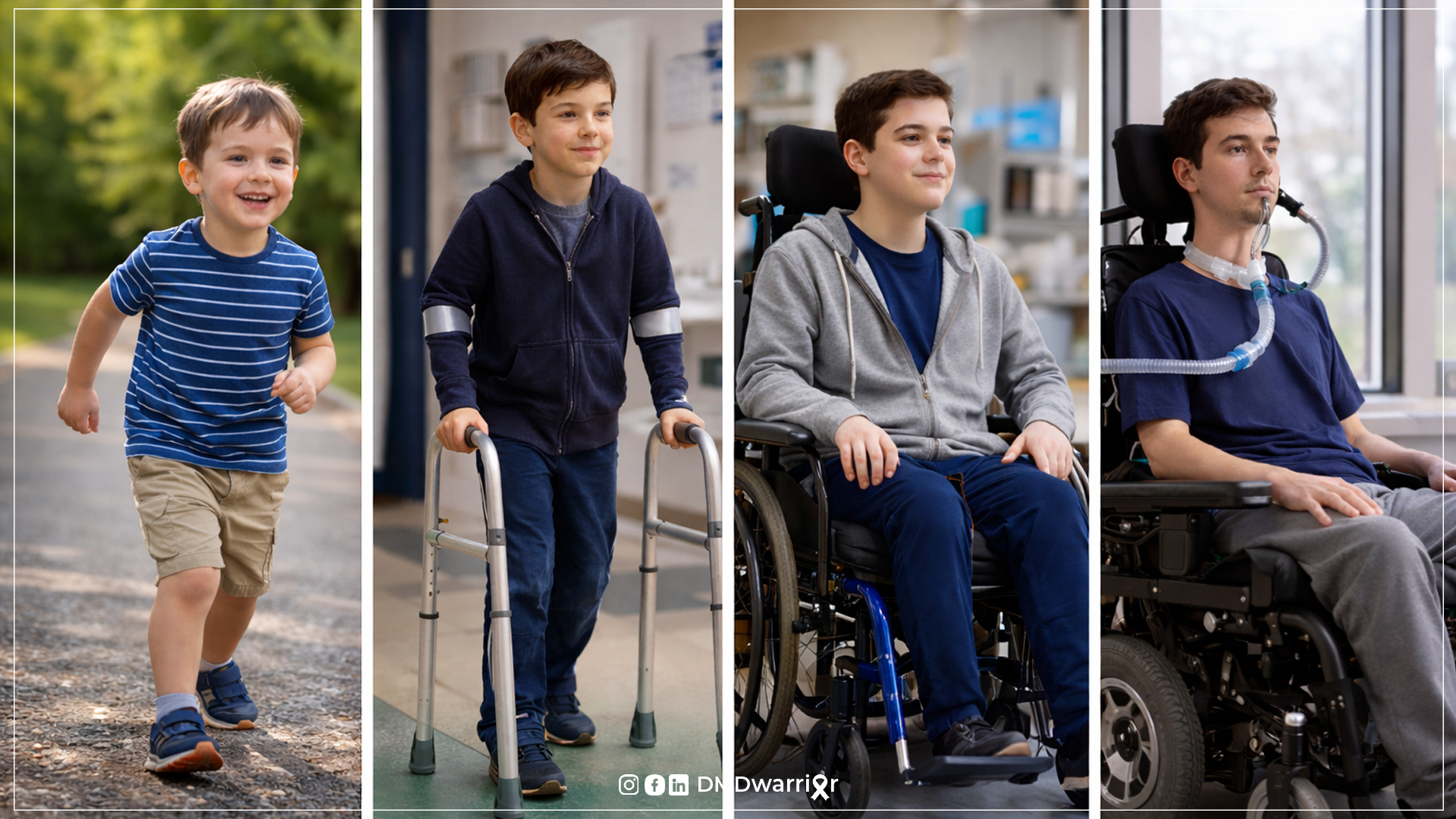
Age-Specific care considerations in Duchenne muscular dystrophy are central to optimizing outcomes in individuals living with Duchenne muscular dystrophy (DMD), a progressive, X-linked condition characterized by the absence of functional dystrophin protein. Because the disease trajectory evolves predictably—from early ambulatory childhood through late non-ambulatory adulthood—care must be anticipatory, stage-adapted, and multidisciplinary.
In this comprehensive guide, we will explore Age-Specific care considerations in Duchenne muscular dystrophy (DMD) across all major disease stages, integrating evidence-based clinical recommendations, practical caregiving strategies, and emerging therapeutic perspectives. The goal is to provide a structured, life-course approach that supports both medical decision-making and quality of life.
Table of Contents
Understanding Disease Progression: Why Age-Specific Care Matters
The rationale behind Age-Specific care considerations in Duchenne muscular dystrophy lies in the natural history of the disease. DMD typically presents in early childhood, progresses through loss of ambulation in adolescence, and evolves into complex cardiopulmonary involvement in adulthood. Read More: What is Duchenne?

Dystrophin deficiency leads to:
- Muscle fiber degeneration
- Chronic inflammation
- Fibrosis and fatty infiltration
- Progressive weakness across skeletal, cardiac, and respiratory muscles
Because each physiological system declines at different rates, Age-Specific care considerations in Duchenne muscular dystrophy must be tailored not only to chronological age but also to functional status.
International standards, such as those published in The Lancet Neurology, emphasize proactive rather than reactive care. Early intervention delays complications, while late-stage management focuses on preserving autonomy and prolonging survival.
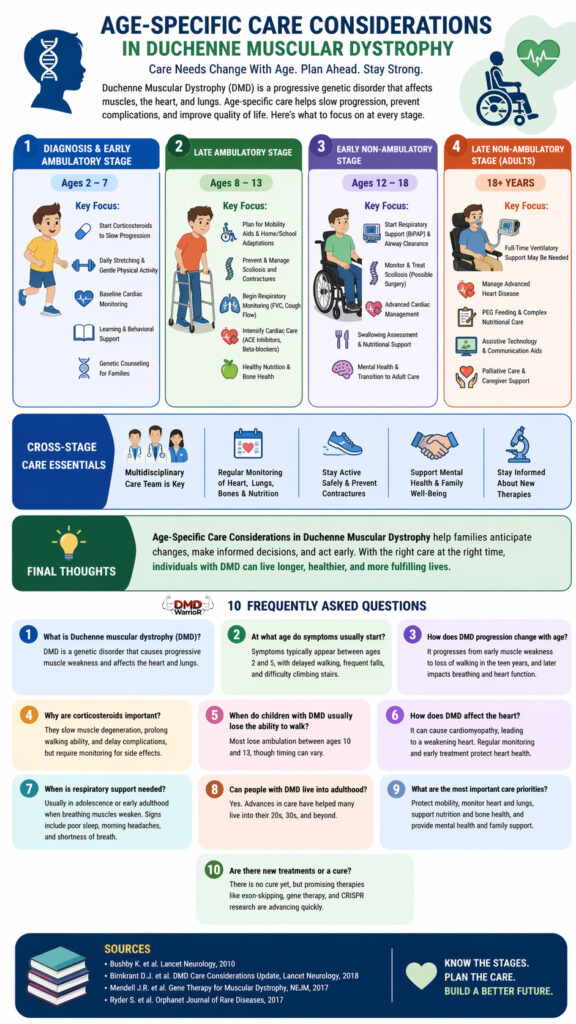
Diagnosis & Early Ambulatory Stage (Ages 2–7)
Early Identification and Baseline Establishment
The first phase of care considerations by age in Duchenne muscular dystrophy begins at diagnosis, often triggered by delayed motor milestones or elevated creatine kinase (CK) levels. Genetic confirmation is essential for both diagnosis and eligibility for mutation-specific therapies. Try Now: Exon Check Tool
At this stage, establishing a baseline is critical:
- Motor function (North Star Ambulatory Assessment)
- Cardiac imaging
- Pulmonary baseline
- Neurocognitive profile
Early intervention significantly alters disease trajectory.
Corticosteroid Therapy: Foundation of Early Care
One of the most important components of Age-Specific care considerations in Duchenne muscular dystrophy in early childhood is corticosteroid therapy.
Common options:
- Prednisone
- Deflazacort
Clinical benefits:
- Prolonged ambulation
- Improved pulmonary function
- Delayed scoliosis onset
However, long-term monitoring is essential:
- Growth suppression
- Weight gain
- Behavioral changes
- Osteoporosis
Balancing efficacy and side effects is a key clinical challenge. Read More: Pros and Cons of Steroids (Cortisone) for Duchenne
Physical Therapy and Activity Optimization
In early ambulatory stages, maintaining mobility is a central pillar of Age-Specific care considerations in Duchenne muscular dystrophy.
Recommended strategies:
- Daily stretching routines
- Hydrotherapy (low-impact)
- Gentle cycling
Avoid:
- High-resistance exercises
- Eccentric contractions that accelerate muscle damage
Early physiotherapy delays contractures and preserves function. Read More: Physical Therapy for Duchenne
Cardiac Monitoring: Starting Before Symptoms
Even in asymptomatic children, cardiomyopathy may begin silently. Therefore, Age-Specific care considerations in Duchenne muscular dystrophy include early cardiac surveillance:
- Annual echocardiography
- Consider cardiac MRI in later childhood
- Early initiation of ACE inhibitors in some cases
Learn More: Heart Health in Duchenne
Cognitive and Behavioral Support
Dystrophin is expressed in the brain, making neurodevelopmental support a crucial part of Age-Specific care considerations in Duchenne muscular dystrophy.
Common challenges:
- Attention deficits
- Learning disabilities
- Autism spectrum traits
Interventions:
- Individualized education plans (IEPs)
- Neuropsychological evaluation
- Speech and behavioral therapy
Discover More: Learning Disabilities in Duchenne
Late Ambulatory Stage (Ages 8–13)
Approaching Loss of Ambulation
A defining feature of this stage in Age-Specific care considerations in Duchenne muscular dystrophy is progressive proximal muscle weakness leading to eventual wheelchair dependence.
Indicators include:
- Difficulty climbing stairs
- Increased falls
- Reduced walking endurance
Planning ahead is essential for smooth transition. Read More: Early Signs of Duchenne
Mobility Aids and Environmental Adaptation
As mobility declines, Age-Specific care considerations in Duchenne muscular dystrophy shift toward assistive technologies:
- Lightweight wheelchairs (initially part-time)
- Home modifications (ramps, elevators)
- School accessibility planning
Psychological adaptation is equally important.
Discover More: When Is The Best Time for a Power Wheelchair in DMD?
Orthopedic Management and Contracture Prevention
Contractures and scoliosis risk increase significantly. Therefore, Age-Specific care considerations in Duchenne muscular dystrophy include:
- Night splints
- Standing frames
- Regular orthopedic evaluations
Early intervention may delay surgical necessity.
Learn More: Ankle Foot Orthosis (AFO) in Duchenne
Respiratory Function Monitoring Begins
Pulmonary decline often starts before clinical symptoms. As part of Age-Specific care considerations in Duchenne muscular dystrophy, clinicians initiate:
- Spirometry (FVC measurement)
- Peak cough flow monitoring
- Sleep studies (if indicated)
Read More: Maintaining for Lung Muscles in Duchenne
Cardiac Care Intensification
Cardiac involvement becomes more pronounced, requiring escalation of Age-Specific care considerations in Duchenne muscular dystrophy:
- ACE inhibitors
- Beta-blockers
- Annual cardiac MRI (preferred)
Early pharmacologic intervention improves long-term outcomes.
Bone Health and Endocrine Monitoring
Steroid use increases fracture risk. Therefore, Age-Specific care considerations in Duchenne muscular dystrophy must include:
- Vitamin D supplementation
- Calcium intake optimization
- DEXA scans
Growth and puberty delays should also be monitored. Read More: Bone & Joint Health in Duchenne
Early Non-Ambulatory Stage (Ages 12–18)
Transition to Full-Time Wheelchair Use
Loss of ambulation marks a major milestone in Age-Specific care considerations in Duchenne muscular dystrophy. The focus shifts toward maintaining independence and preventing complications.
Key priorities:
- Postural support
- Pressure sore prevention
- Advanced wheelchair systems
Respiratory Support and Airway Clearance
Respiratory muscle weakness becomes clinically significant. Therefore, Age-Specific care considerations in Duchenne muscular dystrophy emphasize:
- Non-invasive ventilation (BiPAP)
- Mechanical insufflation-exsufflation (cough assist)
- Vaccination (influenza, pneumococcal)
Early intervention prevents respiratory crises.
Scoliosis Management and Surgical Considerations
Scoliosis progression accelerates after ambulation loss. In this stage, Age-Specific care considerations in Duchenne muscular dystrophy may include:
- Spinal fusion surgery
- Post-operative respiratory planning
Learn More: Scoliosis in Duchenne
Cardiac Disease Progression
Dilated cardiomyopathy is common. Management includes:
- Combination pharmacotherapy
- Regular cardiac MRI
- Monitoring arrhythmias
Cardiac care becomes a dominant component of Age-Specific care considerations in Duchenne muscular dystrophy.
Upper Limb Function Preservation
As lower limb function is lost, preserving upper limb ability becomes essential in Age-Specific care considerations in Duchenne muscular dystrophy.
Interventions:
- Occupational therapy
- Assistive robotics
- Adaptive devices for daily living
Nutritional and Swallowing Management
Malnutrition and dysphagia risk increase. Therefore, Age-Specific care considerations in Duchenne muscular dystrophy include:
- Dietitian involvement
- Texture-modified diets
- PEG tube consideration (advanced cases)
Read More: Swallowing Difficulty (Dysphagia) in Duchenne
Mental Health and Social Integration
Adolescence is psychologically complex. Age-Specific care considerations in Duchenne muscular dystrophy must address:
- Depression and anxiety
- Social isolation
- Transition to adult healthcare systems
Learn More: Care of Non-Ambulatory Patients with DMD
Late Non-Ambulatory Stage (Adults, 18+)
Advanced Respiratory Care
In adulthood, respiratory insufficiency is a leading cause of morbidity. Age-Specific care considerations in Duchenne muscular dystrophy include:
- Full-time ventilation
- Tracheostomy (in selected cases)
- Advanced airway clearance
Cardiac Failure Management
Heart disease becomes the primary life-limiting factor. Management strategies include:
- Advanced heart failure medications
- Device therapy (rare)
- Transplant evaluation (selected patients)
Complex Nutritional Support
Feeding challenges intensify, making nutritional care a core element of Age-Specific care considerations in Duchenne muscular dystrophy:
- Enteral feeding (PEG)
- Hydration management
- Aspiration prevention
Learn More: Best Foods and Nutrition Plan for Duchenne
Assistive Technology and Communication
Technology plays a transformative role:
- Eye-tracking systems
- Voice-assisted devices
- Environmental control units
These tools enhance independence despite severe physical limitations.
Palliative and Supportive Care
Palliative care is not limited to end-of-life—it is an integral part of Age-Specific care considerations in Duchenne muscular dystrophy. Read More: Palliative Care in Duchenne
Focus areas:
- Symptom relief
- Emotional support
- Advance care planning
Caregiver Burden and Support Systems
Caregiver fatigue is a critical but often overlooked aspect. Age-Specific care considerations in Duchenne muscular dystrophy should include:
- Respite care access
- Psychological support
- Financial planning resources
Emerging Therapies and Future Directions
Recent advancements are reshaping Age-Specific care considerations in Duchenne muscular dystrophy:
- Exon-skipping therapies
- Gene therapy approaches
- CRISPR-based editing (experimental)
Clinical trials continue to evolve the treatment landscape.
Follow This Page >>> All Clinical Trials for Duchenne
Frequently Asked Questions (FAQ)
At what age do symptoms of DMD usually start?
Symptoms of Duchenne muscular dystrophy typically appear between ages 2 and 5. Early signs include delayed walking, difficulty running or climbing stairs, frequent falls, and the use of Gowers’ maneuver to stand. Early diagnosis allows timely intervention, which can significantly slow disease progression.
How does DMD progression change with age?
DMD progresses in predictable stages:
• Early childhood: muscle weakness begins
• Late childhood: mobility declines
• Adolescence: loss of ambulation
• Adulthood: respiratory and cardiac complications dominate
This progression is why Age-Specific Care Considerations in Duchenne muscular dystrophy are essential for adapting treatment at each stage.
Why are corticosteroids important in DMD treatment?
Corticosteroids such as prednisone and deflazacort are standard treatments because they:
• Slow muscle degeneration
• Prolong walking ability
• Delay heart and lung complications
However, they require monitoring for side effects like weight gain, bone thinning, and growth suppression.
When do children with DMD usually lose the ability to walk?
Most children with Duchenne muscular dystrophy lose ambulation between ages 10 and 13. This varies depending on treatment, especially corticosteroid use. Planning for mobility aids and home adaptations before this stage is a key part of effective care.
How does DMD affect the heart?
DMD commonly leads to cardiomyopathy, a condition where the heart muscle weakens. This can begin silently in childhood and worsen over time. Regular cardiac monitoring and early treatment with medications such as ACE inhibitors and beta-blockers are critical to managing heart complications.
When is respiratory support needed in DMD?
Respiratory support is usually needed during adolescence or early adulthood when breathing muscles weaken. Signs include:
• Shortness of breath
• Poor sleep quality
• Morning headaches
Non-invasive ventilation (such as BiPAP) is typically introduced first and can significantly extend life expectancy.
Can individuals with DMD live into adulthood?
Yes. Advances in multidisciplinary care—including respiratory support, cardiac management, and improved standards of care—have significantly increased life expectancy. Many individuals with Duchenne muscular dystrophy now live into their late 20s or 30s, and some even longer. Learn More: Multidisciplinary Neuromuscular Team in Duchenne
What are the most important care priorities as DMD progresses?
Key priorities change with age but generally include:
• Maintaining mobility and preventing contractures
• Monitoring heart and lung function
• Supporting nutrition and bone health
• Preserving independence with assistive technology
A multidisciplinary approach is essential for optimal outcomes.
Final Thoughts
Age-Specific care considerations in Duchenne muscular dystrophy require a proactive, stage-based approach. Early diagnosis and timely treatment can slow progression and preserve function. Multidisciplinary care is essential at every stage. Cardiac and respiratory monitoring must never be delayed. Mobility support improves independence and quality of life. Nutrition and bone health remain critical throughout. Mental health support is equally important. New therapies continue to reshape outcomes. Families should plan ahead for each transition. With the right care, longer and better lives are possible.
Academic Sources and References
- Bushby K, et al. Diagnosis and management of DMD. The Lancet Neurology
- Birnkrant DJ, et al. DMD Care Considerations Update (2018)
- Mendell JR, et al. Gene therapy for muscular dystrophy. The New England Journal of Medicine
- Ryder S, et al. Burden of illness in Duchenne. Orphanet Journal of Rare Diseases