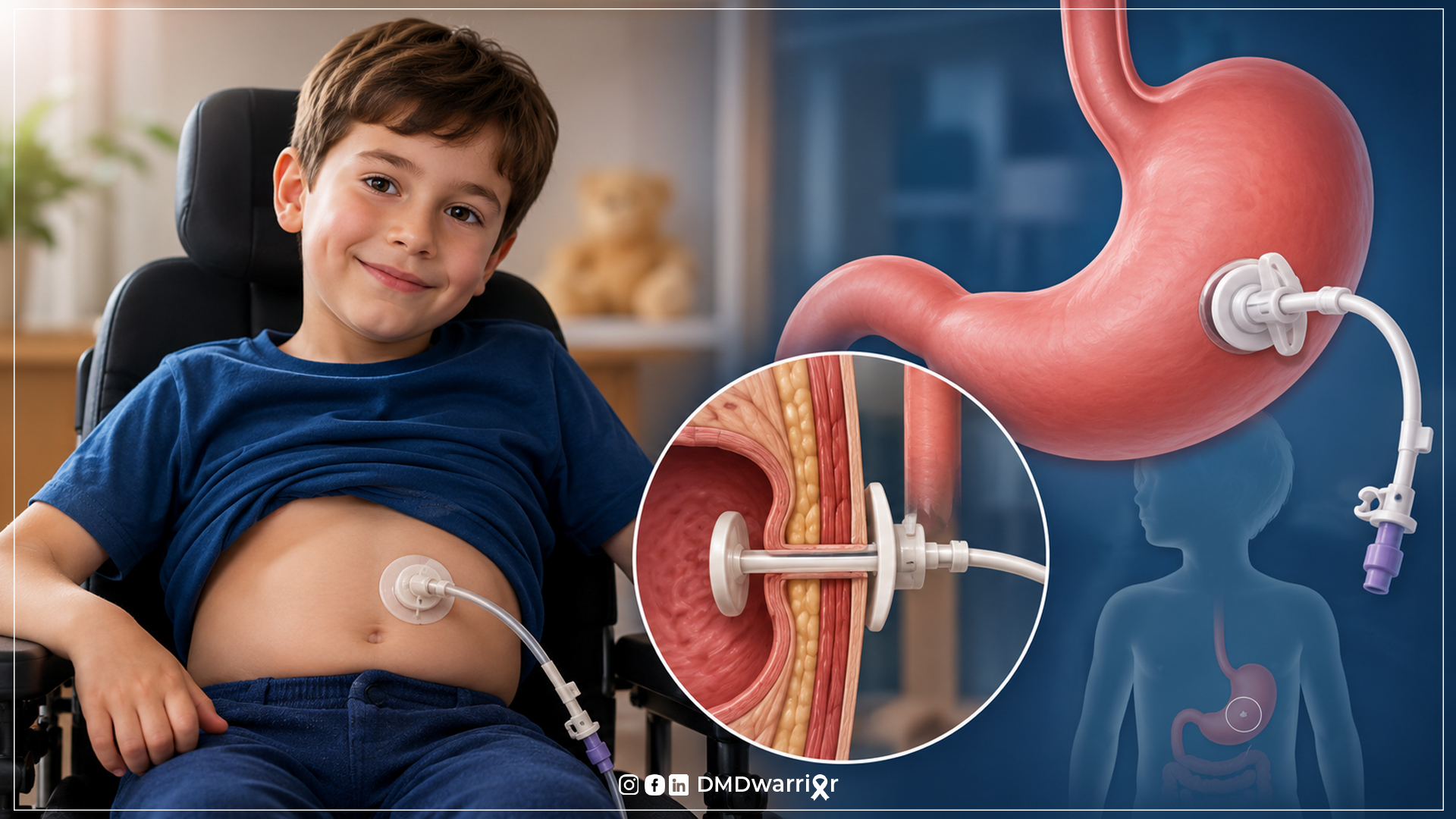
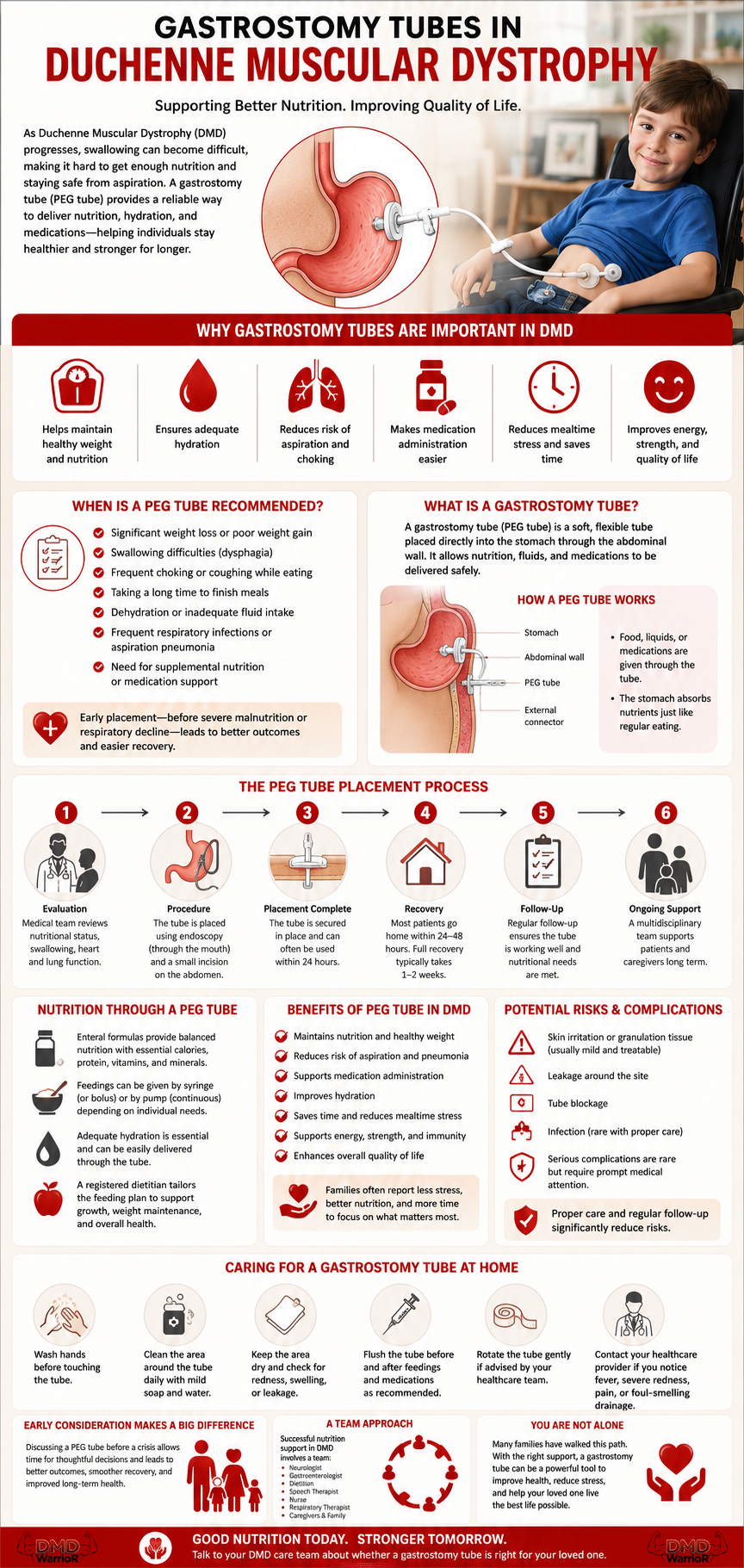
Gastrostomy tubes in Duchenne Muscular Dystrophy (DMD) have become an important component of multidisciplinary care for individuals who experience progressive swallowing difficulties, unintended weight loss, or an increased risk of aspiration. A PEG tube in DMD (Percutaneous Endoscopic Gastrostomy tube) provides direct access to the stomach, allowing adequate nutrition, hydration, and medication administration when eating by mouth becomes difficult or unsafe.
For many families, hearing that a child may need a feeding tube for Duchenne muscular dystrophy can be emotionally challenging. Parents often worry that it represents the “final stage” of the disease or that their child will never eat normally again. Fortunately, neither assumption is accurate. Modern clinical guidelines emphasize that gastrostomy tubes in Duchenne Muscular Dystrophy should be considered as supportive nutritional therapy rather than a sign of failure or disease progression. When placed at the appropriate time, a PEG tube in DMD can improve nutritional status, reduce mealtime stress, decrease the risk of aspiration, and enhance overall quality of life.
As Duchenne muscular dystrophy progresses, skeletal muscles throughout the body—including those involved in chewing and swallowing—gradually weaken. Respiratory muscle weakness may also increase the risk of food entering the airway instead of the stomach. These changes can make eating exhausting and sometimes dangerous. Consequently, nutrition specialists, neurologists, pulmonologists, speech-language pathologists, and gastroenterologists often work together to determine whether a gastrostomy tube in Duchenne muscular dystrophy is appropriate.

Importantly, many individuals who receive a PEG tube in DMD continue to enjoy eating by mouth. The feeding tube frequently serves as a supplement rather than a replacement for normal meals, allowing patients to consume favorite foods safely while receiving additional calories, fluids, and medications through the tube when necessary.
Table of Contents
Why Do Some People with DMD Need a PEG Tube?
Duchenne muscular dystrophy is not solely a disease affecting mobility. As muscle weakness advances, the muscles responsible for chewing, swallowing, coughing, and breathing can also become involved. These changes increase nutritional challenges that may develop gradually over months or years.
Several factors contribute to the need for gastrostomy tubes in Duchenne Muscular Dystrophy:
Progressive Swallowing Muscle Weakness
The muscles of the mouth, tongue, throat, and esophagus become progressively weaker. Although swallowing often appears normal during early childhood, adolescents and adults with DMD may develop:
- Difficulty chewing tougher foods
- Slow eating
- Fatigue during meals
- Frequent coughing while swallowing
- Sensation of food becoming stuck
- Choking episodes
These symptoms collectively indicate dysphagia, a condition that deserves prompt medical evaluation. Read More: Dysphagia in Duchenne
Increased Caloric Requirements
Many individuals with DMD require careful nutritional management. While mobility decreases over time, chronic respiratory effort, infections, corticosteroid therapy, and muscle degeneration may alter energy requirements.
Some patients unintentionally lose weight because:
- Meals take too long.
- Eating becomes physically exhausting.
- Appetite decreases.
- Swallowing discomfort discourages eating.
When calorie intake consistently falls below nutritional needs, physicians may recommend a PEG tube in DMD before severe malnutrition develops.
Safer Medication Administration
Patients with Duchenne muscular dystrophy frequently take multiple medications, including corticosteroids, cardiac medications, bone health supplements, vitamin D, calcium, and respiratory treatments. Swallowing numerous tablets every day can become increasingly difficult.
A gastrostomy tube provides a reliable route for administering many medications safely under physician guidance.
How Do You Know if a Child with DMD Needs a PEG Tube?
One of the most common questions families ask is:
“How do you know when it’s time for a PEG tube?”
There is no single age or milestone that determines the answer. Instead, clinicians evaluate multiple factors simultaneously.
Weight Loss
Persistent weight loss is among the strongest indicators.
Healthcare providers become concerned when a child:
- Falls significantly below expected growth curves
- Loses more than approximately 10 percent of body weight
- Cannot maintain adequate calorie intake despite nutritional counseling
Early intervention generally leads to better outcomes than waiting until severe malnutrition develops.
Swallowing Evaluation
Speech-language pathologists may perform specialized swallowing assessments, including:
- Clinical swallowing examinations
- Modified Barium Swallow Study (VFSS)
- Fiberoptic Endoscopic Evaluation of Swallowing (FEES)
These tests help determine whether food or liquids are entering the airway instead of the esophagus.
Mealtimes Become Extremely Long
A healthy meal typically lasts 20–30 minutes.
Some individuals with advanced DMD require:
- One hour
- Ninety minutes
- Even two hours
for every meal.
Lengthy meals often indicate increasing swallowing muscle fatigue.
Frequent Chest Infections
Repeated pneumonia or respiratory infections may indicate aspiration. Read More: Respiratory Care in Duchenne
Aspiration occurs when food, liquids, or saliva enter the lungs rather than the stomach. Even “silent aspiration,” which may occur without obvious choking, can contribute to recurrent respiratory illness.
Early Warning Signs That Should Never Be Ignored
Families often notice subtle changes months before a formal diagnosis of dysphagia.
Warning signs include:
Eating Much More Slowly
A child who previously finished dinner in 20 minutes may suddenly require over an hour.
Avoiding Certain Foods
Foods commonly avoided include:
- Steak
- Bread
- Rice
- Dry chicken
- Crackers
- Raw vegetables
These foods require stronger chewing muscles.
Drinking Excess Water During Meals
Some individuals repeatedly drink water after every bite because swallowing becomes difficult.
Coughing While Eating
Persistent coughing during meals should always be discussed with the medical team.
Wet or Gurgly Voice
A wet voice immediately after swallowing can suggest residual food or liquid near the airway.
Weight Plateau
Children who stop gaining weight despite normal height growth should undergo nutritional assessment.
Fatigue After Meals
Many patients describe meals as physically exhausting.
Rather than enjoying family dinners, eating becomes a strenuous daily task.
How Doctors Decide Whether a PEG Tube Is Necessary
No single physician makes this decision alone.
Instead, multidisciplinary DMD clinics typically involve:
Neurologist
Evaluates overall disease progression.
Pulmonologist
Assesses respiratory muscle strength because anesthesia risks increase with declining lung function.
Gastroenterologist
Performs endoscopic evaluation and PEG placement.
Speech-Language Pathologist
Evaluates swallowing safety and aspiration risk.
Registered Dietitian
Calculates calorie requirements, monitors nutritional deficiencies, and recommends nutritional formulas when needed.
Anesthesiologist
Plans sedation carefully because individuals with Duchenne muscular dystrophy have unique anesthetic considerations.
Current international DMD care recommendations emphasize that PEG placement should ideally occur before severe respiratory compromise or profound malnutrition develops, as earlier intervention is generally associated with fewer procedural risks and improved recovery.
Is PEG Tube Placement an Emergency or a Planned Procedure?
In most cases, PEG tube placement in DMD is a planned, elective procedure rather than an emergency intervention.
Waiting until a patient becomes severely underweight, dehydrated, or develops repeated aspiration pneumonia may increase procedural risks. For this reason, many neuromuscular specialists recommend discussing gastrostomy placement early, even if the tube is not immediately needed. Early conversations allow families to understand the procedure, ask questions, and make informed decisions without the pressure of an urgent medical crisis.
Careful pre-procedure planning is especially important in Duchenne muscular dystrophy because respiratory muscle weakness and cardiomyopathy can increase anesthesia-related risks. Before scheduling PEG placement, clinicians commonly evaluate:
- Pulmonary function (such as Forced Vital Capacity)
- Cardiac function with echocardiography and/or ECG
- Nutritional status
- Current medications
- Airway management considerations
- Need for perioperative non-invasive ventilation support
The goal is to perform the procedure when the patient is medically stable, rather than delaying until nutrition or respiratory function has deteriorated significantly. Read More: Cardiomyopathy in Duchenne
Key Takeaways
- A PEG tube in DMD is a supportive treatment that helps maintain nutrition, hydration, and medication delivery.
- Many people with gastrostomy tubes in Duchenne muscular dystrophy continue to eat by mouth.
- Progressive swallowing difficulties, weight loss, prolonged mealtimes, and aspiration risk are common reasons to consider PEG placement.
- Decisions should be made by a multidisciplinary neuromuscular team, ideally before severe malnutrition or respiratory decline occurs.
- Early discussions about gastrostomy can reduce stress and allow families to make informed decisions.
Is a PEG Tube Safe for Duchenne Muscular Dystrophy?
Safety is often the first concern families raise when gastrostomy is discussed. Parents understandably worry about anesthesia, the procedure itself, and whether their child will recover well. The reassuring news is that gastrostomy tubes in Duchenne Muscular Dystrophy are considered a well-established and generally safe intervention when performed by an experienced multidisciplinary team familiar with neuromuscular disorders. Read More: Multidisciplinary Neuromuscular Team in Duchenne
The greatest risks are usually not related to the PEG tube itself, but rather to the respiratory and cardiac complications that can accompany advanced DMD. For this reason, international care guidelines recommend evaluating patients before severe respiratory decline or profound malnutrition develops.
Studies published by the Duchenne Care Considerations Working Group have shown that patients who undergo PEG tube in DMD placement while their nutritional and respiratory status remains relatively stable generally experience better outcomes than those who undergo emergency placement after significant weight loss or recurrent aspiration pneumonia.
It is important to remember that every patient is different. A child with preserved lung function may tolerate the procedure very differently from an adult with advanced respiratory muscle weakness requiring non-invasive ventilation.
Why Timing Matters
One of the most common misconceptions is that a feeding tube should only be considered when eating becomes impossible.
In reality, specialists increasingly recommend discussing gastrostomy tubes in Duchenne Muscular Dystrophy much earlier.
Earlier placement may help prevent:
- Severe malnutrition
- Chronic dehydration
- Recurrent aspiration pneumonia
- Significant weight loss
- Emergency hospitalization
- Increased anesthesia risks associated with advanced respiratory decline
Waiting until nutrition has deteriorated substantially may make recovery more difficult.
Pre-Procedure Evaluation
Before recommending a PEG tube in DMD, clinicians usually perform a comprehensive assessment.
Cardiac Assessment
Because Duchenne muscular dystrophy commonly affects the heart muscle, patients typically undergo:
- Electrocardiogram (ECG)
- Echocardiogram
- Cardiology consultation
- Medication review
Patients with cardiomyopathy may require adjustments to anesthesia planning.
Respiratory Assessment
Pulmonary evaluation commonly includes:
- Forced Vital Capacity (FVC)
- Peak cough flow
- Oxygen saturation
- Sleep studies if indicated
- Review of non-invasive ventilation use
Respiratory therapists may recommend cough-assist devices before and after surgery to reduce pulmonary complications. Read More: Respiratory Devices for DMD
Nutritional Assessment
Dietitians evaluate:
- Current weight
- Body Mass Index
- Growth charts
- Daily calorie intake
- Vitamin deficiencies
- Hydration status
These measurements help determine whether supplemental feeding should begin immediately after tube placement.
How Is a PEG Tube Inserted in DMD Patients?
A PEG tube in DMD is usually placed using Percutaneous Endoscopic Gastrostomy (PEG), which has become the most common technique worldwide.
The procedure is minimally invasive and generally takes between 20 and 40 minutes, although preparation and recovery require additional time.
Step 1: Sedation or General Anesthesia
Depending on age, respiratory status, and institutional practice, the patient receives:
- Conscious sedation
- Deep sedation
- General anesthesia
Because individuals with Duchenne muscular dystrophy have unique anesthetic considerations, anesthesia should ideally be managed by clinicians experienced in neuromuscular diseases.
Certain anesthetic agents, particularly succinylcholine, should generally be avoided because they may trigger severe hyperkalemia and life-threatening cardiac complications in patients with DMD. Volatile inhalational anesthetics are also used cautiously due to the risk of anesthesia-induced rhabdomyolysis. Current anesthesia recommendations favor total intravenous anesthesia (TIVA) when appropriate. Read More: Surgery Under Anesthesia in DMD
Step 2: Endoscopic Examination
A flexible endoscope is gently passed through the mouth into the stomach.
The physician examines:
- Esophagus
- Stomach
- Gastric wall
- Appropriate insertion site
The endoscope also allows the stomach to be inflated so it lies against the abdominal wall.
Step 3: Tube Placement
A small incision is made through the skin.
The feeding tube is guided directly into the stomach under endoscopic visualization.
Most PEG tubes have an internal retention bumper that helps secure the tube in place.
Step 4: Recovery
Patients are monitored carefully for:
- Respiratory stability
- Heart rhythm
- Pain control
- Bleeding
- Infection
Many children begin receiving water within several hours, followed by tube feeding according to institutional protocols.
What Happens During the Hospital Stay?
Most patients remain in the hospital for one to three days, although this varies depending on respiratory function and local practice.
During hospitalization, families learn:
- Tube cleaning
- Feeding techniques
- Medication administration
- Flushing procedures
- Recognizing complications
- Emergency contact procedures
Education is one of the most important aspects of successful PEG management.
Does PEG Placement Hurt?
Pain following PEG tube in DMD placement is usually mild to moderate.
Most discomfort occurs during the first few days.
Common symptoms include:
- Mild abdominal soreness
- Tenderness around the insertion site
- Temporary bloating
- Muscle discomfort when changing position
Pain generally improves significantly during the first week. Read More: Pain Management in Duchenne
Physicians commonly recommend:
- Diazepam, etomidate, ketamine, methohexital, midazolam, propofol, thiopental
- Appropriate prescribed pain medication if needed
- Gentle movement
- Careful wound cleaning
Persistent or worsening pain should always be evaluated promptly.
What Are the Risks of PEG Tube Placement in Duchenne?
Every medical procedure carries potential risks.
Fortunately, serious complications remain relatively uncommon when gastrostomy tubes in Duchenne Muscular Dystrophy are placed by experienced teams.
Common Minor Complications
Minor problems are considerably more frequent than major complications.
Examples include:
Skin Irritation
Redness around the tube site may occur during healing.
Proper cleaning usually resolves mild irritation.
Leakage
Small amounts of gastric fluid occasionally leak around the tube.
Adjustments to tube positioning or dressings often solve the problem.
Granulation Tissue
Excess healing tissue may develop around the opening.
Although it appears alarming, granulation tissue is generally benign and can often be treated with topical therapies or cauterization when necessary.
Tube Blockage
Medication residue or thick nutritional formulas can obstruct the tube.
Routine flushing before and after feeding dramatically reduces blockage risk.
Serious Complications
Although uncommon, clinicians monitor carefully for:
Infection
Signs include:
- Fever
- Increasing redness
- Swelling
- Pus
- Severe tenderness
Early antibiotic treatment is often effective.
Peritonitis
Leakage of stomach contents into the abdominal cavity is rare but requires immediate medical attention.
Symptoms include:
- Severe abdominal pain
- Fever
- Rigid abdomen
- Vomiting
Bleeding
Minor bleeding is relatively common immediately after placement.
Persistent or heavy bleeding is unusual and requires urgent evaluation.
Respiratory Complications
Because respiratory muscle weakness is common in DMD, physicians monitor closely for:
- Atelectasis
- Pneumonia
- Difficult airway management
- Reduced ventilation after anesthesia
Use of cough-assist devices and non-invasive ventilation when indicated has substantially improved postoperative safety.
Can People with DMD Still Eat After Getting a Gastrostomy Tube?
One of the biggest myths surrounding PEG tube in DMD is that oral eating immediately stops.
In reality, many patients continue eating normally for months or years after PEG placement.
Whether oral feeding remains safe depends on:
- Swallowing function
- Aspiration risk
- Nutritional needs
- Recommendations from the speech-language pathologist
Many individuals use the tube to:
- Receive overnight nutrition
- Take medications
- Maintain hydration
- Supplement calories
while still enjoying favorite meals with family.
This approach often reduces stress because patients no longer feel pressured to consume enough calories during every meal.
Emotional Impact on Families
The decision to proceed with gastrostomy tubes in Duchenne Muscular Dystrophy is rarely based solely on medical evidence. It is also an emotional milestone for families.
Parents frequently express concerns such as:
- “Will my child feel different from friends?”
- “Will they ever enjoy food again?”
- “Did we wait too long?”
- “Are we giving up?”
These feelings are entirely understandable. However, many families report that, after the initial adjustment period, the PEG tube significantly reduces anxiety around mealtimes. Children often have more energy, gain weight appropriately, and spend less time struggling to finish meals.
Healthcare teams should provide not only medical guidance but also psychological support, ensuring that families understand a PEG tube is a tool to improve comfort, nutrition, and quality of life—not a sign of failure.
Key Takeaways
- PEG tube placement is generally safe when performed by experienced teams familiar with DMD.
- Early placement is often associated with better outcomes than emergency placement after severe malnutrition.
- Comprehensive cardiac, respiratory, and nutritional evaluations are essential before the procedure.
- Most patients experience only mild postoperative discomfort and remain in the hospital for one to three days.
- Many individuals continue eating by mouth after receiving a PEG tube, using it primarily to supplement nutrition, hydration, and medications.
Nutrition After PEG Placement in Duchenne Muscular Dystrophy
One of the greatest advantages of gastrostomy tubes in Duchenne Muscular Dystrophy is the ability to maintain consistent nutritional intake even when swallowing becomes increasingly difficult. Good nutrition is not simply about maintaining body weight; it plays a critical role in preserving muscle function, supporting the immune system, promoting wound healing, maintaining bone health, and helping individuals tolerate respiratory infections more effectively. Read More: Nutrition in Duchenne Muscular Dystrophy
Duchenne muscular dystrophy presents unique nutritional challenges throughout the course of the disease. During childhood, prolonged corticosteroid therapy may contribute to excessive weight gain, while adolescents and adults frequently experience the opposite problem—progressive weight loss due to dysphagia, fatigue during meals, and increased respiratory effort. A PEG tube in DMD provides a reliable method of delivering calories, fluids, vitamins, minerals, and medications when oral intake alone is no longer sufficient.
Nutrition should always be individualized. There is no universal feeding formula suitable for every patient. A registered dietitian familiar with neuromuscular disorders should calculate daily calorie, protein, fluid, and micronutrient requirements based on age, body composition, activity level, corticosteroid use, cardiac function, respiratory status, and gastrointestinal symptoms.
What Foods Can Be Given Through a PEG Tube?
Many families wonder whether only specialized medical formulas can be used through a PEG tube in DMD. In practice, nutritional plans vary depending on the patient’s medical condition, swallowing ability, digestive tolerance, and guidance from the healthcare team.
Commercial Enteral Nutrition Formulas
Most patients initially receive commercially prepared enteral formulas because they provide complete, balanced nutrition and reduce the risk of contamination. These formulas are designed to deliver appropriate amounts of:
- Protein
- Carbohydrates
- Healthy fats
- Vitamins
- Minerals
- Electrolytes
- Fiber (when appropriate)
Specialized formulas are also available for individuals with diabetes, constipation, food allergies, or higher calorie requirements.
Homemade Blenderized Tube Feeding
Some families choose blenderized diets prepared from whole foods.
Examples may include:
- Cooked vegetables
- Fruits
- Lean poultry
- Fish
- Rice
- Oatmeal
- Yogurt
- Healthy oils
However, homemade feeds require careful preparation to ensure nutritional completeness, proper consistency, and food safety. Poorly blended foods may clog the tube, while improper storage increases the risk of bacterial contamination.
Therefore, blenderized feeding should only be undertaken under the supervision of a qualified dietitian.
Hydration
Adequate hydration is equally important.
Many patients with Duchenne muscular dystrophy struggle to drink enough fluids because swallowing becomes tiring.
The gastrostomy tube allows caregivers to provide:
- Water
- Oral rehydration solutions when appropriate
- Additional fluids during hot weather
- Hydration during illness
Maintaining hydration helps reduce constipation, supports kidney function, and improves overall well-being. Read More: Constipation in DMD
Can a PEG Tube Prevent Weight Loss in Duchenne Muscular Dystrophy?
One of the primary goals of gastrostomy tubes in Duchenne Muscular Dystrophy is preventing progressive malnutrition.
Multiple observational studies have demonstrated improvements in:
- Body weight
- Body mass index (BMI)
- Nutritional status
- Hydration
- Medication adherence
after gastrostomy placement.
Importantly, clinicians aim to intervene before severe weight loss develops. Once significant malnutrition occurs, rebuilding muscle mass and correcting nutritional deficiencies becomes considerably more difficult.
Patients who maintain healthier nutritional status often experience:
- Improved wound healing
- Better immune function
- Greater energy levels
- Reduced fatigue
- More stable respiratory function
- Improved tolerance of infections
Although a PEG tube in DMD cannot stop disease progression, it can help reduce complications associated with poor nutrition.
Daily Care of a Gastrostomy Tube at Home
Once the insertion site has healed, caring for a gastrostomy tube usually becomes part of the family’s daily routine.
Proper care helps minimize infections, leakage, skin irritation, and tube blockage.
Cleaning the Site
The skin surrounding the tube should generally be cleaned daily using:
- Mild soap
- Warm water
- A clean, soft cloth or gauze
Harsh antiseptics are usually unnecessary unless specifically recommended by the healthcare provider.
The area should be dried thoroughly after cleaning.
Rotating the Tube
Some PEG tubes should be gently rotated once healing is complete to help prevent tissue adherence.
However, recommendations differ depending on the tube design.
Families should always follow the manufacturer’s instructions and their medical team’s guidance.
Flushing the Tube
Routine flushing is essential.
The tube should generally be flushed:
- Before feeding
- After feeding
- Before medications
- Between medications
- After medications
Flushing with water helps prevent blockages and ensures medications reach the stomach effectively.
Monitoring the Skin
Caregivers should watch for:
- Redness
- Swelling
- Drainage
- Unpleasant odor
- Pain
- Bleeding
- Excess granulation tissue
Early recognition of these problems often allows simple treatment before complications become more serious.
Giving Medications Through a PEG Tube
A major benefit of a PEG tube in DMD is simplifying medication administration.
Many patients take several daily medications, including:
- Corticosteroids
- ACE inhibitors
- Beta-blockers
- Vitamin D
- Calcium
- Bone health medications
- Gastrointestinal medications
Whenever possible, liquid formulations are preferred.
If tablets must be crushed, caregivers should first confirm that the medication can safely be altered. Some sustained-release or enteric-coated medications should never be crushed because doing so can change how the drug is absorbed.
Each medication should generally be administered separately with water flushes between doses to reduce the risk of tube obstruction.
Can a Person Still Enjoy Eating?
One of the greatest emotional concerns surrounding gastrostomy tubes in Duchenne Muscular Dystrophy is the fear of losing the pleasure of eating.
Fortunately, many individuals continue to enjoy meals by mouth.
Depending on swallowing safety, patients may still eat:
- Ice cream
- Mashed potatoes
- Soft pasta
- Yogurt
- Pudding
- Well-cooked vegetables
- Soft fruits
Some individuals consume small oral meals while receiving additional overnight nutrition through the PEG tube.
This strategy reduces pressure to consume enough calories during daytime meals while allowing patients to continue participating in family meals and social events.
Does a Feeding Tube Improve Quality of Life in Duchenne?
For many families, the answer is yes.
Several observational studies have reported improvements in both patient and caregiver quality of life after PEG placement.
Benefits commonly reported include:
- Less stressful mealtimes
- Better nutritional status
- Reduced anxiety about choking
- Easier medication administration
- Improved hydration
- Reduced time spent eating
- Greater participation in family activities
Parents frequently report that meals become enjoyable again because they are no longer focused solely on encouraging adequate calorie intake.
For patients, improved nutrition may contribute to increased energy levels and reduced fatigue, even though the feeding tube does not alter the underlying progression of Duchenne muscular dystrophy.
Practical Advice for Families
The decision to proceed with a PEG tube in DMD should never be rushed, but it should also not be postponed until a crisis develops. Families benefit from discussing the option early with their multidisciplinary care team, even if tube placement is not immediately necessary.
Meeting with other families who have experienced gastrostomy placement, speaking with dietitians and speech-language pathologists, and learning how PEG tubes are managed at home can make the decision less overwhelming. Understanding the benefits, limitations, and realistic expectations allows families to choose the timing that best supports the patient’s health and quality of life.
FAQs: Gastrostomy Tubes in Duchenne Muscular Dystrophy
When does a child with Duchenne muscular dystrophy need a PEG tube?
A child with Duchenne muscular dystrophy may need a PEG tube in DMD when they can no longer consume enough food or fluids safely by mouth. Common signs include significant weight loss, prolonged mealtimes, swallowing difficulties (dysphagia), frequent choking, dehydration, or recurrent aspiration pneumonia. International Duchenne care guidelines recommend discussing gastrostomy tubes in Duchenne Muscular Dystrophy before severe malnutrition or advanced respiratory decline develops.
Can someone with DMD still eat normally after getting a PEG tube?
Yes. In many cases, individuals with DMD continue eating by mouth after receiving a PEG tube. The tube often serves as supplemental nutritional support rather than replacing oral feeding. If swallowing remains safe, patients may continue enjoying their favorite foods while using the tube for extra calories, fluids, or medications. A speech-language pathologist determines whether oral feeding remains appropriate.
Is PEG tube placement safe for people with Duchenne muscular dystrophy?
Yes, PEG tube placement is generally considered safe when performed by an experienced multidisciplinary team familiar with Duchenne muscular dystrophy. Before the procedure, doctors carefully evaluate heart function, lung function, nutritional status, and anesthesia risks. Early placement, before severe respiratory weakness develops, is usually associated with better outcomes and fewer complications.
Does a PEG tube improve quality of life in DMD?
For many families, the answer is yes. A PEG tube in DMD can reduce stressful mealtimes, improve nutritional status, simplify medication administration, decrease dehydration, and lower the risk of aspiration. Many caregivers report that their child has more energy and spends less time struggling to finish meals, leading to an overall improvement in quality of life.
How long does it take to recover after PEG tube placement?
Most patients recover within one to two weeks after PEG tube placement. Mild soreness around the insertion site is common during the first few days and usually improves with simple pain management. Many patients begin using the tube within hours or a day after the procedure, depending on their doctor’s recommendations. Full healing of the stoma generally takes several weeks.
What are the most common complications of a PEG tube in DMD?
The most common complications include mild skin irritation, granulation tissue, tube blockage, and leakage around the insertion site. Serious complications such as infection, bleeding, or peritonitis are uncommon but require immediate medical attention. Daily cleaning, proper tube flushing, and regular follow-up with the healthcare team significantly reduce the risk of complications.
Can a PEG tube prevent weight loss in Duchenne muscular dystrophy?
Yes. One of the main benefits of gastrostomy tubes in Duchenne Muscular Dystrophy is helping prevent unintended weight loss. By providing reliable nutrition, hydration, and medications directly into the stomach, a PEG tube helps maintain body weight and reduces the risk of malnutrition, particularly in patients with swallowing difficulties or poor appetite.
What foods can be given through a PEG tube?
Most individuals receive commercially prepared enteral nutrition formulas because they provide balanced calories, protein, vitamins, and minerals. In some cases, carefully prepared blenderized meals may be used under the supervision of a registered dietitian. The feeding plan should always be personalized based on the patient’s age, nutritional needs, digestive tolerance, and overall health.
How do you care for a PEG tube at home?
Daily PEG tube care includes cleaning the skin around the tube with mild soap and water, keeping the area dry, flushing the tube before and after feedings or medications, and monitoring for redness, swelling, leakage, or signs of infection. Caregivers should also follow the healthcare team’s instructions regarding tube rotation, dressing changes, and when to seek medical attention.
Can a PEG tube be removed if it is no longer needed?
Yes. If swallowing function improves or nutritional support is no longer necessary, a PEG tube can often be removed by a healthcare professional. The decision depends on the patient’s ability to maintain adequate nutrition and hydration by mouth, as well as the recommendations of the multidisciplinary care team. Families should never attempt to remove the tube themselves.
Conclusion
The decision to use gastrostomy tubes in Duchenne Muscular Dystrophy is rarely easy, but it is one of the most effective supportive interventions available for individuals experiencing progressive swallowing difficulties, weight loss, or an increased risk of aspiration. A PEG tube in DMD is not a treatment for Duchenne muscular dystrophy itself; rather, it is a tool that helps maintain adequate nutrition, hydration, medication delivery, and overall health.
One of the most important messages for families is that timing matters. Waiting until severe malnutrition or advanced respiratory compromise develops may increase procedural risks and delay recovery. International Duchenne care guidelines consistently recommend discussing gastrostomy placement before a nutritional crisis occurs, allowing patients and caregivers to make informed decisions in a calm, planned manner.
A multidisciplinary approach remains essential. Neurologists, pulmonologists, cardiologists, gastroenterologists, dietitians, speech-language pathologists, anesthesiologists, nurses, and caregivers each play an important role in ensuring successful long-term outcomes. With appropriate medical follow-up, many individuals continue to enjoy eating by mouth while using their gastrostomy tube to supplement calories, hydration, or medications.
Equally important is the emotional aspect of care. Families often associate feeding tubes with disease progression, yet many later describe PEG placement as a turning point that reduced stress, shortened exhausting mealtimes, improved weight maintenance, and enhanced quality of life. By supporting good nutrition, reducing aspiration risk, and simplifying medication administration, gastrostomy tubes in Duchenne Muscular Dystrophy can help patients remain healthier and more comfortable throughout the course of the disease.
Although every individual with DMD follows a unique clinical journey, the evidence strongly supports early nutritional assessment, routine swallowing evaluations, and timely consideration of a PEG tube in DMD when medically appropriate. Open communication between families and experienced neuromuscular teams is the best way to determine the right timing and the most appropriate nutritional strategy for each patient.
Academic Sources and References
- Birnkrant DJ, et al. Diagnosis and Management of Duchenne Muscular Dystrophy, Part 2: Respiratory, Cardiac, Bone Health, and Orthopaedic Management. The Lancet Neurology. 2018.
- Birnkrant DJ, et al. Diagnosis and Management of Duchenne Muscular Dystrophy, Part 1: Diagnosis, Neuromuscular, Rehabilitation, Endocrine, and Gastrointestinal Management. The Lancet Neurology. 2018.
- Birnkrant DJ, et al. Duchenne Muscular Dystrophy Care Considerations Working Group. The Lancet Neurology. 2018.
- Romano C, et al. European Society for Paediatric Gastroenterology, Hepatology and Nutrition (ESPGHAN) Position Paper on Percutaneous Endoscopic Gastrostomy in Children. Journal of Pediatric Gastroenterology and Nutrition. 2021.
- American Academy of Pediatrics. Nutritional and Gastrointestinal Management of Children With Neuromuscular Disorders.
- European Society for Clinical Nutrition and Metabolism (ESPEN). Guideline on Clinical Nutrition in Neurology.