
Approved treatments for Duchenne muscular dystrophy (DMD) are transforming how this progressive disease is managed. From gene therapy to exon-skipping and supportive care, these innovations aim to slow muscle degeneration and improve daily life. Understanding these options helps families make informed decisions.
Duchenne muscular dystrophy (DMD) is a severe, progressive genetic disorder characterized by muscle degeneration due to the absence of dystrophin, a critical structural protein. Over the past decade, significant advances in medical science have transformed the treatment landscape, shifting from purely supportive care to targeted, disease-modifying therapies.
Today, approved treatments for Duchenne muscular dystrophy include gene therapy, exon-skipping drugs, corticosteroids, nonsteroidal medications, and a broad range of supportive interventions. These treatments aim not only to slow disease progression but also to improve mobility, extend life expectancy, and enhance overall quality of life.
This comprehensive guide explores all currently approved therapies and supportive care strategies, helping patients, caregivers, and clinicians understand the evolving standard of care.
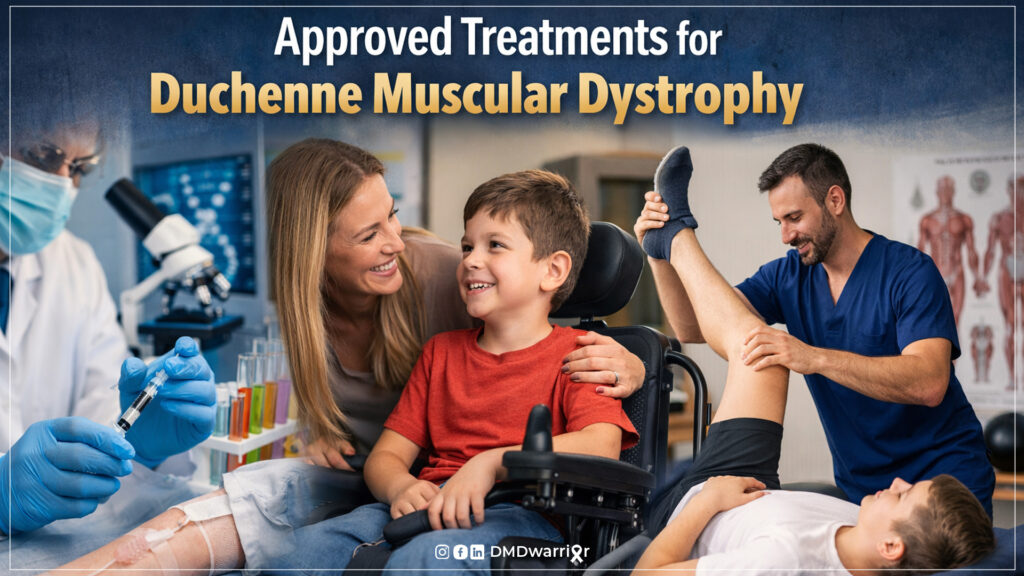
Approved Treatments for Duchenne Muscular Dystrophy
Gene Therapy
Gene therapy represents one of the most groundbreaking advancements in DMD treatment. Since DMD is caused by mutations in the dystrophin gene, gene therapy aims to correct or bypass this defect at its source.
In 2023, the FDA approved delandistrogene moxeparvovec (Elevidys), marking a major milestone in neuromuscular medicine.1 This therapy delivers a micro-dystrophin gene using a viral vector, enabling muscle cells to produce a shortened but functional version of dystrophin. Read More: Micro-dystrophin
Unlike traditional treatments, gene therapy is administered as a single intravenous infusion, making it a potentially transformative option.
Read More: Frequently Asked Questions About Elevidys
Mechanism of Action
- Introduces a functional dystrophin gene into muscle cells
- Enables production of micro-dystrophin protein
- Helps stabilize muscle fibers and reduce degeneration
Benefits
- Targets the root genetic cause
- May improve muscle function and slow progression
- One-time treatment approach
Limitations and Risks
- Long-term efficacy still under investigation
- Not suitable for all patients (e.g., certain immune profiles or advanced disease stages)
- Side effects include liver enzyme elevation, thrombocytopenia, nausea, and fever
Gene therapy continues to be studied in clinical trials, particularly regarding durability of response and use in non-ambulatory patients.
Learn More: Potential New Gene Therapies for Duchenne
Exon Skipping Therapies
Exon skipping therapies are precision medicines designed to address specific genetic mutations within the dystrophin gene. These therapies work by “skipping” faulty exons during mRNA processing, allowing the production of a partially functional dystrophin protein. Learn More: What is exon skipping?
Approved Exon-Skipping Drugs
- Eteplirsen (targets exon 51)
- Golodirsen (targets exon 53)
- Viltolarsen (targets exon 53)
- Casimersen (targets exon 45)
How It Works
Exons are coding segments of DNA. When one is missing or defective, protein production fails. Exon-skipping drugs mask the faulty exon, enabling the cell to produce a shorter but functional dystrophin protein.
Key Considerations
- Requires genetic testing to identify mutation type
- Only applicable to specific exon mutations
- Typically administered via regular intravenous infusions
Side Effects
- Injection site reactions
- Respiratory infections
- Fever and cough
- Potential kidney complications
Exon-skipping therapies are a cornerstone of personalized medicine in DMD, offering targeted treatment for subsets of patients.
Learn More: Next Generation Exon Skipping Therapies
Steroids and Immunosuppressive Medications
Corticosteroids have long been the standard of care in DMD management. These drugs reduce inflammation, slow muscle degeneration, and improve strength and function.
Commonly Used Steroids
- Deflazacort (FDA-approved for DMD)
- Prednisone (widely used off-label)
- Vamorolone (new-generation steroid with fewer side effects)
Clinical Benefits
- Prolong ambulation
- Improve muscle strength
- Delay scoliosis development
- Support respiratory and cardiac function
Adverse Effects
- Weight gain
- Growth suppression
- Osteoporosis
- Mood changes
- Sleep disturbances
Vamorolone, approved in 2023, represents a newer class of steroidal therapy with a more favorable safety profile, particularly regarding bone health and growth. Learn More: What is Agamree (vamorolone)?
Nonsteroidal Drugs
Nonsteroidal therapies are emerging as alternatives or complements to corticosteroids. In 2024, the FDA approved givinostat (Duvyzat), a histone deacetylase (HDAC) inhibitor. Read More: What is Duvyzat (Givinostat)?
Mechanism of Action
- Modulates gene expression
- Reduces inflammation
- Preserves muscle tissue
Advantages
- Fewer steroid-related side effects
- Suitable for long-term use
- Addresses disease progression at the molecular level
Side Effects
- Gastrointestinal discomfort
- Elevated triglycerides
- Thrombocytopenia
- Fever
This class of drugs represents a significant step toward safer long-term disease management.
Supportive and Mobility Devices
Supportive devices play a crucial role in maintaining independence and preventing complications.
Common Devices
- Ankle-foot orthoses (AFOs)
- Standing frames
- Walkers and wheelchairs
- Spinal braces
Clinical Importance
- Prevent contractures
- Maintain posture and alignment
- Improve circulation and bone health
- Enhance mobility and independence
As DMD progresses, transitioning between mobility aids becomes necessary. Early intervention improves long-term outcomes.
Physical Therapy and Occupational Therapy
Rehabilitation therapies are essential components of comprehensive DMD care.
Physical Therapy Goals
- Maintain muscle strength
- Prevent contractures
- Improve flexibility
- Support mobility
Occupational Therapy Focus
- Daily living skills (dressing, bathing)
- School and workplace accommodations
- Assistive technology integration
- Home environment modifications
These therapies significantly enhance quality of life and delay functional decline.
Heart Care
Cardiac complications are a leading cause of morbidity in DMD. Regular cardiac monitoring is essential.
Common Cardiac Issues
- Cardiomyopathy
- Arrhythmias
- Conduction abnormalities
Treatment Options
- ACE inhibitors
- Beta-blockers
- Anti-arrhythmic medications
- Pacemakers or implantable devices
Early detection and treatment can significantly extend survival and improve outcomes.
Learn More: Heart Care in Duchenne
Respiratory Care
Respiratory muscle weakness develops as DMD progresses, necessitating proactive management.
Noninvasive Support
- CPAP (Continuous Positive Airway Pressure)
- BiPAP (Bilevel Positive Airway Pressure)
Advanced Interventions
- Mechanical ventilation
- Tracheostomy
Additional Tools
- Cough assist devices
- Airway clearance techniques
Effective respiratory care reduces infection risk and improves life expectancy.
Learn More: Respiratory Care in Duchenne
Bone Care
Bone health is often compromised in DMD due to reduced mobility and steroid use.
Common Issues
- Osteoporosis
- Fractures
- Reduced bone density
Management Strategies
- Vitamin D and calcium supplementation
- Weight-bearing activities
- Bone density monitoring
- Bisphosphonate therapy (in some cases)
Maintaining bone health is critical for preventing complications and preserving mobility.
Learn More: Bone Care in Duchenne
Spine-Straightening Surgery
Scoliosis is a common complication in DMD, particularly after loss of ambulation.
Surgical Options
- Growing rods (for children)
- Spinal fusion
Benefits
- Improves posture
- Enhances respiratory function
- Reduces pain
- Prevents further curvature
Surgical intervention is typically considered when curvature becomes severe or progressive.
Final Thoughts
The landscape of approved treatments for Duchenne muscular dystrophy has evolved dramatically, offering new hope to patients and families. From innovative gene therapies and exon-skipping drugs to established corticosteroids and emerging nonsteroidal options, modern treatment strategies target both the underlying disease and its complications.
Equally important are supportive therapies, including physical rehabilitation, mobility aids, cardiac monitoring, and respiratory support. Together, these interventions create a multidisciplinary care model that significantly improves quality of life and survival.
Because DMD presents differently in each individual, personalized treatment planning is essential. Collaboration with neurologists, cardiologists, pulmonologists, and rehabilitation specialists ensures optimal outcomes.
Continued research and clinical trials promise even more advanced therapies in the near future, reinforcing the importance of staying informed and proactive in managing this condition.
Follow This Page >>> All Clinical Trials for Duchenne
Sources and Academic References