
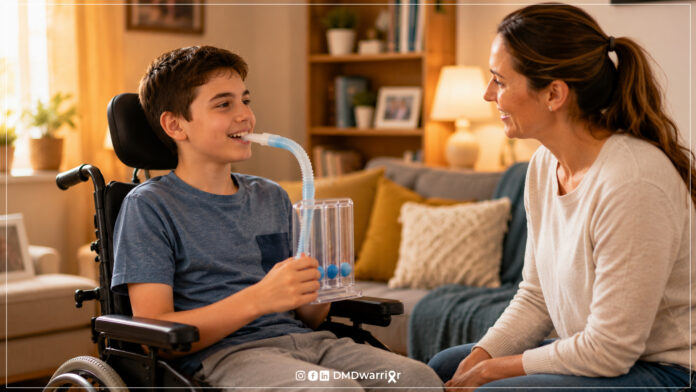
Duchenne muscular dystrophy (DMD) is a severe progressive neuromuscular disorder that gradually weakens skeletal, cardiac, and respiratory muscles. Among the most critical complications of the disease are respiratory problems caused by weakening of the diaphragm and chest muscles. Because of this, breathing exercises in Duchenne muscular dystrophy have become an essential component of long-term pulmonary care. Respiratory therapy in Duchenne muscular dystrophy, pulmonary rehabilitation for DMD, inspiratory muscle training, lung exercises for Duchenne muscular dystrophy, airway clearance techniques in DMD, and cough assist therapy are all increasingly recognized as important interventions that may help preserve lung function, improve airway clearance, reduce respiratory infections, and enhance quality of life.
As Duchenne muscular dystrophy progresses, respiratory muscle weakness can significantly affect breathing efficiency, sleep quality, and cough effectiveness. However, modern respiratory management strategies for DMD now include specialized breathing support techniques, deep breathing exercises, non-invasive ventilation, respiratory physiotherapy, and pulmonary monitoring programs that may help delay respiratory complications and improve survival outcomes. Understanding the role of breathing exercises in Duchenne muscular dystrophy is therefore crucial for patients, caregivers, respiratory therapists, and healthcare professionals involved in multidisciplinary DMD care.
Table of Contents
Understanding the Importance of Respiratory Care in DMD
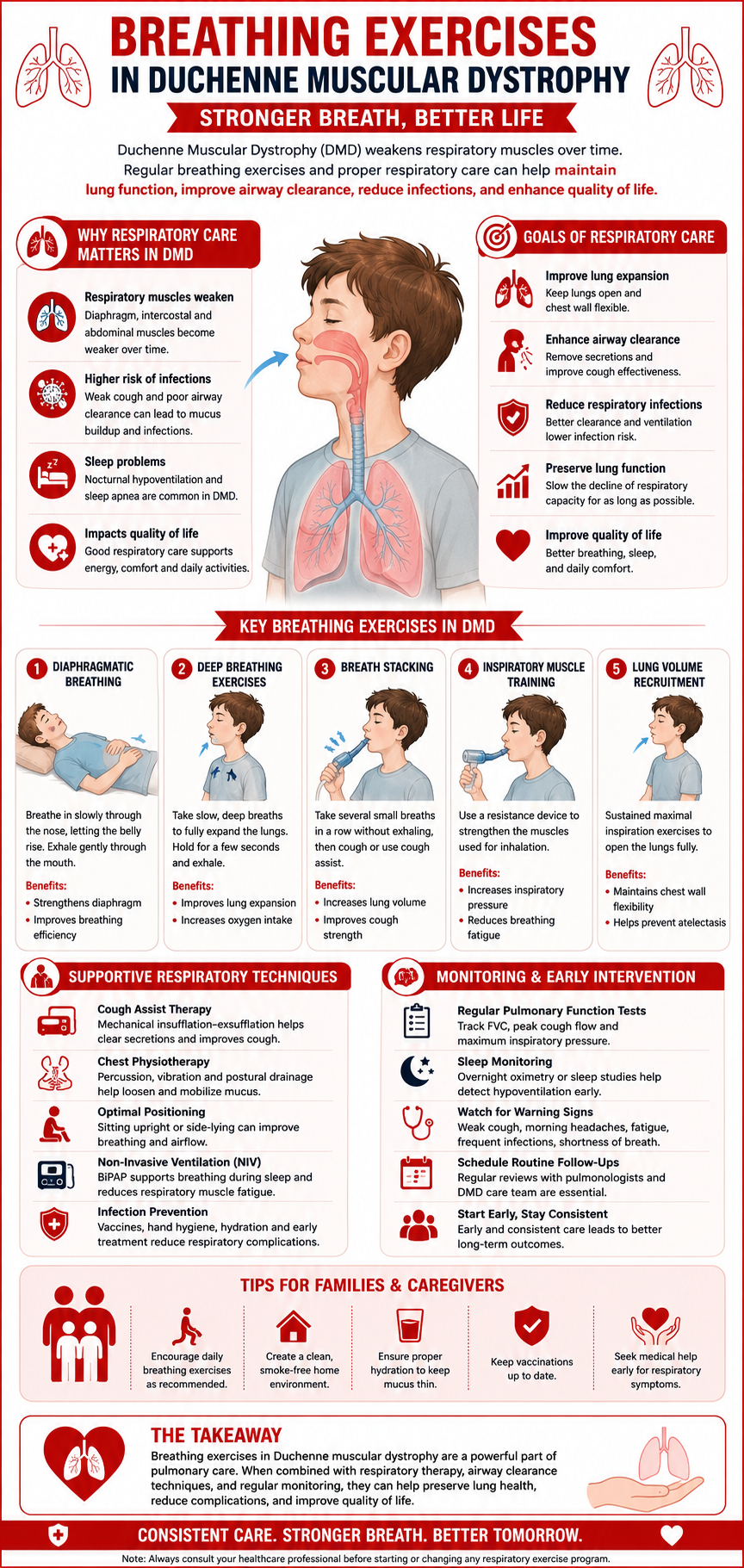
Respiratory complications remain one of the leading causes of hospitalization and mortality in Duchenne muscular dystrophy. As respiratory muscles gradually weaken, the lungs become less capable of fully expanding and clearing secretions effectively. This can lead to chronic hypoventilation, recurrent chest infections, sleep-disordered breathing, and respiratory failure.

Breathing exercises in Duchenne muscular dystrophy are designed to support respiratory mechanics and preserve pulmonary function for as long as possible. These exercises are not considered curative treatments, but they are an important supportive intervention that may help maintain respiratory health and improve daily comfort.
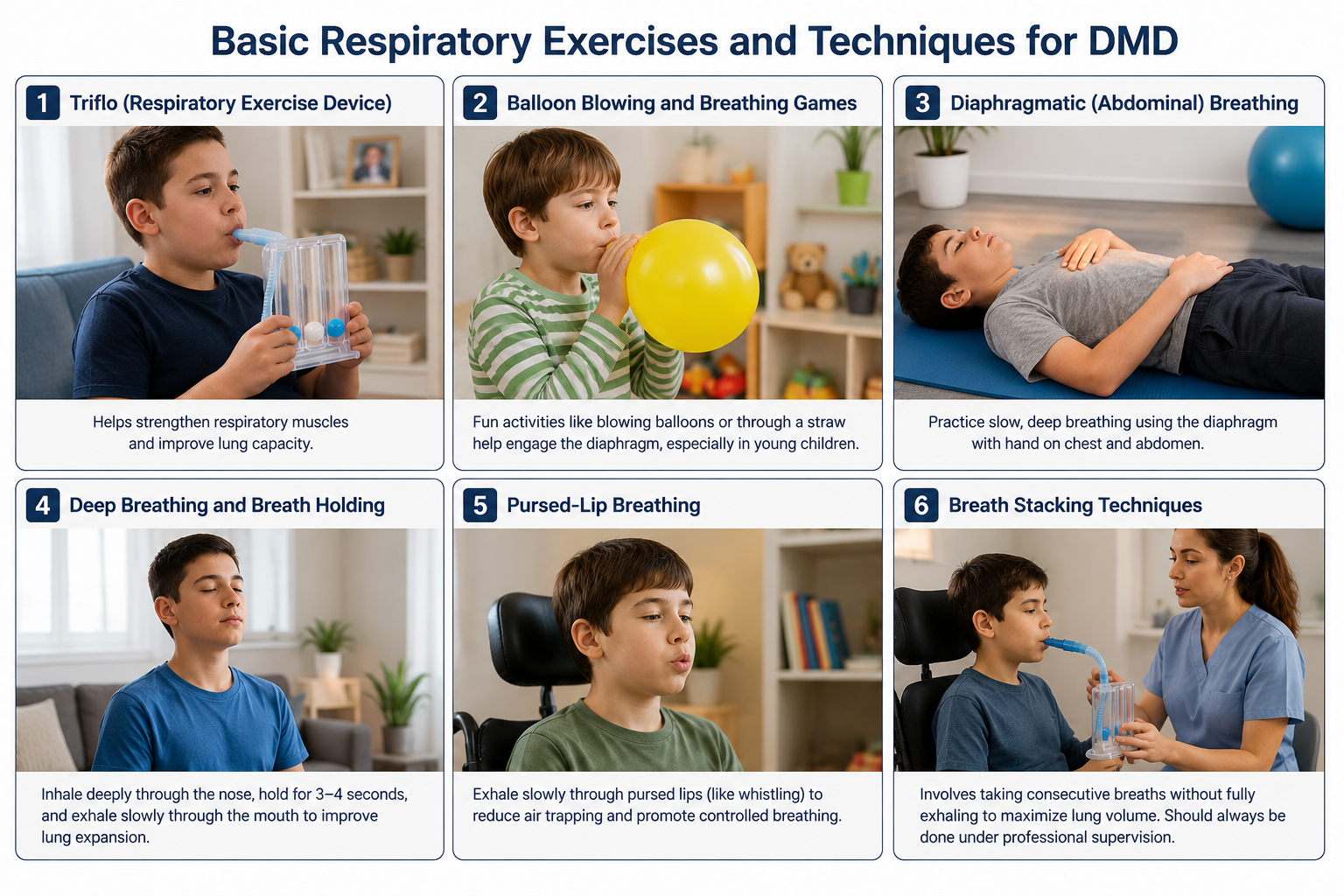
Basic Respiratory Exercises and Techniques for DMD
Triflo (Respiratory Exercise Device)
Under professional supervision, respiratory exercise devices such as Triflo may be used to help strengthen breathing muscles and support lung capacity in individuals with Duchenne muscular dystrophy.
Balloon Blowing and Breathing Games
Especially for younger children, fun activities like blowing up balloons or blowing through a straw can help stimulate the diaphragm and encourage active breathing exercises in an engaging way.
Diaphragmatic (Abdominal) Breathing
This technique involves lying on the back or sitting comfortably with one hand placed on the chest and the other on the abdomen. The goal is to practice slow, deep breathing using primarily the abdominal muscles and diaphragm.
Deep Breathing and Breath Holding
Taking a deep breath through the nose, holding it for 3–4 seconds, and slowly exhaling through the mouth may help improve lung expansion and breathing capacity.
Pursed-Lip Breathing
Exhaling slowly through pursed lips, similar to whistling, may help reduce air trapping in the lungs and promote more controlled breathing.
Breath Stacking Techniques
Breath stacking involves taking consecutive breaths without fully exhaling in order to maximize lung volume. This technique should always be performed under the guidance of a qualified healthcare professional or respiratory therapist.
Continue reading the article to discover more detailed information about respiratory therapy, pulmonary care strategies, airway clearance techniques, and expert-recommended breathing exercises for Duchenne muscular dystrophy.
Pulmonary Rehabilitation for DMD
Pulmonary rehabilitation for DMD involves a comprehensive respiratory care program that combines therapeutic exercises, pulmonary monitoring, airway clearance techniques, and respiratory support technologies. Pulmonary rehabilitation is usually supervised by pulmonologists, respiratory physiotherapists, and neuromuscular specialists.
Goals of Pulmonary Rehabilitation
Improve Lung Expansion
Maintaining chest wall flexibility and lung elasticity becomes increasingly important as DMD progresses.
Reduce Respiratory Infections
Improved airway clearance may reduce mucus buildup and lower pneumonia risk.
Preserve Functional Breathing Capacity
Pulmonary rehabilitation aims to slow the decline of respiratory function.
Enhance Quality of Life
Better breathing efficiency may improve sleep, comfort, and energy levels.
Pulmonary rehabilitation programs frequently incorporate breathing exercises in Duchenne muscular dystrophy as a daily routine for long-term respiratory support.
Respiratory Therapy in Duchenne Muscular Dystrophy
Respiratory therapy in Duchenne muscular dystrophy focuses on preserving lung function and managing progressive respiratory muscle weakness. Respiratory therapists monitor pulmonary health using pulmonary function tests and recommend interventions based on disease progression.
Common Respiratory Therapy Interventions
Incentive Spirometry
Encourages deep inhalation and lung expansion.
Assisted Cough Techniques
Supports secretion clearance when cough strength decreases.
Breath Stacking
Helps maximize inspiratory capacity.
Airway Clearance Devices
Mechanical devices can assist with mucus mobilization.
Sleep Monitoring
Overnight breathing studies may detect nocturnal hypoventilation early.
Breathing exercises in Duchenne muscular dystrophy are often introduced before respiratory symptoms become severe.
Lung Exercises for Duchenne Muscular Dystrophy
Lung exercises for Duchenne muscular dystrophy are designed to maintain respiratory muscle activity and chest mobility. These exercises should always be individualized and supervised by qualified healthcare professionals.
Common Lung Exercises
Deep Breathing Exercises
Controlled inhalation techniques encourage full lung expansion.
Diaphragmatic Breathing
Focuses on activating the diaphragm during inhalation.
Breath Holding Exercises
May help improve lung recruitment under professional supervision.
Balloon Inflation Exercises
Can stimulate respiratory muscle engagement in some patients.
These exercises may help improve ventilation efficiency and reduce shallow breathing patterns associated with respiratory muscle weakness.
DMD Breathing Support Techniques
DMD breathing support techniques are increasingly important as respiratory muscles weaken over time. These techniques support ventilation and improve airway clearance.
Common Breathing Support Strategies
Manual Assisted Cough
Caregivers help strengthen cough force manually.
Mechanical Insufflation-Exsufflation
Also known as cough assist therapy.
Positioning Techniques
Optimized positioning can improve ventilation.
Chest Mobility Exercises
Help preserve chest wall flexibility.
Breathing exercises in Duchenne muscular dystrophy often work best when combined with structured breathing support techniques.
Inspiratory Muscle Training DMD
Inspiratory muscle training DMD programs aim to strengthen the muscles involved in inhalation. Specialized devices create resistance during breathing exercises, forcing inspiratory muscles to work harder.
Potential Benefits
Improved Inspiratory Pressure
May support stronger inhalation capacity.
Enhanced Breathing Efficiency
Can help reduce respiratory fatigue.
Better Cough Strength
Stronger inspiratory muscles may improve cough effectiveness.
Increased Exercise Tolerance
Some patients may experience improved endurance.
However, excessive respiratory muscle fatigue should be avoided, and inspiratory muscle training should always be medically supervised.
Lung Volume Recruitment Duchenne
Lung volume recruitment Duchenne techniques are designed to increase lung inflation and maintain chest wall compliance.
Why Lung Volume Recruitment Matters
As respiratory muscles weaken, patients may struggle to fully inflate the lungs. Over time, reduced lung expansion can contribute to atelectasis and reduced chest wall mobility.
Benefits of Lung Volume Recruitment
Improved Lung Expansion
Helps maintain pulmonary flexibility.
Better Airway Clearance
Larger inspiratory volumes may strengthen cough force.
Reduced Risk of Pulmonary Complications
Can help prevent secretion retention.
Breathing exercises in Duchenne muscular dystrophy frequently incorporate lung volume recruitment techniques.
Breath Stacking Exercises for DMD
Breath stacking exercises for DMD involve taking multiple small breaths consecutively without exhaling. This gradually increases lung inflation volume.
How Breath Stacking Works
Patients inhale several times while preventing air from escaping between breaths. This can be done manually or using assistive devices.
Potential Advantages
Improved Peak Cough Flow
Larger lung volumes can generate stronger coughs.
Increased Chest Wall Flexibility
Supports lung compliance.
Enhanced Secretion Clearance
Improves mucus mobilization.
Breath stacking is considered one of the most effective breathing exercises in Duchenne muscular dystrophy for maintaining inspiratory capacity.
Respiratory Muscle Weakness in Duchenne Muscular Dystrophy
Respiratory muscle weakness in Duchenne muscular dystrophy affects both inspiratory and expiratory muscles.
Respiratory Muscles Commonly Affected
Diaphragm
The primary breathing muscle.
Intercostal Muscles
Assist with chest wall movement.
Abdominal Muscles
Support effective coughing.
As weakness progresses, pulmonary function gradually declines.
FVC=Forced Vital Capacity
Forced Vital Capacity (FVC) is one of the most important measurements used to monitor respiratory decline in DMD.
Cough Assist Therapy for Duchenne Muscular Dystrophy
Cough assist therapy for Duchenne muscular dystrophy helps patients clear respiratory secretions more effectively.
Why Cough Assist Is Important
Weak respiratory muscles reduce cough effectiveness, allowing mucus to accumulate in the airways.
Benefits of Cough Assist Devices
Reduced Pneumonia Risk
Improved secretion clearance lowers infection risk.
Better Airway Hygiene
Helps remove mucus from the lungs.
Fewer Hospitalizations
Can reduce respiratory complications.
Many clinicians consider cough assist therapy an essential part of breathing exercises in Duchenne muscular dystrophy.
Deep Breathing Exercises for Muscular Dystrophy
Deep breathing exercises for muscular dystrophy help maintain lung expansion and support oxygen exchange.
Examples of Deep Breathing Exercises
Diaphragmatic Breathing
Promotes efficient breathing patterns.
Slow Controlled Inhalation
Encourages full chest expansion.
Pursed-Lip Breathing
May improve breathing rhythm.
These exercises are often included in pulmonary rehabilitation programs for DMD patients.
Duchenne Muscular Dystrophy Pulmonary Care
Duchenne muscular dystrophy pulmonary care requires long-term multidisciplinary management.
Key Components of Pulmonary Care
Routine Pulmonary Function Testing
Monitors respiratory decline.
Vaccination Programs
Helps reduce infection risk.
Sleep Studies
Detects nocturnal hypoventilation early.
Respiratory Equipment Support
Includes ventilatory support devices and cough assist machines.
Breathing exercises in Duchenne muscular dystrophy should be integrated into a comprehensive pulmonary care plan.
Read More: Infection in Duchenne
Airway Clearance Techniques in DMD
Airway clearance techniques in DMD help prevent mucus accumulation and respiratory infections.
Common Airway Clearance Methods
Chest Physiotherapy
Manual percussion and vibration techniques.
Mechanical Cough Assist
Device-assisted airway clearance.
Positive Expiratory Pressure Therapy
Supports mucus mobilization.
Postural Drainage
Uses gravity to help move secretions.
Combining airway clearance techniques with breathing exercises in Duchenne muscular dystrophy may improve respiratory outcomes.
Diaphragm Exercises for Duchenne Muscular Dystrophy
The diaphragm is the most important respiratory muscle in the body. Diaphragm exercises for Duchenne muscular dystrophy aim to preserve diaphragmatic efficiency as long as possible.
Examples of Diaphragm Exercises
Belly Breathing
Encourages diaphragmatic activation.
Inspiratory Resistance Exercises
May strengthen inhalation muscles.
Controlled Breathing Drills
Improve breathing coordination.
Preserving diaphragm function is critical for delaying ventilatory dependence in DMD.
Non-Invasive Ventilation in Duchenne Muscular Dystrophy
Non-invasive ventilation in Duchenne muscular dystrophy has significantly improved respiratory outcomes and survival.
Common Non-Invasive Ventilation Methods
BiPAP
Provides different pressures during inhalation and exhalation.
CPAP
Maintains continuous airway pressure.
Benefits of Non-Invasive Ventilation
Improved Sleep Quality
Reduces nocturnal hypoventilation.
Better Daytime Energy
Improves overnight oxygenation.
Reduced Respiratory Fatigue
Supports weakened breathing muscles.
Breathing exercises in Duchenne muscular dystrophy are often combined with non-invasive ventilation for comprehensive respiratory management.
Pulmonary Function in Duchenne Muscular Dystrophy
Pulmonary function in Duchenne muscular dystrophy is monitored using several respiratory tests.
Important Pulmonary Function Tests
Forced Vital Capacity (FVC)
FVC↓ as respiratory muscle weakness progresses
Peak Cough Flow
Measures cough effectiveness.
Maximum Inspiratory Pressure
Evaluates inspiratory muscle strength.
Sleep Oximetry
Assesses overnight oxygen levels.
Regular pulmonary testing allows early intervention when respiratory decline begins.
DMD Respiratory Physiotherapy
DMD respiratory physiotherapy combines breathing exercises, chest mobility techniques, and airway clearance strategies.
Main Goals of Respiratory Physiotherapy
Preserve Chest Wall Flexibility
Reduces stiffness.
Improve Ventilation
Supports oxygen exchange.
Maintain Respiratory Muscle Activity
Helps slow functional decline.
Enhance Secretion Clearance
Reduces respiratory complications.
Respiratory physiotherapy remains one of the most important supportive treatments in Duchenne muscular dystrophy.
How to Improve Breathing in Duchenne Muscular Dystrophy
Families and caregivers often ask how to improve breathing in Duchenne muscular dystrophy safely.
Practical Recommendations
Start Respiratory Monitoring Early
Early intervention improves outcomes.
Follow Daily Respiratory Exercises
Consistency is essential.
Prevent Respiratory Infections
Vaccinations and prompt treatment matter.
Monitor Sleep Quality
Sleep-disordered breathing is common in DMD.
Work with Neuromuscular Specialists
Expert respiratory management is crucial.
Breathing exercises in Duchenne muscular dystrophy should always be tailored to the individual patient’s respiratory status.
Respiratory Management Strategies for DMD
Respiratory management strategies for DMD have evolved dramatically over recent decades.
Modern Respiratory Management Includes
Preventive Pulmonary Monitoring
Early detection of respiratory decline.
Assisted Airway Clearance
Supports secretion removal.
Ventilatory Support
Includes non-invasive ventilation technologies.
Multidisciplinary Care
Coordination between pulmonologists, neurologists, cardiologists, and physiotherapists.
Comprehensive respiratory care has contributed significantly to increased life expectancy in Duchenne muscular dystrophy.
Read More: Ultimate Age-Specific Care Considerations in Duchenne Muscular Dystrophy for Families and Clinicians
FAQs: Breathing Exercises in Duchenne Muscular Dystrophy
What are the best breathing exercises in Duchenne muscular dystrophy?
The best breathing exercises in Duchenne muscular dystrophy usually include diaphragmatic breathing, breath stacking, deep breathing exercises, inspiratory muscle training, and airway clearance techniques. These exercises are designed to support lung expansion, improve cough strength, and maintain respiratory muscle activity. However, every DMD patient has different respiratory needs, so breathing exercises should always be recommended and supervised by a pulmonologist or respiratory physiotherapist experienced in neuromuscular disorders.
When should respiratory therapy begin in Duchenne muscular dystrophy?
Respiratory therapy in Duchenne muscular dystrophy should ideally begin before noticeable breathing problems develop. Many experts recommend early pulmonary monitoring during childhood, even when respiratory symptoms are mild or absent. Starting breathing exercises in Duchenne muscular dystrophy early may help preserve lung function, improve airway clearance, and delay respiratory complications later in the disease progression.
Can breathing exercises improve lung function in DMD?
Breathing exercises in Duchenne muscular dystrophy cannot cure respiratory muscle weakness, but they may help maintain lung capacity, improve chest wall flexibility, and support airway clearance. Pulmonary rehabilitation and respiratory physiotherapy may also reduce the risk of respiratory infections and improve quality of life. Consistent respiratory care is considered one of the most important supportive interventions in DMD management.
What is breath stacking in Duchenne muscular dystrophy?
Breath stacking is a respiratory technique used in Duchenne muscular dystrophy to increase lung inflation and improve cough effectiveness. During breath stacking, multiple small breaths are taken consecutively without exhaling. This helps expand the lungs beyond normal tidal volume and may improve secretion clearance, chest wall mobility, and peak cough flow. Breath stacking is commonly included in pulmonary rehabilitation programs for DMD patients.
Why is cough assist therapy important for DMD patients?
Cough assist therapy for Duchenne muscular dystrophy is important because respiratory muscle weakness reduces the ability to cough effectively. Weak cough strength can lead to mucus buildup, chest infections, and pneumonia. Mechanical cough assist devices help simulate a stronger cough by delivering positive and negative airway pressure cycles. This may significantly improve airway clearance and reduce hospitalization risk.
How often should pulmonary function be tested in Duchenne muscular dystrophy?
Pulmonary function testing in Duchenne muscular dystrophy is usually recommended at least once or twice per year, depending on age and respiratory status. Common tests include Forced Vital Capacity (FVC), peak cough flow, and overnight sleep monitoring. More frequent evaluations may be necessary as respiratory muscle weakness progresses. Regular monitoring helps specialists determine when to begin interventions such as non-invasive ventilation or cough assist therapy.
What are the early signs of respiratory problems in Duchenne muscular dystrophy?
Early signs of respiratory decline in Duchenne muscular dystrophy may include weak cough, frequent chest infections, shortness of breath, morning headaches, fatigue, poor sleep quality, and daytime sleepiness. Sleep-disordered breathing and nocturnal hypoventilation are also common as respiratory muscles weaken. Families should report any breathing changes to their neuromuscular care team promptly.
Can non-invasive ventilation help DMD patients breathe better?
Yes. Non-invasive ventilation in Duchenne muscular dystrophy has significantly improved respiratory outcomes and life expectancy. Devices such as BiPAP support weakened respiratory muscles during sleep and may improve oxygenation, reduce respiratory fatigue, and enhance sleep quality. Non-invasive ventilation is often introduced when pulmonary function declines or sleep-related breathing problems develop.
Are breathing exercises safe for children with Duchenne muscular dystrophy?
Breathing exercises in Duchenne muscular dystrophy are generally safe when supervised by qualified healthcare professionals. However, respiratory exercises should always be individualized based on the patient’s age, lung function, and disease stage. Overexertion and respiratory muscle fatigue should be avoided. Families should never begin advanced respiratory exercises without medical guidance.
How can families support respiratory health in Duchenne muscular dystrophy at home?
Families can support respiratory health in Duchenne muscular dystrophy by following prescribed breathing exercises daily, maintaining vaccination schedules, preventing respiratory infections, monitoring sleep quality, ensuring proper hydration, and attending regular pulmonary evaluations. Home respiratory care may also include cough assist therapy, airway clearance techniques, chest physiotherapy, and non-invasive ventilation when recommended by specialists. Early and consistent respiratory management is essential for long-term pulmonary health in DMD patients.
Final Thoughts
Breathing exercises in Duchenne muscular dystrophy are an important part of long-term respiratory care. Early pulmonary monitoring may help detect breathing problems sooner. Respiratory therapy can support lung function and airway clearance. Breath stacking and cough assist therapy may reduce complications. Non-invasive ventilation has improved survival in many DMD patients. Daily respiratory exercises should always be medically supervised. Consistent pulmonary care may improve sleep and quality of life. Families play a critical role in respiratory management. Multidisciplinary care remains essential in Duchenne muscular dystrophy. Advances in respiratory support continue to bring new hope for DMD families worldwide.
Academic Sources and References
- Birnkrant DJ, Bushby K, Bann CM, et al. “Diagnosis and management of Duchenne muscular dystrophy, part 2: respiratory, cardiac, bone health, and orthopaedic management.” The Lancet Neurology, 2018. (thelancet.com)
- Sheehan DW, Birnkrant DJ, Benditt JO, et al. “Respiratory Management of the Patient With Duchenne Muscular Dystrophy.” Pediatrics, 2018. (PubMed)
- Prigent H. “Respiratory care in Duchenne muscular dystrophy.” Neuromuscular Disorders, 2025. (ScienceDirect)
- McKim DA, Katz SL, Barrowman N, et al. “Lung volume recruitment slows pulmonary function decline in Duchenne muscular dystrophy.” Archives of Physical Medicine and Rehabilitation, 2012. (ScienceDirect)
- Finder JD, Birnkrant D, Carl J, et al. “Respiratory care of the patient with Duchenne muscular dystrophy.” American Journal of Respiratory and Critical Care Medicine, 2004.
- Bushby K, Finkel R, Birnkrant DJ, et al. “Diagnosis and management of Duchenne muscular dystrophy: implementation of multidisciplinary care.” The Lancet Neurology, 2010.
- Raphael JC, Chevret S, Chastang C, Bouvet F. “Randomised trial of preventive nasal ventilation in Duchenne muscular dystrophy.” The Lancet, 1994. (ScienceDirect)
- Eagle M, Baudouin SV, Chandler C, et al. “Survival in Duchenne muscular dystrophy: improvements in life expectancy since 1967 and the impact of home nocturnal ventilation.” Neuromuscular Disorders, 2002. (ScienceDirect)
- LoMauro A, D’Angelo MG, Aliverti A. “Assessment and management of respiratory function in patients with Duchenne muscular dystrophy.” Current Opinion in Pediatrics, 2015.
- Bach JR, Ishikawa Y, Kim H. “Prevention of pulmonary morbidity for patients with Duchenne muscular dystrophy.” Chest, 1997. (ScienceDirect)
- Chatwin M, Simonds AK. “The addition of mechanical insufflation/exsufflation shortens airway-clearance sessions in neuromuscular patients.” European Respiratory Journal, 2009.
- Szeinberg A, Tabachnik E, Rashed N, et al. “Cough capacity in patients with muscular dystrophy.” Chest, 1988. (ScienceDirect)
- Ward S, Chatwin M, Heather S, Simonds AK. “Randomised controlled trial of non-invasive ventilation for nocturnal hypoventilation in neuromuscular disease.” Thorax, 2005. (ScienceDirect)
- LoMauro A, Romei M, D’Angelo MG, et al. “Determinants of cough efficiency in Duchenne muscular dystrophy.” Respiratory Physiology & Neurobiology, 2014.
- Childs AM, et al. “Development of respiratory care guidelines for Duchenne muscular dystrophy.” Thorax, 2024. (thorax.bmj.com)
- DMD Care UK Working Group. “Clinical recommendations for Duchenne muscular dystrophy care.” DMD Care UK, 2026. (DMD Care UK)
- American Thoracic Society Consensus Statement. “Respiratory care of patients with neuromuscular weakness.” American Journal of Respiratory and Critical Care Medicine.
- Duchenne Warriors. “Respiratory Care Guidelines for Duchenne Muscular Dystrophy.” DMDWarrior