

Psychological support in Duchenne muscular dystrophy (DMD) is a critical and often underemphasized aspect of comprehensive care. Living with Duchenne Muscular Dystrophy involves not only progressive physical decline but also significant emotional, cognitive, and social challenges for both patients and their families. Effective psychological support in Duchenne muscular dystrophy, alongside mental health care, emotional resilience strategies, and caregiver support systems, plays a key role in improving quality of life. Families navigating this condition require structured psychological support in Duchenne muscular dystrophy to cope with diagnosis, disease progression, and long-term uncertainty.
Table of Contents
Emotional Shock After Diagnosis: What Families Experience
The moment of diagnosis in Duchenne muscular dystrophy is often described as emotionally overwhelming and life-altering. Parents frequently report experiencing shock, disbelief, fear, and profound grief when they first hear the diagnosis. This emotional reaction is not only natural but clinically recognized as an acute stress response that can impact decision-making and family dynamics. Psychological support in Duchenne muscular dystrophy is especially critical during this early stage to help families process information and begin emotional adaptation. Read More: Newly Diagnosed Patients with Duchenne
Acute Psychological Response
Immediately after diagnosis, families may enter a state of emotional paralysis. Research shows that caregivers of children with DMD experience significantly higher stress levels and reduced quality of life compared to parents of healthy children.

Cognitive Overload
Parents often struggle to absorb medical information due to emotional distress.
Emotional Fragmentation
Simultaneous feelings of denial, anger, and sadness may occur.
Anticipatory Grief Begins Early
Unlike many conditions, DMD introduces anticipatory grief almost immediately after diagnosis.
What is Anticipatory Grief?
It refers to grieving future losses before they occur.
Why It Matters
Studies indicate that caregiver distress in DMD is closely linked to disease progression awareness.
How to Talk to Your Child About DMD (Age-Appropriate Guidance)
Explaining DMD to a child is one of the most emotionally complex responsibilities for parents. Children are highly perceptive and often sense changes even when adults attempt to shield them. Avoiding the conversation can increase anxiety, while overly technical explanations may overwhelm them. Psychological support in Duchenne muscular dystrophy includes structured communication strategies tailored to the child’s developmental stage.
Age-Based Communication Framework
Ages 4–7 (Early Childhood)
Children at this stage need simple, reassuring explanations.
Example Language
“Your muscles need extra help to stay strong.”
Ages 8–12 (Middle Childhood)
Children begin to understand cause and effect.
Key Strategy
Introduce the idea of a genetic condition gradually.
Adolescents
Teenagers require transparency and inclusion in decisions.
Emotional Impact
Adolescents may experience identity-related distress and future anxiety.
Psychological Benefits of Honest Communication
Studies show that children who receive age-appropriate explanations demonstrate better emotional adjustment and lower anxiety levels.
How Siblings Are Affected and How to Support Them
Siblings of children with DMD are often referred to as the “silent sufferers” within the family system. While the affected child receives most of the attention, siblings may experience emotional neglect, guilt, and confusion. These emotional responses can significantly impact their psychological development if not addressed. Psychological support in Duchenne muscular dystrophy must include siblings as an integral part of care.
Emotional Impact on Siblings
Perceived Neglect
Siblings may feel overlooked due to the medical needs of the affected child.
Survivor Guilt
Healthy siblings may feel guilty for not having the condition.
Long-Term Risks
Unaddressed emotional needs can lead to:
- Anxiety disorders
- Behavioral issues
- Reduced self-esteem
Support Strategies
Dedicated Attention
Parents should create regular one-on-one time.
Inclusion in Care
Involving siblings in caregiving decisions fosters understanding.
Parental Burnout: Signs, Risks, and Prevention
Caring for a child with DMD is an intensive, long-term responsibility that places significant psychological strain on caregivers. Parents often prioritize their child’s needs at the expense of their own mental and physical health. Over time, this imbalance can lead to burnout, depression, and reduced caregiving capacity. Psychological support in Duchenne muscular dystrophy must prioritize caregiver well-being.
Clinical Evidence of Caregiver Burden
Multiple studies confirm that DMD caregiving is associated with:
- Depression
- Poor sleep quality
- Reduced quality of life
Signs of Burnout
Emotional Signs
- Irritability
- Emotional detachment
Physical Signs
- Chronic fatigue
- Sleep disturbances
Prevention Strategies
Respite Care
Temporary relief significantly reduces stress.
Mental Health Support
Therapy improves coping mechanisms.
Where to Find Support: Resources for DMD Families
Access to support systems plays a crucial role in improving emotional outcomes for families affected by DMD. However, many families struggle to identify reliable and accessible resources. Psychological support in Duchenne muscular dystrophy includes connecting families with healthcare professionals, community organizations, and peer support networks.
Medical Support Systems
- Neurologists
- Psychologists
- Multidisciplinary clinics
Community Resources
Support organizations provide:
- Education
- Advocacy
- Peer connection
Stages of Emotional Adjustment in Chronic Illness
Families living with DMD often move through recognizable emotional stages. These stages are not linear and may recur throughout the disease progression. Understanding these patterns helps normalize emotional responses. Psychological support in Duchenne muscular dystrophy should address each stage appropriately.
Classic Stages
- Denial
- Anger
- Hold talks
- Depression
- Acceptance
Common Psychological Challenges in Children with DMD
Children with DMD face a unique combination of physical limitations and psychological stressors. These challenges often evolve alongside disease progression. Psychological support in Duchenne muscular dystrophy should include regular mental health monitoring.
Anxiety
Fear of medical procedures and disease progression is common.
Depression
Loss of independence contributes to depressive symptoms.
Social Withdrawal
Reduced participation in peer activities leads to isolation.
Studies show anxiety and depression significantly impact quality of life in DMD patients.
Building Emotional Resilience in Children with DMD
Resilience is a critical factor in long-term psychological adaptation. Psychological support in Duchenne muscular dystrophy focuses on strengthening coping skills and emotional flexibility.
Key Strategies
Encouraging Independence
Promotes self-efficacy.
Positive Reinforcement
Builds confidence and motivation.
Coping Strategies for Parents: Practical Mental Health Tools
Caring for a child with Duchenne Muscular Dystrophy (DMD) places sustained psychological demands on parents—often over many years and across multiple care transitions. Effective coping is not a single skill but a portfolio of tools that help regulate stress, maintain functioning, and protect long-term well-being. Within psychological support in Duchenne muscular dystrophy, these tools are taught, practiced, and adapted over time to match changing needs.
Why Structured Coping Matters
Without intentional coping strategies, chronic stress can accumulate into burnout, anxiety, or depression. Structured tools help parents:
- Regulate emotional responses during high-stress moments
- Make clearer medical decisions
- Sustain caregiving capacity over the long term
- Model healthy coping for their child and family
Core Coping Frameworks (What to Use, When to Use It)
1) Problem-Focused Coping (When something can be changed)
Use when a stressor is actionable (e.g., scheduling, equipment, care routines).
Tools
- Task breakdown: Convert large problems into small, time-bound steps
- Care checklists: Morning/evening routines to reduce cognitive load
- Decision trees: “If X happens, we do Y” for common scenarios
- Care coordination map: Contacts for neurology, respiratory, cardiology, therapy
Example
Instead of “everything is overwhelming,” list three tasks for today: confirm appointment, refill medication, organize equipment.
2) Emotion-Focused Coping (When something cannot be changed)
Use for uncontrollable stressors (e.g., disease progression, uncertainty).
Tools
- Mindfulness (3–5 minutes): Slow breathing, body scan
- Name the emotion: “This is fear/grief”—labeling reduces intensity
- Self-compassion script: “This is hard, and I’m doing my best”
- Grounding (5–4–3–2–1): Engage senses to reduce acute anxiety
3) Meaning-Focused Coping (Sustaining long-term resilience)
Use to maintain purpose and motivation.
Tools
- Values clarification: What matters most today—comfort, connection, dignity
- Micro-meaning moments: Noticing small wins (a calm morning, a shared laugh)
- Gratitude journaling (3 items/day): Shifts attention without denying reality
- Narrative reframing: “We are building a life with DMD, not waiting for life to start”
Daily Mental Health Toolkit (Practical, Repeatable)
The 10-Minute Reset Routine
- 2 min breathing: Inhale 4, exhale 6
- 3 min body scan: Release tension (jaw, shoulders, hands)
- 3 min thought check: “What am I telling myself? Is it accurate/helpful?”
- 2 min plan: Choose one doable next step
Cognitive Reframing (CBT-Informed)
- Catch it: Identify the automatic thought (“I can’t handle this”)
- Check it: Evidence for/against
- Change it: Balanced thought (“This is hard, but I’ve handled hard things before”)
Stress Budgeting
- Must-do / Should-do / Could-do lists
- Schedule recovery blocks (10–20 minutes) between high-demand tasks
Treat energy like a budget:
Protecting Against Caregiver Burnout
Early Warning Signs
- Persistent fatigue, irritability, sleep disruption
- Emotional numbness or withdrawal
- Reduced concentration or decision fatigue
Protective Habits
- Non-negotiable breaks: Even 10–15 minutes daily
- Delegation: Share tasks with partner/family when possible
- Professional support: Regular check-ins with a therapist
- Peer connection: Support groups reduce isolation
Communication Tools That Reduce Stress
With Healthcare Teams
- Prepare 3 key questions before visits
- Use teach-back: “Can I repeat what I understood?”
- Keep a one-page summary (meds, recent changes, concerns)
Within the Family
- Weekly 10-minute check-in with partner
- What went well?
- What was hard?
- What do we need this week?
- Use “I” statements to reduce conflict (“I feel overwhelmed when…”)
Managing Uncertainty (A High-Impact Skill)
- Two-column method:
- Column A: What I can control (appointments, routines)
- Column B: What I can’t (timeline, progression)
- Invest energy in Column A; use emotion-focused tools for Column B
- Set short planning horizons (today/this week) to reduce anxiety
Sleep and Physical Health (Foundations of Coping)
- Sleep hygiene: consistent schedule, low light before bed, limit screens
- Micro-movement: brief stretching or walking to discharge stress
- Nutrition: regular meals to stabilize energy and mood
Physical regulation strengthens psychological resilience.
When to Seek Professional Help
Seek a psychologist or psychiatrist if:
- Distress persists most days for 2+ weeks
- Panic, severe anxiety, or depressive symptoms impair function
- You feel emotionally overwhelmed or detached
Early support is part of effective psychological support in Duchenne muscular dystrophy, not a last resort.
Putting It Together: A Simple Weekly Plan
- Daily: 10-minute reset + one recovery break
- 3x/week: 5-minute mindfulness or journaling
- Weekly: partner check-in + support group/therapy (if available)
- Monthly: review care plan and redistribute tasks
Coping well in DMD is not about “being strong all the time”—it’s about using the right tool at the right moment. By combining problem-focused, emotion-focused, and meaning-focused strategies, parents can reduce stress, sustain caregiving, and protect their own mental health while providing stable, compassionate care for their child.
How to Maintain Hope Without Creating Unrealistic Expectations
Maintaining hope while avoiding unrealistic expectations is one of the most delicate psychological tasks for families living with Duchenne Muscular Dystrophy. Hope is essential—it sustains motivation, strengthens resilience, and helps families navigate uncertainty. However, when hope becomes disconnected from medical reality, it can lead to emotional crashes, mistrust in healthcare providers, and poor decision-making. Effective psychological support in Duchenne muscular dystrophy focuses on cultivating adaptive hope—a form of hope that is grounded, flexible, and aligned with real-world conditions.
Understanding the Difference: Hope vs. Unrealistic Expectations
Hope and unrealistic expectations are often confused, but psychologically they function very differently.
Healthy (Adaptive) Hope
- Focuses on achievable, meaningful goals
- Accepts uncertainty and change
- Supports emotional resilience
- Coexists with realistic understanding
Unrealistic Expectations
- Depend on unlikely or unproven outcomes
- Often tied to denial or avoidance
- Lead to disappointment and emotional distress
- Can delay necessary care decisions
In DMD, unrealistic expectations may emerge around “miracle cures,” immediate gene therapy outcomes, or complete reversal of disease progression. While medical advances are promising, psychological support in Duchenne muscular dystrophy requires helping families interpret these developments accurately.
Why Hope Is Still Essential
Even in progressive conditions, hope is not about denial—it is about meaning and direction.
Research in chronic illness psychology shows that:
- Hope improves coping capacity
- Hope reduces anxiety and depression
- Hope enhances quality of life
Families who maintain adaptive hope are better able to:
- Engage in care decisions
- Support their child emotionally
- Sustain long-term caregiving
Practical Ways to Maintain Healthy Hope
1. Shift the Focus to Short-Term, Meaningful Goals
Instead of focusing only on long-term disease outcomes, families can anchor hope in:
- Daily comfort and well-being
- Achievable milestones
- Positive experiences
Example:
Rather than hoping for a cure, focus on improving today’s mobility, comfort, or emotional connection.
2. Stay Informed—But Critically
Access to medical information is important, but it must be interpreted carefully.
- Follow credible sources (clinical guidelines, major organizations)
- Be cautious with social media claims
- Discuss new treatments with healthcare professionals
Balanced information supports realistic optimism rather than false hope.
3. Reframe What “Progress” Means
In DMD, progress is not always about physical improvement.
It can also mean:
- Slower disease progression
- Better symptom management
- Improved quality of life
This reframing is a core element of psychological support in Duchenne muscular dystrophy.
4. Allow Space for Both Hope and Grief
Hope and grief are not opposites—they coexist.
Families may:
- Hope for the best
- Grieve current or future losses
Suppressing grief in favor of “forced positivity” can lead to emotional burnout. Healthy adaptation involves acknowledging both.
5. Build a Supportive Narrative
The way families talk about the condition shapes emotional outcomes.
Instead of:
- “There is nothing we can do”
Shift to:
- “We are doing everything possible to support our child’s life and well-being”
This narrative fosters agency and resilience.
The Role of Healthcare Professionals
Clinicians play a key role in balancing hope and realism.
Effective communication should:
- Be honest but compassionate
- Avoid false reassurance
- Provide clear expectations
- Support emotional processing
Studies show that families prefer truth delivered with empathy over overly optimistic but inaccurate messaging.
Common Pitfalls to Avoid
- ❌ Relying on unverified “miracle treatments”
- ❌ Avoiding difficult conversations about progression
- ❌ Equating realism with “giving up”
- ❌ Ignoring emotional distress
These patterns can undermine both psychological stability and medical decision-making.
Long-Term Perspective: Redefining Hope
Over time, hope often evolves.
Early-stage hope:
- Focused on cure or reversal
Later-stage hope:
- Focused on comfort, dignity, connection, and meaning
This evolution is not a loss of hope—it is a transformation of hope into a more sustainable and psychologically healthy form.
Maintaining hope without creating unrealistic expectations is not about lowering expectations—it is about aligning hope with reality in a way that protects emotional well-being. In the context of psychological support in Duchenne muscular dystrophy, this balance is essential for both families and children to navigate the journey with strength, clarity, and resilience.
School and Social Life: Supporting Emotional Well-being
School and social environments play a critical role in shaping the psychological well-being of children with Duchenne muscular dystrophy. As physical limitations increase, children may face challenges in participation, peer relationships, and self-esteem. These experiences can significantly impact emotional health and identity development. Psychological support in Duchenne muscular dystrophy must include structured collaboration between families, educators, and healthcare providers to promote inclusion and emotional stability.
Educational Challenges in DMD
Children with DMD often require individualized support due to:
- Mobility limitations
- Fatigue
- Learning difficulties (in some cases)
Cognitive Considerations
Research shows that some boys with DMD may have:
- Attention deficits
- Learning disabilities
- Executive function challenges
These are linked to dystrophin expression in the brain (Ricotti et al., 2016).
Strategies for School Support
Individualized Education Plans (IEPs)
IEPs ensure tailored academic accommodations, including:
- Extended time for tasks
- Physical accessibility
- Assistive technology
Teacher Awareness
Educators should understand:
- Disease progression
- Emotional needs
- Fatigue management
Learn More: Guide to DMD for Parents and Teachers at School
Social Inclusion
Peer Education
Educating classmates about DMD can:
- Reduce stigma
- Increase empathy
- Promote inclusion
Encouraging Participation
Adapted activities help maintain social engagement and prevent isolation.
Communication Between Parents: Staying Strong as a Couple
The emotional burden of raising a child with DMD can place significant strain on parental relationships. Differences in coping styles, stress levels, and caregiving responsibilities may lead to misunderstandings or conflict. Strong communication between parents is essential for maintaining family stability and emotional resilience. Psychological support in Duchenne muscular dystrophy should address the couple as a unit, not just individual caregivers.
Common Relationship Challenges
- Unequal caregiving roles
- Emotional withdrawal
- Financial stress
Strengthening Communication
Open Dialogue
Regular discussions about emotions and expectations reduce misunderstandings.
Shared Decision-Making
Collaborative decisions foster unity and reduce conflict.
When to Seek Couple Counseling
Professional support may be beneficial when:
- Communication breaks down
- Conflict becomes frequent
- Emotional disconnection occurs
When to Seek Professional Help (Psychologist or Psychiatrist?)
While many emotional reactions are normal, some situations require professional mental health intervention. Early recognition of psychological distress can prevent more severe conditions such as clinical depression or anxiety disorders. Psychological support in Duchenne muscular dystrophy includes timely referral to specialists when needed.
Warning Signs in Children
- Persistent sadness
- Withdrawal from activities
- Behavioral changes
Warning Signs in Parents
- Chronic anxiety
- Sleep disturbances
- Feelings of hopelessness
Types of Professional Support
Psychologists
Provide therapy and coping strategies.
Psychiatrists
Manage severe mental health conditions with medication if necessary.
The Role of Support Groups and Patient Communities
Support groups and patient communities are essential for reducing isolation and improving emotional well-being. Families often find comfort in connecting with others who share similar experiences. Psychological support in Duchenne muscular dystrophy is strengthened through peer interaction and shared knowledge.
Benefits of Support Groups
- Emotional validation
- Practical advice
- Shared experiences
Online vs In-Person Communities
Online Communities
Provide accessibility and global connections.
In-Person Groups
Offer deeper emotional bonding and local support.
Cultural and Social Factors Affecting Coping in Families
Cultural beliefs and social environments significantly influence how families perceive and cope with DMD. These factors affect attitudes toward illness, help-seeking behavior, and caregiving roles. Psychological support in Duchenne muscular dystrophy must be culturally sensitive to be effective.
Cultural Beliefs About Illness
Some cultures may:
- Stigmatize disability
- Avoid discussing illness openly
Social Support Systems
Strong community networks improve coping outcomes and reduce caregiver stress.
Managing Uncertainty About the Future
Uncertainty is one of the most persistent stressors for families living with Duchenne Muscular Dystrophy (DMD). Questions about progression, treatments, independence, and long-term care rarely have precise timelines. Effective psychological support in Duchenne muscular dystrophy focuses on helping families tolerate uncertainty while still planning, making decisions, and maintaining emotional stability.
Why Uncertainty Feels So Overwhelming
Uncertainty activates the brain’s threat system. When outcomes are unclear, the mind tries to “solve” the future, leading to:
- Constant worry and mental over-analysis
- Difficulty making decisions (“What if we choose wrong?”)
- Sleep disruption and physical tension
- A sense of loss of control
In DMD, these feelings can intensify at transition points (e.g., loss of ambulation, starting respiratory support).
Practical Strategies to Manage Uncertainty
1) Set Short Planning Horizons
Focus on today, this week, this month rather than distant, uncertain timelines. Short horizons reduce cognitive overload and improve follow-through.
Example:
“Today we’ll complete physiotherapy and plan a restful evening.”
2) Use “If–Then” Planning
Create simple contingency plans to reduce decision anxiety.
- If fatigue increases → then adjust activity schedule
- If respiratory symptoms change → then contact the care team
This turns uncertainty into prepared flexibility.
3) Schedule “Worry Time”
Contain worry instead of letting it run all day.
- Set a 10–15 minute window daily
- Write down concerns
- Outside that window, gently postpone worries
This technique reduces rumination and improves focus.
4) Practice Cognitive Reframing (CBT-Based)
- Catch: “We don’t know what will happen—I can’t cope.”
- Check: Is there evidence I can’t cope? What have we handled before?
- Change: “We don’t know everything, but we have support and a plan.”
Reframing builds realistic confidence without denying uncertainty.
5) Ground the Body to Calm the Mind
Simple physiological tools can quickly reduce anxiety:
- Breathing: inhale 4 seconds, exhale 6 seconds (2–3 minutes)
- 5–4–3–2–1 grounding: name 5 things you see, 4 you feel, etc.
- Muscle release: unclench jaw, drop shoulders
Regulating the body helps quiet the mind’s threat response.
6) Limit Unfiltered Information Intake
While staying informed is important, constant exposure to unverified or worst-case content can amplify anxiety.
- Prioritize trusted clinical sources
- Discuss new information with your care team
- Avoid “doom-scrolling” late at night
Balanced information supports informed calm, not panic.
7) Build Flexible Routines
Routines create stability even when the future is uncertain.
- Consistent sleep and meal times
- Predictable care blocks (therapy, meds)
- Built-in rest periods
Flexibility within structure allows you to adapt without feeling out of control.
Emotional Tools for Living With Uncertainty
Allow Both Hope and Not-Knowing
You can hold hope while accepting uncertainty. These are not opposites.
Name the Feeling
Saying “This is anxiety” or “This is fear” reduces its intensity.
Self-Compassion
Use supportive inner language:
“This is hard, and I’m doing the best I can right now.”
When Uncertainty Becomes Overwhelming
Seek professional support if:
- Worry is constant and uncontrollable
- Sleep is consistently disrupted
- Anxiety interferes with daily functioning
Psychologists can teach structured skills for uncertainty tolerance—an important part of psychological support in Duchenne muscular dystrophy.
Reframing the Future
Instead of asking:
- “What will happen in 5–10 years?”
Shift to:
- “What matters most this week?”
- “What can we improve today?”
This reframing moves focus from uncontrollable outcomes to meaningful action.
Managing uncertainty in DMD is not about eliminating unknowns—it is about building the capacity to live well despite them. By combining practical planning, emotional regulation, and supportive communication, families can reduce anxiety, make clearer decisions, and maintain stability even in the face of an unpredictable future.
Grief and Anticipatory Grief in DMD
Grief in DMD is ongoing and multifaceted. Families experience not only current losses but also anticipated future losses. This form of grief can be emotionally exhausting if not addressed. Psychological support in Duchenne muscular dystrophy should include structured grief support.
Types of Grief
- Anticipatory grief
- Chronic sorrow
Coping with Grief
Emotional Expression
Encouraging open discussion of feelings.
Counseling Support
Professional guidance helps process grief effectively.
Balancing Caregiving and Personal Life
Caregivers often struggle to balance intensive caregiving responsibilities with personal needs. Neglecting personal well-being can lead to burnout and reduced caregiving capacity. Psychological support in Duchenne muscular dystrophy should emphasize the importance of maintaining balance.
Risks of Imbalance
- Burnout
- Social isolation
- Health decline
Strategies for Balance
Time Management
Scheduling personal time is essential.
Support Networks
Delegating tasks reduces burden.
Mental Health Impact of Disease Progression
The mental health impact of disease progression in Duchenne Muscular Dystrophy (DMD) is cumulative, dynamic, and deeply intertwined with each functional transition the child and family experience. As physical abilities change over time—often in predictable stages—the emotional landscape shifts as well, bringing waves of adaptation, grief, resilience, and uncertainty. Effective psychological support in Duchenne muscular dystrophy recognizes that mental health needs are not static; they evolve alongside the disease and must be addressed proactively at each stage.
Why Disease Progression Affects Mental Health
DMD progression introduces a series of developmental disruptions—losses that occur at key moments in a child’s physical, social, and identity development. Each milestone (e.g., reduced mobility, need for assistive devices, respiratory support) can challenge a child’s sense of autonomy and a family’s sense of control.
Common psychological drivers include:
- Loss of independence
- Increasing medical complexity
- Social limitations
- Heightened awareness of the future
These factors can lead to increased vulnerability to anxiety, depression, and adjustment difficulties if not addressed with structured psychological support in Duchenne muscular dystrophy.
Stage-by-Stage Psychological Impact
1. Early Stage (Ambulatory Phase)
During early childhood, many boys with DMD remain ambulatory but begin to notice differences in physical abilities compared to peers. This period is often marked by confusion rather than distress, but subtle emotional challenges may emerge.
Psychological Features
- Frustration with physical limitations
- Early awareness of being “different”
- Mild anxiety in social or school settings
Parental Impact
Parents may already be experiencing:
- Diagnostic grief
- Hypervigilance
- Anxiety about the future
Support Focus
- Normalize differences without stigmatizing
- Build self-esteem through strengths
- Introduce age-appropriate explanations
2. Transition Phase (Loss of Ambulation)
The loss of walking ability is one of the most psychologically significant milestones in DMD. It represents not only a functional change but also a symbolic loss of independence.
Psychological Impact on the Child
- Grief and sadness
- Anger or resistance
- Reduced self-esteem
- Social withdrawal
Psychological Impact on the Family
- Renewed grief and emotional distress
- Increased caregiving burden
- Adjustment challenges
This stage often triggers anticipatory grief and requires intensified psychological support in Duchenne muscular dystrophy.
Support Strategies
- Prepare the child gradually before transition
- Frame assistive devices (e.g., wheelchair) as tools for independence
- Encourage peer inclusion and social engagement
3. Non-Ambulatory Stage
As mobility becomes fully dependent on assistive devices, the child’s daily life changes significantly. This stage can impact identity, autonomy, and social participation.
Mental Health Risks
- Depression
- Isolation
- Loss of motivation
- Body image concerns
Cognitive and Emotional Aspects
Children may:
- Become more introspective
- Ask deeper questions about the future
- Experience existential concerns
Family Dynamics
- Increased caregiver fatigue
- Emotional strain on parents
- Shifts in family roles
Support Focus
- Promote independence in decision-making
- Maintain social and educational engagement
- Provide ongoing psychological counseling
4. Advanced Stage (Respiratory/Cardiac Involvement)
In later stages, increasing medical needs (e.g., ventilatory support) can intensify emotional challenges for both the child and family.
Psychological Impact on the Child
- Anxiety related to medical procedures
- Fear of hospitalization
- Awareness of mortality (especially in adolescence)
Psychological Impact on Parents
- Chronic stress
- Anticipatory grief
- Emotional exhaustion
Support Strategies
- Clear, compassionate communication about medical interventions
- Emotional preparation for transitions
- Access to specialized psychological care
Cumulative Psychological Effects Over Time
One of the defining features of DMD is that psychological stress is not a single event, but a continuous process.
Key Patterns
- Recurrent cycles of adjustment and grief
- Emotional “peaks” at transition points
- Gradual development of resilience
Longitudinal studies indicate that while distress levels may spike during transitions, many families develop stronger coping mechanisms over time—especially when supported appropriately.
Common Mental Health Conditions Across Progression
Anxiety Disorders
- Fear of disease progression
- Medical anxiety
- Social anxiety
Depression
- Linked to loss of independence
- Increased during adolescence
Behavioral Changes
- Irritability
- Withdrawal
- Reduced engagement
Early screening is essential, as untreated mental health conditions can negatively impact both quality of life and medical adherence.
Impact on Identity and Self-Concept
As children grow, they develop a sense of identity that includes—but is not defined by—their condition.
Key Challenges
- Feeling “different” from peers
- Loss of physical identity (e.g., athletic ability)
- Navigating independence vs dependence
Support Approach
- Reinforce strengths and abilities
- Encourage personal interests and achievements
- Promote autonomy where possible
Family System Impact
DMD progression affects the entire family system, not just the individual child.
Parents
- Chronic stress
- Emotional fatigue
- Role overload
Siblings
- Emotional neglect (perceived)
- Guilt
- Increased responsibility
Family Dynamics
- Role shifts
- Communication challenges
- Emotional interdependence
Psychological support in Duchenne muscular dystrophy must adopt a family-centered model, addressing all members.
Protective Factors That Improve Mental Health Outcomes
Certain factors significantly improve psychological resilience across disease progression:
1. Strong Social Support
- Extended family
- Support groups
- Community networks
2. Access to Multidisciplinary Care
- Psychologists
- Neurologists
- Social workers
3. Open Communication
- Honest discussions
- Emotional validation
4. Adaptive Coping Strategies
- Problem-solving skills
- Emotional regulation
- Flexibility
The Role of Continuous Psychological Support
Psychological care in DMD should not be episodic—it must be continuous and adaptive.
Key Principles
- Anticipate emotional transitions
- Provide proactive support before crises
- Normalize emotional responses
- Offer long-term follow-up
This approach significantly reduces the risk of severe mental health conditions and improves overall well-being.
The mental health impact of disease progression in DMD is profound but manageable with the right support systems in place. Each stage brings unique emotional challenges, but also opportunities for growth, adaptation, and resilience. Through consistent and structured psychological support in Duchenne muscular dystrophy, families can navigate these transitions with greater stability, clarity, and emotional strength.
Long-Term Emotional Adaptation in Families Living with DMD
Over time, many families develop resilience and effective coping mechanisms. Adaptation involves integrating the condition into daily life while maintaining emotional well-being. Psychological support in Duchenne muscular dystrophy plays a central role in facilitating long-term adjustment.
Factors Supporting Adaptation
- Strong support systems
- Access to resources
- Positive coping strategies
Outcomes of Adaptation
Families often report:
- Increased resilience
- Stronger relationships
- Meaning-making perspectives
Advanced Clinical Perspective: Integrating Psychological Care into DMD Management
Psychological support in Duchenne muscular dystrophy should not be viewed as a secondary or optional component of care. Instead, it must be embedded into routine clinical management alongside respiratory, cardiac, and physical therapies. Multidisciplinary care models consistently demonstrate improved outcomes when psychological services are integrated early and continuously. This approach recognizes that emotional well-being directly influences treatment adherence, decision-making, and overall quality of life.
Multidisciplinary Care Model
Integrated Approach
- Neurologists
- Psychologists
- Physiotherapists
- Social workers
Evidence-Based Impact
Studies show that multidisciplinary care improves survival and psychosocial outcomes in DMD (Bushby et al., 2010).
Learn More: Multidisciplinary Neuromuscular Team in Duchenne
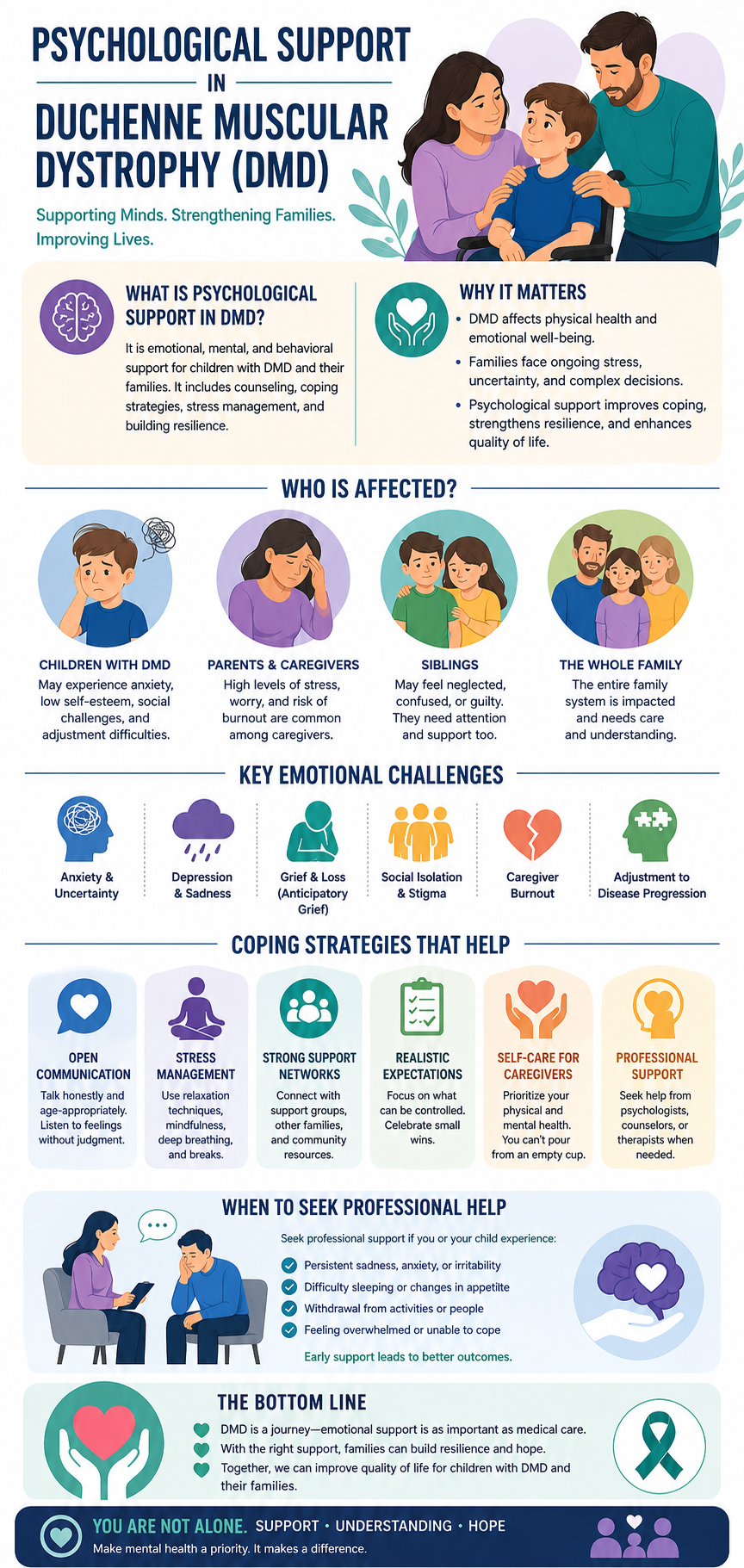
FAQ: Psychological Support in Duchenne Muscular Dystrophy
What is psychological support in Duchenne muscular dystrophy?
Psychological support in Duchenne muscular dystrophy refers to structured emotional, mental, and behavioral care for both the child and family. It includes counseling, coping strategies, stress management, and family support. This type of support helps reduce anxiety, improve resilience, and enhance quality of life. It is a core part of multidisciplinary DMD care.
Why is mental health important in DMD?
Mental health is crucial in DMD because the disease affects not only the body but also emotional well-being. Children and families face stress, uncertainty, and long-term caregiving demands. Poor mental health can reduce quality of life and affect treatment adherence. Proper psychological support improves coping and overall outcomes.
How does DMD affect a child’s mental health?
DMD can lead to anxiety, depression, and social withdrawal due to physical limitations and disease progression. Children may feel different from peers and struggle with independence. Emotional challenges often increase over time. Early psychological support helps prevent long-term issues.
What are the early signs of emotional distress in DMD?
Common signs include irritability, withdrawal, sleep problems, loss of interest in activities, and frequent sadness. Children may also show anxiety about medical procedures or physical changes. These signs should not be ignored. Early intervention improves emotional outcomes.
How can parents cope with a DMD diagnosis?
Parents can cope by seeking psychological support, joining support groups, and staying informed through reliable sources. Open communication within the family is essential. Professional counseling can help process grief and stress. Building a support network is key.
How do you explain DMD to a child?
Use simple, age-appropriate language and be honest without overwhelming the child. Younger children need basic explanations, while older children can understand more detail. Encourage questions and revisit conversations over time. Emotional reassurance is essential.
How does DMD affect siblings?
Siblings may feel neglected, confused, or guilty. They might also take on additional responsibilities. Without support, these feelings can impact their emotional development. Including siblings in communication and providing individual attention helps maintain balance.
What is caregiver burnout in DMD?
Caregiver burnout is physical and emotional exhaustion caused by long-term caregiving stress. Symptoms include fatigue, irritability, and emotional detachment. It is common in parents of children with DMD. Support, rest, and counseling can help prevent burnout.
When should families seek psychological help?
Families should seek help when emotional distress affects daily life, relationships, or decision-making. Persistent anxiety, depression, or behavioral changes are key warning signs. Early professional support prevents more serious mental health issues.
What role do support groups play in DMD?
Support groups provide emotional validation, shared experiences, and practical advice. They reduce feelings of isolation and help families learn from others. Both online and in-person groups are valuable. They are an important part of psychological support.
Can therapy help children with DMD?
Yes, therapy can help children manage anxiety, build coping skills, and improve emotional regulation. Approaches like cognitive behavioral therapy (CBT) are effective. Therapy also supports self-esteem and social skills.
How can families maintain hope with DMD?
Families can maintain hope by focusing on achievable goals, quality of life, and daily progress. Staying informed through reliable medical sources is important. Hope should be balanced with realistic expectations to avoid disappointment.
What mental health challenges are common in DMD?
Common challenges include anxiety, depression, social isolation, and adjustment difficulties. These issues may increase as the disease progresses. Regular mental health monitoring is recommended.
How does disease progression affect mental health?
Each stage of DMD brings new emotional challenges, such as loss of independence and increased medical needs. These transitions can trigger stress, grief, and anxiety. Continuous psychological support helps families adapt.
How can schools support children with DMD?
Schools can provide individualized education plans (IEPs), physical accommodations, and emotional support. Teacher awareness and peer education improve inclusion. A supportive school environment enhances mental well-being.
What is anticipatory grief in DMD?
Anticipatory grief is the emotional response to expected future losses. Families may grieve changes before they happen. It is a normal but complex process. Counseling can help manage these emotions.
How can parents manage stress in DMD care?
Parents can manage stress through mindfulness, therapy, support groups, and structured routines. Taking breaks and seeking help is essential. Self-care improves both mental health and caregiving ability.
Are there psychological differences in children with DMD?
Yes, some children with DMD may have attention difficulties, learning challenges, or behavioral differences. These are linked to dystrophin’s role in the brain. Early assessment and support are important.
What are the benefits of early psychological support in DMD?
Early support improves emotional resilience, reduces anxiety, and helps families adapt more effectively. It also prevents long-term mental health problems. Early intervention leads to better overall outcomes.
How can families improve quality of life in DMD?
Families can improve quality of life by combining medical care with psychological support, social engagement, and strong support networks. Focusing on daily well-being and meaningful experiences is key.
Final Thoughts
Psychological support in Duchenne muscular dystrophy is vital at every stage of the journey. Families face evolving emotional challenges that require ongoing attention and care. Early support helps build resilience and improves coping. Open communication strengthens trust and emotional stability. Supporting both the child and caregivers leads to better outcomes. Realistic expectations combined with hope reduce distress. Professional guidance can prevent long-term mental health issues. Strong support networks lessen isolation. Adaptive coping strategies empower families. With the right support, families can navigate DMD with strength and clarity.
Academic Sources and References
- Landfeldt E, Lindgren P, Bell CF, et al. (2018). Duchenne muscular dystrophy and caregiver burden: a systematic review. Developmental Medicine & Child Neurology.
- Landfeldt E, Lindgren P, Bell CF, et al. (2014). The burden of Duchenne muscular dystrophy: an international, cross-sectional study. Neurology.
- Balidemaj A et al. (2023). Exploring the dynamics of caring for a child with Duchenne muscular dystrophy. NIH (PMC).
- Schwartz CE et al. (2021). Characterizing the quality-of-life impact of Duchenne muscular dystrophy on caregivers.
- Domaradzki J et al. (2024). Quality of life and caregiving burden associated with Duchenne muscular dystrophy.
- Strober J et al. (2026). Caregiver burden in Duchenne muscular dystrophy in Europe, Japan, and the United States.
- Schwartz CE et al. (2022). Drivers of caregiver impact in Duchenne muscular dystrophy.
- Abi Daoud MS et al. (2004). Depression in parents of children with Duchenne muscular dystrophy.
- Peay HL et al. (2016). Psychological adaptation of mothers caring for children with Duchenne muscular dystrophy.
- Ryder S et al. (2017). The burden, epidemiology, costs and treatment for Duchenne muscular dystrophy: an evidence review. Orphanet Journal of Rare Diseases.
- Uttley L et al. (2018). A review of quality of life themes in Duchenne muscular dystrophy for patients and carers.
- Ozyurt G et al. Quality of life and sleep in children with Duchenne muscular dystrophy.
- Jesus A et al. (2024). Mood, behavior, and quality of life in Duchenne muscular dystrophy.
- Landfeldt E et al. (2016). Quantifying the burden of caregiving in Duchenne muscular dystrophy.
- American Journal of Managed Care (2024). Caregiver burden and productivity loss in Duchenne muscular dystrophy.