
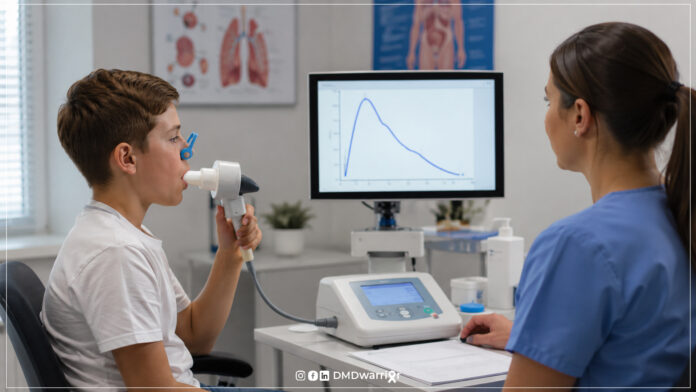
A spirometry test in Duchenne muscular dystrophy is a simple, non-invasive breathing test used to evaluate how well the lungs and respiratory muscles are functioning. In Duchenne Muscular Dystrophy, the muscles responsible for breathing gradually weaken over time, which can reduce lung capacity and make it harder to breathe deeply or cough effectively.
Because respiratory muscle weakness is a major part of DMD progression, regular monitoring is extremely important. A spirometry test in DMD helps physicians identify early changes in breathing function before severe symptoms develop. The test is widely used as a standard part of long-term respiratory care in individuals living with DMD.
Table of Contents
Why Is a Spirometry Test Performed in DMD?
A spirometry test in DMD is performed for several important reasons related to respiratory health and disease monitoring.

Main Reasons for Spirometry Testing in DMD
- To measure the strength of breathing muscles
- To monitor lung function over time
- To detect early signs of respiratory decline
- To evaluate how effectively the patient can cough and clear secretions
- To determine whether respiratory support or cough assistance devices may be needed
- To help guide treatment planning and long-term respiratory management
Regular spirometry evaluations allow healthcare providers to intervene early and improve respiratory outcomes for individuals with DMD.
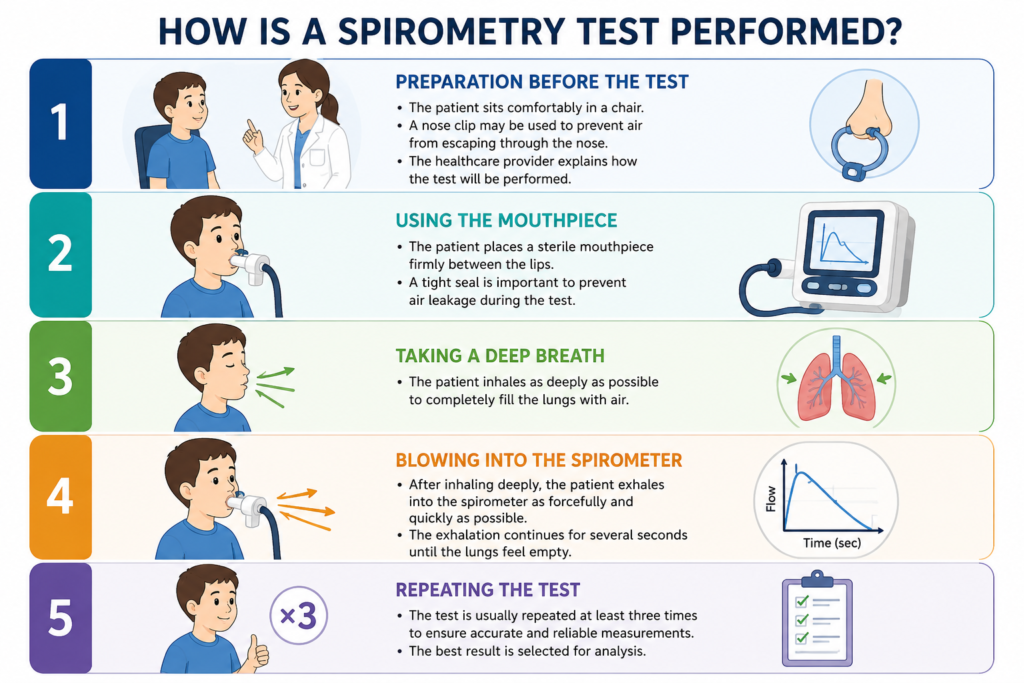
How Is a Spirometry Test Performed?
A spirometry test is safe, painless, and usually completed within a few minutes. The procedure is commonly performed in hospitals, pulmonary clinics, or neuromuscular care centers by trained healthcare professionals.
Step-by-Step Spirometry Test Procedure
1. Preparation Before the Test
- The patient sits comfortably in a chair.
- A nose clip may be used to prevent air from escaping through the nose.
- The healthcare provider explains how the test will be performed.
2. Using the Mouthpiece
- The patient places a sterile mouthpiece firmly between the lips.
- A tight seal is important to prevent air leakage during the test.
3. Taking a Deep Breath
- The patient inhales as deeply as possible to completely fill the lungs with air.
4. Blowing Into the Spirometer
- After inhaling deeply, the patient exhales into the spirometer as forcefully and quickly as possible.
- The exhalation continues for several seconds until the lungs feel empty.
5. Repeating the Test
- The test is usually repeated at least three times to ensure accurate and reliable measurements.
- The best result is selected for analysis.
What Does a Spirometry Test Measure?
A spirometry test in Duchenne muscular dystrophy measures several important aspects of lung and respiratory muscle function.
Common Spirometry Measurements
- FVC (Forced Vital Capacity): The total amount of air exhaled after taking the deepest possible breath
- FEV1 (Forced Expiratory Volume in 1 Second): The amount of air exhaled during the first second of forced breathing
- Peak Expiratory Flow: The fastest speed of exhalation
In DMD, these measurements may gradually decrease as respiratory muscles become weaker over time.
Learn More: Respiratory Health Care in Duchenne
Is Spirometry Difficult for Individuals With DMD?
Some children and adults with DMD may find spirometry tiring or challenging, especially in advanced stages of the disease. Younger children may also need extra practice to understand the breathing instructions.
However, respiratory therapists and healthcare professionals are experienced in helping patients perform the test correctly. Even when the results are not perfect, a spirometry test in DMD still provides valuable information about respiratory function and disease progression.
Why Regular Respiratory Monitoring Is Important in DMD
Respiratory care plays a critical role in the long-term management of DMD. Routine spirometry test in Duchenne muscular dystrophy evaluations help physicians detect breathing changes early and introduce supportive interventions at the appropriate time.
These interventions may include:
- Breathing exercises
- Cough assistance devices
- Airway clearance techniques
- Non-invasive ventilation support
Early respiratory monitoring and proactive care can significantly improve quality of life and long-term outcomes for people living with DMD.
FAQs: Spirometry Test in Duchenne muscular dystrophy
What does a spirometry test measure in Duchenne muscular dystrophy?
A spirometry test in Duchenne Muscular Dystrophy measures how well the lungs and breathing muscles are working. The test evaluates lung capacity, airflow, and respiratory muscle strength. Important values such as FVC (Forced Vital Capacity) and FEV1 help doctors monitor respiratory decline and detect early breathing problems in DMD patients.
At what age should spirometry testing start in DMD?
Most specialists recommend starting spirometry testing in Duchenne muscular dystrophy around 5 to 6 years of age, depending on the child’s ability to follow instructions. Early respiratory monitoring helps establish baseline lung function and allows doctors to track changes over time before symptoms become severe.
How often should DMD patients have a spirometry test?
The frequency of spirometry testing in DMD depends on age, disease progression, and respiratory status. Many neuromuscular specialists recommend pulmonary function testing at least once or twice per year. More frequent testing may be needed if breathing weakness progresses or respiratory symptoms worsen.
Is a spirometry test painful or dangerous for children with DMD?
No, a spirometry test is considered safe, painless, and non-invasive for children and adults with DMD. The test only involves breathing into a mouthpiece connected to a spirometer. Some patients may feel tired after repeated breathing efforts, but the procedure does not cause harm or discomfort.
Why is respiratory monitoring important in Duchenne muscular dystrophy?
Respiratory monitoring is essential in Duchenne muscular dystrophy because breathing muscles gradually weaken over time. Regular spirometry testing helps detect early lung function decline, guides treatment decisions, and determines when supportive therapies such as cough assistance or non-invasive ventilation may be needed. Early respiratory care can improve quality of life and long-term outcomes in DMD.
Final Thoughts
Regular spirometry testing plays a vital role in DMD care. It helps monitor lung function early. Breathing changes can be detected sooner. Early action may improve long-term outcomes. A spirometry test in Duchenne muscular dystrophy is simple and non-invasive. The procedure is usually quick and safe. Routine respiratory monitoring supports better treatment planning. Families can better understand respiratory health. Consistent follow-up is extremely important in DMD. Early respiratory care can improve quality of life.
Read More: Age-Based Assistive Devices for Duchenne
Academic Sources and References
- Birnkrant DJ, Bushby K, Bann CM, et al. Diagnosis and management of Duchenne muscular dystrophy, part 2: respiratory, cardiac, bone health, and orthopaedic management. The Lancet Neurology. 2018;17(4):347-361. DOI: 10.1016/S1474-4422(18)30025-5
- Finder JD, Birnkrant D, Carl J, et al. Respiratory care of the patient with Duchenne muscular dystrophy: ATS consensus statement. American Journal of Respiratory and Critical Care Medicine. 2004;170(4):456-465. DOI: 10.1164/rccm.200307-885ST
- Birnkrant DJ, Panitch HB, Benditt JO, et al. American College of Chest Physicians consensus statement on the respiratory and related management of patients with Duchenne muscular dystrophy undergoing anesthesia or sedation. Chest. 2007;132(6):1977-1986. DOI: 10.1378/chest.07-0458
- LoMauro A, D’Angelo MG, Aliverti A. Assessment and management of respiratory function in patients with Duchenne muscular dystrophy: current and emerging options. Therapeutics and Clinical Risk Management. 2015;11:1475-1488. DOI: 10.2147/TCRM.S55889
- McDonald CM, Henricson EK, Abresch RT, et al. The cooperative international neuromuscular research group Duchenne natural history study — a longitudinal investigation in Duchenne muscular dystrophy. Muscle & Nerve. 2013;48(1):32-54. DOI: 10.1002/mus.23671
- Bushby K, Finkel R, Birnkrant DJ, et al. Diagnosis and management of Duchenne muscular dystrophy, part 1: diagnosis, and pharmacological and psychosocial management. The Lancet Neurology. 2010;9(1):77-93. DOI: 10.1016/S1474-4422(09)70271-6
- American Thoracic Society. ATS/ERS Standardisation of Spirometry. European Respiratory Journal. 2005;26(2):319-338. DOI: 10.1183/09031936.05.00034805
- Mayer OH, Finkel RS, Rummey C, et al. Characterization of pulmonary function in Duchenne muscular dystrophy. Pediatric Pulmonology. 2015;50(5):487-494. DOI: 10.1002/ppul.23172
- Toussaint M, Davidson ZE, Bouvoie V, et al. Respiratory function decline in Duchenne muscular dystrophy. Pediatric Pulmonology. 2018;53(5):673-679. DOI: 10.1002/ppul.23981
- Eagle M, Baudouin SV, Chandler C, et al. Survival in Duchenne muscular dystrophy: improvements in life expectancy since 1967 and the impact of home nocturnal ventilation. Neuromuscular Disorders. 2002;12(10):926-929. DOI: 10.1016/S0960-8966(02)00140-2