
Genetic Counseling in Duchenne Muscular Dystrophy (DMD) plays a crucial role in helping patients and families understand the genetic nature of this severe neuromuscular disorder. Duchenne muscular dystrophy is an inherited condition characterized by progressive muscle degeneration caused by mutations in the dystrophin gene. Because it follows an X-linked inheritance pattern, the disease primarily affects boys, while females are typically carriers.
For families affected by Duchenne muscular dystrophy, genetic counseling offers valuable guidance on diagnosis, genetic testing, reproductive options, and emotional support. Genetic counselors help families understand how the disease is inherited, assess the risk for future children, and explore options such as prenatal testing and carrier screening.
This article provides a comprehensive overview of genetic counseling in Duchenne Muscular Dystrophy, including the importance of genetic risk assessment in DMD, available diagnostic tests, and strategies for family planning and Duchenne muscular dystrophy counseling.
Table of Contents
Understanding Duchenne Muscular Dystrophy
What is Duchenne Muscular Dystrophy?
Duchenne muscular dystrophy is one of the most common and severe forms of muscular dystrophy. It is caused by mutations in the dystrophin gene (DMD gene), which is responsible for producing dystrophin, a protein essential for maintaining muscle cell stability. Read More: What is dystrophin gene?
Without functional dystrophin, muscle fibers become damaged and gradually weaken. Symptoms typically begin in early childhood, often between the ages of 2 and 5.
Common signs include:
- Difficulty walking or running
- Frequent falls
- Enlarged calf muscles
- Delayed motor milestones
- Progressive muscle weakness
As the disease progresses, individuals with Duchenne muscular dystrophy may develop respiratory and cardiac complications. Learn More: FAQ About Duchenne
The Genetic Basis of Duchenne Muscular Dystrophy
Duchenne muscular dystrophy is inherited in an X-linked recessive pattern. Because males have only one X chromosome, a mutation in the dystrophin gene on that chromosome leads to the disease.
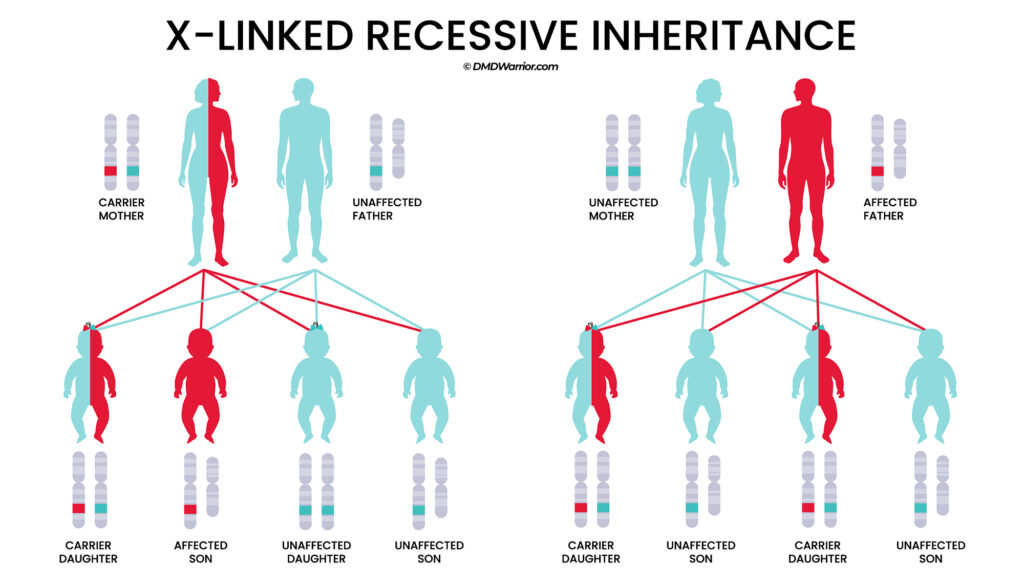
Females typically have two X chromosomes, meaning they can carry one mutated gene without developing severe symptoms. These individuals are known as carriers. Learn More: Duchenne Carriers
Important inheritance facts:
- Carrier mothers have a 50% chance of passing the mutated gene to their sons.
- Sons who inherit the mutation will develop Duchenne muscular dystrophy.
- Daughters who inherit the mutation will become carriers.
Understanding this inheritance pattern is essential for genetic risk assessment in Duchenne muscular dystrophy.
The Role of Genetic Counseling in Duchenne Muscular Dystrophy
What is Genetic Counseling?
Genetic counseling is a healthcare service that provides information and guidance to individuals or families affected by genetic conditions.
For Duchenne muscular dystrophy, genetic counseling helps families:
- Understand the genetic cause of the disease
- Evaluate the likelihood of recurrence
- Make informed reproductive decisions
- Interpret genetic testing results
- Access appropriate medical care and support
A genetic counselor works closely with physicians, neurologists, and genetic specialists to provide personalized risk assessment and guidance. Learn More: Neuromuscular Team
Why Genetic Counseling is Important in Duchenne Muscular Dystrophy
The complexity of genetic inheritance makes counseling an essential part of DMD care.
Key benefits include:
Accurate Diagnosis
Genetic counseling helps confirm a molecular diagnosis through genetic testing.
Understanding Inheritance
Families learn how the disease is inherited and the implications for relatives.
Risk Assessment
Counselors provide detailed genetic risk assessment in Duchenne muscular dystrophy, helping families understand the likelihood of the disease occurring in future children.
Emotional and Psychological Support
Receiving a diagnosis of Duchenne muscular dystrophy can be emotionally challenging. Counseling offers support during difficult decision-making processes.
Genetic Risk Assessment in Duchenne Muscular Dystrophy
Evaluating Family History
A key component of genetic counseling is analyzing the family pedigree. Counselors review multiple generations to identify possible carriers and affected individuals.
Family history evaluation includes:
- Male relatives with muscle weakness
- Early deaths related to muscle disease
- Known genetic diagnoses
- Carrier status among female relatives
This information helps determine the probability that a family member carries a dystrophin gene mutation. Discover More: Types of Genetic Variants in Duchenne
Carrier Testing
Carrier testing identifies females who carry the DMD gene mutation.
This is important for:
- Mothers of affected boys
- Sisters of individuals with DMD
- Female relatives in the extended family
Carrier testing usually involves molecular genetic testing to detect mutations in the dystrophin gene.
Women identified as carriers may experience mild symptoms, including muscle weakness or cardiomyopathy, making medical monitoring important.
Genetic Testing Methods
Several genetic testing technologies are used in Duchenne muscular dystrophy.
1. Deletion/Duplication Analysis
Approximately 70% of DMD cases result from deletions of segments of the dystrophin gene. Testing methods such as MLPA (Multiplex Ligation-dependent Probe Amplification) are commonly used.
2. DNA Sequencing
Sequencing can detect small mutations that deletion tests might miss.
3. Next-Generation Sequencing
Advanced genomic technologies can analyze the entire dystrophin gene efficiently and identify rare mutations.
Accurate testing is essential for reliable genetic risk assessment in Duchenne muscular dystrophy.
Family Planning and Duchenne Muscular Dystrophy Counseling
Reproductive Options for Families
Families affected by Duchenne muscular dystrophy often seek guidance about future pregnancies.
Genetic counselors discuss several reproductive options.
Prenatal Testing
Prenatal diagnosis allows parents to determine whether a fetus has inherited the DMD mutation.
Common prenatal tests include:
- Chorionic Villus Sampling (CVS)
Performed during early pregnancy. - Amniocentesis
Conducted later in pregnancy to analyze fetal DNA.
These tests can detect the dystrophin gene mutation if the familial mutation is known. Learn More: What is Prenatal Testing?
Preimplantation Genetic Testing (PGT)
Preimplantation genetic testing is performed during in vitro fertilization (IVF). Embryos are tested for the DMD mutation before implantation.
Only embryos without the mutation are transferred to the uterus.
This option allows families to reduce the risk of having a child with Duchenne muscular dystrophy.
Donor Eggs or Sperm
Some families choose donor reproductive cells to eliminate the risk of passing on the mutation.
Adoption
Adoption may also be considered by families who prefer to avoid genetic transmission risks.
Emotional Considerations in Family Planning
Family planning and Duchenne muscular dystrophy counseling involve sensitive emotional and ethical decisions.
Families may face difficult choices regarding:
- Prenatal testing results
- Pregnancy continuation
- Reproductive technologies
Genetic counselors provide non-directive guidance, allowing families to make decisions aligned with their values and beliefs.
Screening and Testing for Family Members
Once a child is diagnosed with Duchenne muscular dystrophy, it is recommended that other relatives undergo genetic evaluation.
Testing may be offered to:
- Sisters of affected individuals
- Maternal aunts
- Female cousins
- Extended family members
Early identification of carriers enables proactive health monitoring and informed reproductive decisions.
Psychological and Social Support
Living with Duchenne muscular dystrophy can have significant emotional impacts on families.
Common challenges include:
- Anxiety about disease progression
- Stress related to caregiving responsibilities
- Uncertainty about future pregnancies
- Feelings of guilt among carrier mothers
Genetic counseling provides access to psychological support resources and patient advocacy groups.
Support networks can improve coping strategies and overall well-being.
Advances in Genetic Research and Therapy
Recent scientific advances are improving the outlook for individuals with Duchenne muscular dystrophy.
Research areas include:
Gene Therapy
Scientists are exploring therapies that introduce functional dystrophin genes into muscle cells.
Exon Skipping
Exon-skipping drugs aim to restore the reading frame of the dystrophin gene, allowing production of partially functional protein. Keep Reading: What is Exon Skipping Therapy in Duchenne
CRISPR Gene Editing
Emerging gene-editing technologies may one day correct DMD mutations directly.
As treatments evolve, genetic counseling continues to play a key role in helping families understand new therapeutic possibilities.
Ethical Considerations in Genetic Counseling
Genetic counseling raises several ethical considerations.
Important principles include:
Informed Consent
Patients must understand the benefits and limitations of genetic testing.
Privacy and Confidentiality
Genetic information must be protected and shared responsibly.
Non-Directive Counseling
Counselors provide information without imposing decisions.
Equity of Access
Ensuring access to genetic services for all populations is a growing priority.
Future Directions in Genetic Counseling for Duchenne Muscular Dystrophy
The field of genetic counseling is rapidly evolving.
Future developments may include:
- Expanded genomic screening
- Artificial intelligence-assisted risk prediction
- Improved prenatal diagnostic technologies
- Personalized treatment planning based on genetic profiles
These advancements will enhance the accuracy of genetic risk assessment in Duchenne muscular dystrophy and improve support for affected families.
TRY NOW: DMD or BMD? Exon Check Tool
FAQ: Genetic Counseling in Duchenne Muscular Dystrophy
What is genetic counseling in Duchenne muscular dystrophy?
Genetic counseling in Duchenne muscular dystrophy is a specialized healthcare service that helps individuals and families understand the genetic causes of the condition, how it is inherited, and what it means for future health and family planning. A genetic counselor explains the results of genetic tests, assesses the risk of passing the disease to future children, and helps families explore reproductive options. Genetic counseling also provides emotional support and guidance during complex medical decision-making.
Why is genetic counseling important for Duchenne muscular dystrophy?
Genetic counseling is essential because Duchenne muscular dystrophy is an inherited disorder caused by mutations in the dystrophin gene. Counseling helps families understand the X-linked inheritance pattern, identify carriers within the family, and determine the risk of recurrence in future pregnancies. It also ensures that patients receive accurate diagnosis and appropriate genetic testing.
Who should consider genetic counseling for Duchenne muscular dystrophy?
Genetic counseling is recommended for:
• Parents of a child diagnosed with Duchenne muscular dystrophy
• Women who may be carriers of the dystrophin gene mutation
• Family members of individuals with DMD
• Couples with a family history of muscular dystrophy
• Individuals considering genetic testing before pregnancy
Early counseling allows families to make informed decisions about health management and reproductive planning.
What happens during a genetic counseling session for Duchenne muscular dystrophy?
During a genetic counseling session, the counselor typically:
• Reviews the patient’s medical history and family history
• Explains how Duchenne muscular dystrophy is inherited
• Discusses genetic testing options
• Performs genetic risk assessment in Duchenne muscular dystrophy
• Explains test results and their implications
• Discusses family planning and reproductive choices
The goal is to provide clear, understandable information so families can make informed decisions.
What is genetic risk assessment in Duchenne muscular dystrophy?
Genetic risk assessment in Duchenne muscular dystrophy involves evaluating the likelihood that a person carries or will pass on the DMD gene mutation. This assessment is based on family history, genetic testing results, and inheritance patterns. Genetic counselors analyze family pedigrees and recommend appropriate testing to determine carrier status and recurrence risks.
How is Duchenne muscular dystrophy inherited?
Duchenne muscular dystrophy follows an X-linked recessive inheritance pattern. The mutation occurs in the dystrophin gene located on the X chromosome.
Key points include:
• Males with the mutation usually develop the disease because they have only one X chromosome.
• Females with one mutated gene are typically carriers.
• Carrier mothers have a 50% chance of passing the mutation to their sons and a 50% chance of passing carrier status to their daughters.
Understanding this inheritance pattern is a critical part of genetic counseling.
What is carrier testing for Duchenne muscular dystrophy?
Carrier testing is a genetic test used to determine whether a woman carries a mutation in the dystrophin gene. This testing is often recommended for:
• Mothers of boys diagnosed with Duchenne muscular dystrophy
• Sisters of affected individuals
• Female relatives in the maternal family line
Identifying carriers helps families understand genetic risk and plan for future pregnancies.
Can Duchenne muscular dystrophy occur without a family history?
Yes, approximately one-third of Duchenne muscular dystrophy cases occur due to new (de novo) mutations in the dystrophin gene. This means the mutation appears spontaneously and was not inherited from the parents. Even in these cases, genetic counseling is important because the mutation may still be passed on to future generations.
What genetic tests are used to diagnose Duchenne muscular dystrophy?
Several types of genetic tests are used to diagnose Duchenne muscular dystrophy:
• Deletion and duplication testing of the dystrophin gene
• DNA sequencing to detect small mutations
• Next-generation sequencing (NGS) for comprehensive gene analysis
These tests help confirm the diagnosis and identify the specific mutation responsible for the disease.
Can prenatal testing detect Duchenne muscular dystrophy?
Yes, prenatal genetic testing can detect Duchenne muscular dystrophy if the familial gene mutation is known. Common prenatal tests include:
• Chorionic villus sampling (CVS)
• Amniocentesis
These procedures analyze fetal DNA to determine whether the fetus has inherited the dystrophin gene mutation.
What reproductive options are available for families affected by Duchenne muscular dystrophy?
Families have several reproductive options when considering future pregnancies, including:
• Prenatal genetic testing
• Preimplantation genetic testing (PGT) with in vitro fertilization (IVF)
• Use of donor eggs or sperm
• Adoption
Genetic counselors discuss these options during family planning and Duchenne muscular dystrophy counseling.
What is preimplantation genetic testing (PGT)?
Preimplantation genetic testing is a procedure used during IVF to test embryos for genetic disorders before pregnancy begins. Embryos are screened for the DMD mutation, and only embryos without the mutation are implanted in the uterus. This approach can significantly reduce the risk of having a child with Duchenne muscular dystrophy.
How does family planning and Duchenne muscular dystrophy counseling help families?
Family planning and Duchenne muscular dystrophy counseling help families understand their reproductive risks and explore options to prevent or manage the disease in future generations. Genetic counselors provide information about prenatal diagnosis, fertility treatments, and genetic testing so families can make informed decisions that align with their values and goals.
Can female carriers of Duchenne muscular dystrophy have symptoms?
Although most female carriers do not develop severe symptoms, some may experience mild muscle weakness or heart problems such as cardiomyopathy. Because of this risk, carriers are often advised to undergo periodic medical evaluations, including cardiac monitoring.
When should families seek genetic counseling after a Duchenne muscular dystrophy diagnosis?
Genetic counseling should ideally be arranged soon after a diagnosis of Duchenne muscular dystrophy is confirmed. Early counseling allows families to:
• Understand the genetic cause of the disease
• Test other family members for carrier status
• Plan for future pregnancies
• Access appropriate medical care and support services
Can genetic counseling help relatives who are not yet affected?
Yes. Genetic counseling can identify relatives who may be carriers or at risk of having affected children. Early identification allows these individuals to make informed decisions about genetic testing and reproductive planning.
Is genetic counseling only about medical information?
No. Genetic counseling also addresses emotional, psychological, and ethical aspects of genetic diseases. Counselors help families cope with the stress of diagnosis, understand complex medical information, and connect with support groups and healthcare resources.
How can families prepare for a genetic counseling appointment?
Families can prepare by gathering relevant medical and family history information, including:
• Medical records of affected individuals
• Family history of muscle disorders
• Previous genetic test results
Providing this information helps counselors perform a more accurate genetic risk assessment in Duchenne muscular dystrophy.
Can genetic counseling reduce the risk of Duchenne muscular dystrophy in future children?
While genetic counseling cannot eliminate genetic mutations, it can significantly reduce the risk of having affected children by providing information about reproductive options such as carrier testing, prenatal diagnosis, and preimplantation genetic testing.
Where can families find genetic counseling services for Duchenne muscular dystrophy?
Genetic counseling services are typically available through:
• hospitals and medical genetics clinics
• neuromuscular disease centers
• specialized genetic counseling clinics
• academic medical centers
Healthcare providers can refer families to certified genetic counselors with expertise in neuromuscular disorders.
Learn More: Genetic counseling, prenatal diagnosis and newborn screening in Duchenne muscular dystrophy
Final Thoughts
Genetic Counseling in Duchenne Muscular Dystrophy is an essential component of comprehensive care for individuals and families affected by this genetic disorder. Through detailed genetic evaluation, counseling services help families understand the inheritance pattern of DMD, evaluate the risk of recurrence, and explore reproductive options.
From carrier testing and prenatal diagnosis to emotional support and family planning strategies, genetic counseling empowers families with the knowledge needed to make informed decisions about their future.
As research continues to advance and new therapies emerge, genetic counseling will remain a critical bridge between cutting-edge genetic science and patient care.
Follow This Page >>> All Clinical Trials for Duchenne