

Duchenne carriers play a critical role in the understanding and management of Duchenne Muscular Dystrophy (DMD) in females. Awareness among healthcare providers regarding the implications of carrier status is essential for the timely implementation of cardiac monitoring and preventive healthcare strategies. Early diagnosis of DMD in girls, whether they are symptomatic or carriers, promotes better health outcomes through informed medical care. Thus, increasing awareness and education about Duchenne carriers contributes significantly to the overall well-being of affected individuals and their families.
Understanding how DMD occurs in girls, what symptoms may look like, and how it is managed is essential for early diagnosis, proper treatment, and long-term health monitoring.
Table of Contents
Understanding Duchenne Carriers
It’s important to understand that dystrophinopathy is not always passed down from a mother who is a carrier. Around 70% (about 2 in 3) of children diagnosed with Duchenne muscular dystrophy inherit the gene change from their mother, who carries the variant. However, in approximately 30% of cases, the gene change occurs for the first time in the child and was not inherited from either parent. This type of change is known as a spontaneous or “de novo” variant. When a child has a de novo variant and the mother does not carry the gene change, she is not considered a carrier.
Can Girls Have Duchenne?
Yes, girls can have Duchenne, but it is much rarer.
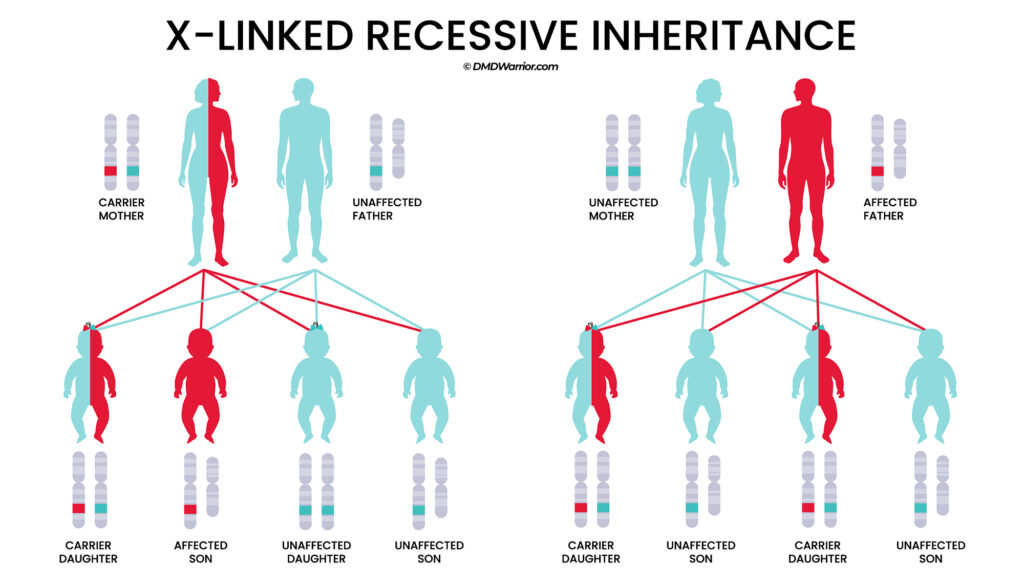
DMD is an X-linked genetic disorder caused by mutations in the dystrophin gene. Because boys have only one X chromosome (XY), a single mutation causes the disease. Girls, however, have two X chromosomes (XX). If one carries the mutation, the other often compensates.
That’s why most girls with a DMD mutation are called carriers rather than fully affected patients. However, some girls develop symptoms. These individuals are often referred to as manifesting carriers.
Learn More: Population-Wide Duchenne Muscular Dystrophy Carrier Detection by CK and Molecular Testing
Why and How Does DMD Occur in Girls?
There are several genetic mechanisms that explain how DMD can affect girls:
Skewed X-Chromosome Inactivation
In females, one X chromosome is randomly inactivated in each cell. If the healthy X chromosome is inactivated more often than the mutated one, symptoms can appear. This is called skewed X-inactivation and is the most common reason girls develop DMD symptoms.
Turner Syndrome (XO)
Girls with Turner syndrome have only one X chromosome. If that single X carries the DMD mutation, they can develop Duchenne similarly to boys.
X-Autosome Translocation
In rare cases, part of the X chromosome attaches to another chromosome. If the normal dystrophin gene is disrupted, DMD symptoms may develop.
Inheriting Mutations from Both Parents (Extremely Rare)
A girl could inherit a mutated gene from both parents, though this scenario is exceptionally uncommon.
Symptoms of DMD in Girls
Symptoms in girls are often milder than in boys but can still significantly impact quality of life.
Common signs may include:
- Muscle weakness (especially in hips and legs)
- Delayed motor milestones
- Difficulty climbing stairs
- Frequent falls
- Muscle cramps
- Fatigue
- Learning difficulties (in some cases)
Importantly, even girls with mild or no muscle symptoms may still develop cardiac complications, making heart monitoring essential.
Managing DMD in Girls
Management depends on symptom severity. A multidisciplinary approach is often recommended.
Neurological Care
Regular evaluations by neuromuscular specialists help monitor muscle strength and function.
Cardiac Monitoring
Heart involvement is one of the most important concerns in female carriers.
Cardiomyopathy (weakening of the heart muscle) can occur even without skeletal muscle symptoms. Routine cardiac evaluations may include:
- Echocardiograms
- Cardiac MRI
- Electrocardiograms (ECG)
Early detection allows for preventive medications that protect heart function.
Learn More: Heart Health in Duchenne Muscular Dystrophy: Cardiomyopathy, Detection, and Modern Treatment Strategies
Physical Therapy
Physical therapy helps:
- Maintain flexibility
- Prevent contractures
- Improve mobility
- Reduce muscle stiffness
Exercise plans should be supervised to avoid overexertion.
Respiratory Monitoring
Though less common than in boys, respiratory weakness can occur in symptomatic females. Pulmonary function testing may be recommended if symptoms appear. Read More: Respiratory Health Care in DMD
Genetic Counseling
Genetic counseling is crucial for:
- Understanding inheritance patterns
- Family planning decisions
- Testing other family members
A confirmed genetic diagnosis helps guide monitoring and treatment. Learn More: Genetic Counseling in Duchenne
What Should Girls and Women Who Are Carriers of Duchenne Pay Attention To?
Even if a girl or woman has no muscle weakness, being a carrier of DMD muscular dystrophy requires lifelong awareness.
Heart Health Is a Priority
Female carriers should begin regular cardiac screening in adolescence or early adulthood. Cardiomyopathy may develop silently, so routine imaging is essential.
Pregnancy Considerations
Carrier women have a:
- 50% chance of passing the mutation to sons (who may develop DMD)
- 50% chance of passing carrier status to daughters
Preconception genetic counseling helps families understand options.
Read More: What Is Prenatal Testing for Duchenne Muscular Dystrophy (DMD)?
Watch for Mild Muscle Symptoms
Even subtle signs—like fatigue, exercise intolerance, or mild weakness—should be evaluated.
Emotional and Psychological Support
Learning about carrier status can be emotionally challenging. Psychological counseling and support groups can be beneficial.
Informing Healthcare Providers
Not all clinicians are aware that DMD can affect females. It’s important that providers know about carrier status to ensure proper cardiac monitoring and preventive care.
The Importance of Early Diagnosis
Early identification of DMD in girls—whether symptomatic or carriers—allows for:
- Timely cardiac intervention
- Preventive treatment
- Family planning support
- Access to clinical trials (when appropriate)
With advances in genetic testing, diagnosis has become more accessible and accurate than ever before.
Frequently Asked Questions (FAQ)
Can girls really have Duchenne muscular dystrophy?
Yes. Although DMD mainly affects boys, girls can develop symptoms, especially if they are manifesting carriers or have specific chromosomal conditions.
Are female carriers always symptom-free?
No. Some female carriers experience muscle weakness, fatigue, or heart problems, even if symptoms are mild.
How common is DMD in girls?
It is rare. Most girls with the mutation are carriers, but a small percentage develop noticeable symptoms.
Should female carriers have heart checkups?
Yes. Regular cardiac screening is strongly recommended because cardiomyopathy can develop without obvious warning signs.
Can a carrier mother have more than one child with DMD?
Yes. Each pregnancy carries independent genetic probabilities.
Is genetic testing recommended for sisters of boys with DMD?
Yes. If a boy is diagnosed with DMD, female siblings should consider genetic testing to determine carrier status. Read: DMD Genetic Testing
Does DMD progress the same way in girls as in boys?
Usually not. When girls show symptoms, progression is often milder and slower, but cardiac involvement still requires careful monitoring.
Final Thoughts
Understanding that girls can be affected by Duchenne is essential for early diagnosis, proper monitoring, and informed family decisions. With appropriate care and awareness, many female carriers and affected girls can lead healthy, well-managed lives.