
Duchenne muscular dystrophy (DMD) is one of the most severe inherited neuromuscular disorders affecting children worldwide. It is caused by pathogenic mutations in the dystrophin gene, also known as the DMD gene, which plays a critical role in maintaining the structural integrity of muscle fibers. Understanding genetic variants in Duchenne muscular dystrophy and the types of genetic variants in Duchenne muscular dystrophy is essential for accurate diagnosis, genetic counseling, and the development of targeted therapies.
Advances in molecular genetics have significantly improved our knowledge of Duchenne muscular dystrophy genetics, revealing a complex mutation spectrum that includes large deletions, duplications, and small sequence variants within the DMD gene. These genetic variants in Duchenne muscular dystrophy, also described as different types of genetic variants in Duchenne muscular dystrophy, disrupt the production of the dystrophin protein, leading to progressive muscle degeneration and weakness.
This article provides an in-depth overview of the mutation spectrum of the DMD gene, the types of genetic variants in Duchenne muscular dystrophy, modern diagnostic technologies such as next-generation sequencing, and the importance of genotype–phenotype correlations in Duchenne muscular dystrophy. It also highlights how identifying genetic variants in Duchenne muscular dystrophy can support precise diagnosis and guide personalized therapeutic strategies.
Table of Contents
Duchenne Muscular Dystrophy Genetics
The DMD Gene and Its Role
The DMD gene is one of the largest genes in the human genome, located on the X chromosome (Xp21). It spans approximately 2.4 million base pairs and contains 79 exons. This gene encodes dystrophin, a protein that stabilizes muscle cell membranes by linking the cytoskeleton of muscle fibers to the extracellular matrix.
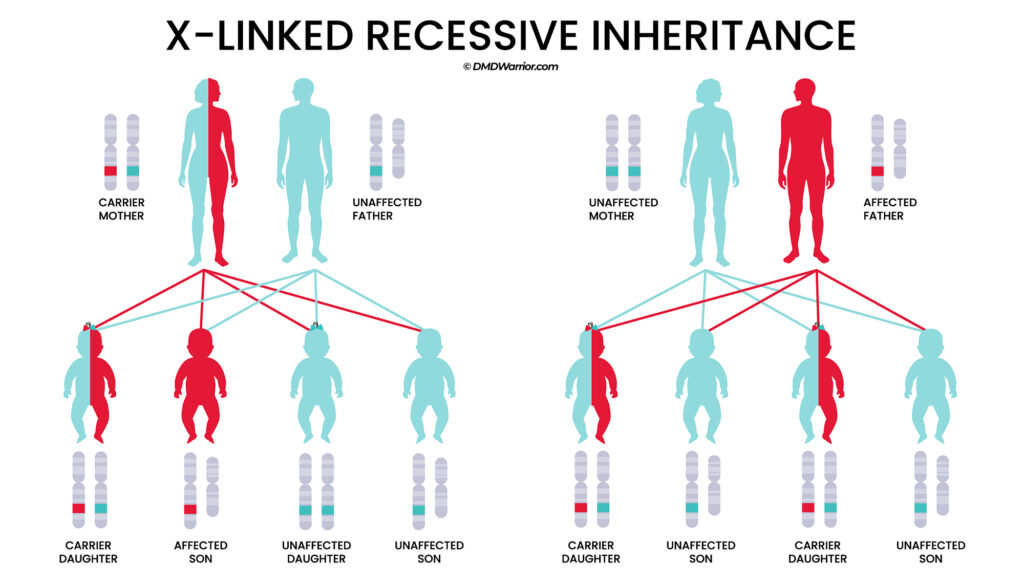
Because the gene is located on the X chromosome, Duchenne muscular dystrophy genetics follows an X-linked recessive inheritance pattern. As a result:
- Males are primarily affected.
- Females are usually carriers but may occasionally show symptoms.
When dystrophin gene mutations occur, the production of functional dystrophin protein is severely disrupted. Without dystrophin, muscle cells become fragile and susceptible to damage during normal muscle contraction. Keep Reading: Dystrophin Gene
Over time, this damage leads to:
- Progressive muscle weakness
- Muscle fiber degeneration
- Replacement of muscle tissue with fat and connective tissue
Genetic Variants in Duchenne Muscular Dystrophy
What Are Genetic Variants?
Genetic variants are changes in the DNA sequence that may alter gene function. In the context of genetic variants in Duchenne muscular dystrophy, these mutations affect the DMD gene, leading to loss or dysfunction of dystrophin protein.
These variants can include:
- Large structural mutations
- Small nucleotide changes
- Insertions or deletions
- Splice site alterations
The mutation spectrum of the DMD gene is diverse, and identifying the specific mutation type is critical for diagnosis and treatment decisions.
Types of Genetic Variants in Duchenne Muscular Dystrophy
1. Deletion Mutations
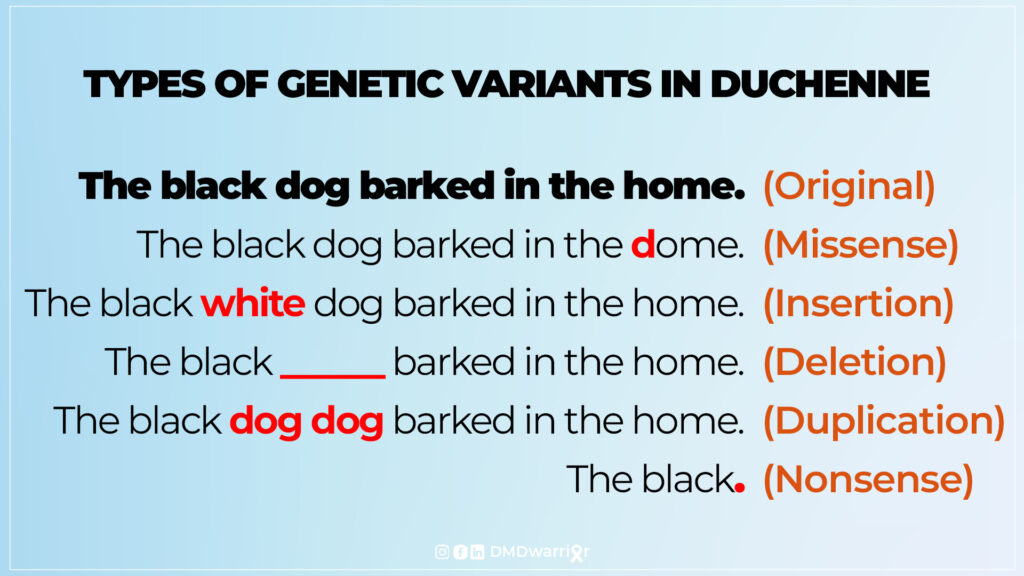
The most common DMD gene mutations are large deletions, accounting for approximately 60–70% of cases. These deletions typically involve one or more exons of the dystrophin gene.
Deletion hotspots occur in two major regions:
- Exons 45–55 (major hotspot)
- Exons 2–20 (minor hotspot)
When these deletions disrupt the reading frame of the gene, dystrophin production is severely affected, leading to Duchenne muscular dystrophy. However, if the reading frame remains intact, a milder condition known as Becker muscular dystrophy may occur. Keep Reading: What is Becker muscular dystrophy?
Key features of deletion mutations include:
- Loss of one or more exons
- Disruption of the protein reading frame
- Reduced or absent dystrophin protein
2. Duplication Mutations
Duplications represent approximately 5–10% of dystrophin gene mutations. These mutations occur when one or more exons are copied and inserted into the gene sequence.
Duplications can also disrupt the gene’s reading frame and impair dystrophin production.
Characteristics of duplication mutations:
- Repeated segments of the DMD gene
- Potential disruption of gene function
- Often detected using MLPA or genomic sequencing technologies
Although less common than deletions, duplications are a significant part of the mutation spectrum of the DMD gene. Read More: What is DMD Genetic Testing
3. Point Mutations and Small Variants
Point mutations represent approximately 20–30% of cases of genetic variants in Duchenne muscular dystrophy. These include small changes in the DNA sequence that can have significant functional consequences.
Types of point mutations include:
Nonsense Mutations
Nonsense mutations introduce a premature stop codon in the gene sequence. This causes early termination of dystrophin protein synthesis.
These mutations are particularly important because nonsense mutation therapies have been developed to address them.
Missense Mutations
Missense mutations involve the substitution of one amino acid for another. In the DMD gene, these mutations may disrupt the structure or stability of dystrophin protein.
Splice Site Mutations
Splice site mutations affect the normal splicing of RNA transcripts. These variants can lead to the exclusion or inclusion of incorrect exons during protein synthesis.
4. Insertions and Frameshift Mutations
Insertions involve the addition of extra nucleotides into the gene sequence. When these insertions change the reading frame, they are called frameshift mutations.
Frameshift mutations often result in:
- Premature stop codons
- Truncated dystrophin proteins
- Severe Duchenne muscular dystrophy phenotypes
5. Novel Genetic Variants in Dystrophin Gene
With the expansion of genomic technologies, researchers continue to identify novel genetic variants in the dystrophin gene.
These variants may include:
- Rare splice mutations
- Deep intronic mutations
- Structural rearrangements
- Complex genomic alterations
Understanding these novel variants helps expand the known mutation spectrum of the DMD gene and improves diagnostic accuracy.
Mutation Spectrum of the DMD Gene
The mutation spectrum of the DMD gene reflects the diversity of genetic changes that can cause Duchenne muscular dystrophy.
Approximate distribution:
| Mutation Type | Frequency |
|---|---|
| Large deletions | 60–70% |
| Duplications | 5–10% |
| Small mutations | 20–30% |
Learn More: What is exon deletion?
This wide spectrum makes comprehensive genetic testing essential for accurate diagnosis.
Learn More: Spectrum of Genetic Variants in the Dystrophin Gene
Genotype–Phenotype Correlation in Duchenne Muscular Dystrophy
Understanding the relationship between genetic mutations and clinical outcomes is critical in Duchenne muscular dystrophy genetics.
The reading frame rule is commonly used to predict disease severity:
- Out-of-frame mutations → Duchenne muscular dystrophy
- In-frame mutations → Becker muscular dystrophy
However, exceptions exist, and additional factors may influence disease progression.
Examples of genotype–phenotype relationships include:
- Mutations affecting certain exons may lead to earlier disease onset.
- Some variants allow partial dystrophin expression.
- Modifier genes may influence clinical severity.
Studying genotype–phenotype correlation in Duchenne muscular dystrophy helps clinicians predict disease course and guide therapy.
Next-Generation Sequencing in DMD Diagnosis
Advances in Genetic Testing
Traditional diagnostic methods focused on detecting deletions and duplications. However, advances in next-generation sequencing (NGS) have revolutionized the diagnosis of DMD gene mutations.
NGS enables:
- Comprehensive sequencing of the DMD gene
- Detection of small variants
- Identification of rare mutations
- Discovery of novel genetic variants
This technology has greatly improved the detection of genetic variants in Duchenne muscular dystrophy.
Benefits of Next-Generation Sequencing
Advantages of NGS in DMD diagnosis include:
- High sensitivity
- Comprehensive mutation detection
- Rapid turnaround time
- Ability to identify rare or complex variants
NGS is now widely used in clinical genetics laboratories and research studies.
Clinical Importance of Identifying DMD Genetic Variants
Understanding types of mutations in Duchenne muscular dystrophy is critical for several reasons:
1. Accurate Diagnosis
Genetic testing confirms the diagnosis of Duchenne muscular dystrophy and differentiates it from other neuromuscular disorders.
2. Carrier Detection
Female relatives of affected individuals can be tested to determine carrier status. Keep Reading: DMD Carriers
3. Prenatal and Preimplantation Diagnosis
Families with a history of DMD may benefit from genetic counseling and reproductive options. Keep Reading: What is Prenatal Testing?
4. Personalized Treatment
Certain therapies target specific DMD gene mutations, such as exon skipping or nonsense mutation therapies.
Emerging Research on Genetic Variants in Duchenne Muscular Dystrophy
Recent research is expanding our understanding of dystrophin gene mutations and their impact on disease progression.
Key areas of study include:
- Identification of rare genetic variants
- Discovery of modifier genes
- Development of gene therapies
- Investigation of RNA-based therapies
Understanding the mutation spectrum of the DMD gene is essential for developing precision medicine strategies for Duchenne muscular dystrophy.
Future Directions in Duchenne Muscular Dystrophy Genetics
The future of Duchenne muscular dystrophy genetics lies in advanced genomic technologies and innovative therapeutic approaches.
Promising developments include:
- CRISPR gene editing
- Exon skipping therapies
- Gene replacement strategies
- RNA-based treatments
As research continues, improved understanding of types of genetic variants in Duchenne muscular dystrophy will lead to more effective treatments and better patient outcomes.
Frequently Asked Questions (FAQ) About Genetic Variants in Duchenne Muscular Dystrophy
What are genetic variants in Duchenne muscular dystrophy?
Genetic variants in Duchenne muscular dystrophy are changes in the DNA sequence of the DMD gene that disrupt the production of dystrophin protein.
These variants can include:
• Large deletions of gene segments
• Duplications of exons
• Small DNA sequence changes (point mutations)
• Insertions or frameshift mutations
• Splice-site alterations
Together, these changes form the mutation spectrum of the DMD gene, which explains why different patients may have slightly different disease characteristics.
How do genetic variants impact DMD treatment and prognosis?
Current research indicates that a patient’s specific mutation in the DMD gene may influence how severe the disease becomes, although the relationship is not always straightforward. Understanding the types of genetic variants in Duchenne muscular dystrophy can help provide clues about possible disease progression.
For example, individuals with deletions involving exons 3–7 or deletions near exon 44 often experience relatively milder clinical symptoms. In contrast, mutations affecting regions around exons 51 and 53 are sometimes associated with a more severe disease course.
However, genetic mutations alone do not fully determine a patient’s prognosis or life expectancy. Other factors—such as how early treatment begins, the type of therapy used, and how long treatment continues—can also play a major role in influencing disease progression and overall outcomes.
What are the most common types of DMD gene mutations?
The types of mutations in Duchenne muscular dystrophy vary, but the most common ones include:
• Large deletions – account for about 60–70% of cases
• Duplications – occur in approximately 5–10% of patients
• Point mutations – including nonsense and missense variants
• Insertions and frameshift mutations
• Splice-site mutations
These DMD gene mutations affect the ability of muscle cells to produce functional dystrophin protein.
What are deletion and duplication mutations in the DMD gene?
Deletion and duplication mutations in the DMD gene are structural genetic changes involving one or more exons.
Deletions:
Deletions occur when parts of the dystrophin gene are missing. These are the most common cause of Duchenne muscular dystrophy.
Duplications:
Duplications occur when sections of the gene are copied and inserted again in the DNA sequence.
Both types of mutations may disrupt the gene’s reading frame, preventing normal dystrophin production.
How are genetic variants in Duchenne muscular dystrophy diagnosed?
Diagnosing genetic variants in Duchenne muscular dystrophy involves specialized genetic testing.
Common diagnostic methods include:
• Multiplex ligation-dependent probe amplification (MLPA) for detecting deletions and duplications
• Next-generation sequencing (NGS) for identifying small mutations
• Whole-exome sequencing in complex cases
These technologies help detect the full mutation spectrum of the DMD gene.
What is next-generation sequencing in DMD diagnosis?
Next-generation sequencing (NGS) is an advanced genetic testing technology used to analyze the DNA sequence of genes.
In DMD diagnosis, NGS allows doctors to:
• Identify rare or small DMD gene mutations
• Detect novel genetic variants in the dystrophin gene
• Analyze the entire gene quickly and accurately
NGS has significantly improved the ability to diagnose Duchenne muscular dystrophy and guide treatment options.
What is the genotype–phenotype correlation in Duchenne muscular dystrophy?
The genotype–phenotype correlation in Duchenne muscular dystrophy refers to how specific genetic mutations affect disease severity and progression.
One key principle is the reading frame rule:
• Out-of-frame mutations usually cause Duchenne muscular dystrophy
• In-frame mutations may lead to a milder condition called Becker muscular dystrophy
However, other genetic factors may influence how severe the disease becomes.
Are new genetic variants in the dystrophin gene still being discovered?
Yes. Researchers continue to identify novel genetic variants in the dystrophin gene as genetic technologies improve.
New discoveries include:
• Rare intronic mutations
• Complex genomic rearrangements
• Previously unknown splice variants
These findings expand the known mutation spectrum of the DMD gene and improve diagnostic accuracy.
Why is identifying the exact DMD gene mutation important?
Knowing the specific DMD gene mutation helps doctors:
• Confirm the diagnosis
• Predict disease progression
• Identify eligibility for mutation-specific therapies
• Provide accurate genetic counseling
Certain emerging treatments are designed to target specific types of dystrophin gene mutations, making precise diagnosis increasingly important.
Final Thoughts
Duchenne muscular dystrophy is a devastating genetic disorder caused by mutations in the dystrophin gene. The mutation spectrum of the DMD gene includes deletions, duplications, point mutations, insertions, and novel genetic variants.
Advances in genomic technologies such as next-generation sequencing have greatly improved the detection of DMD gene mutations, enabling more accurate diagnosis and personalized treatment strategies.
Understanding the types of DMD genetic variants and their relationship to disease severity through genotype–phenotype correlation is essential for improving clinical management and guiding future therapies.
Continued research into Duchenne muscular dystrophy genetics will pave the way for new diagnostic tools, targeted treatments, and potentially curative therapies.
Follow This Page >>> All Clinical Trials for Duchenne