
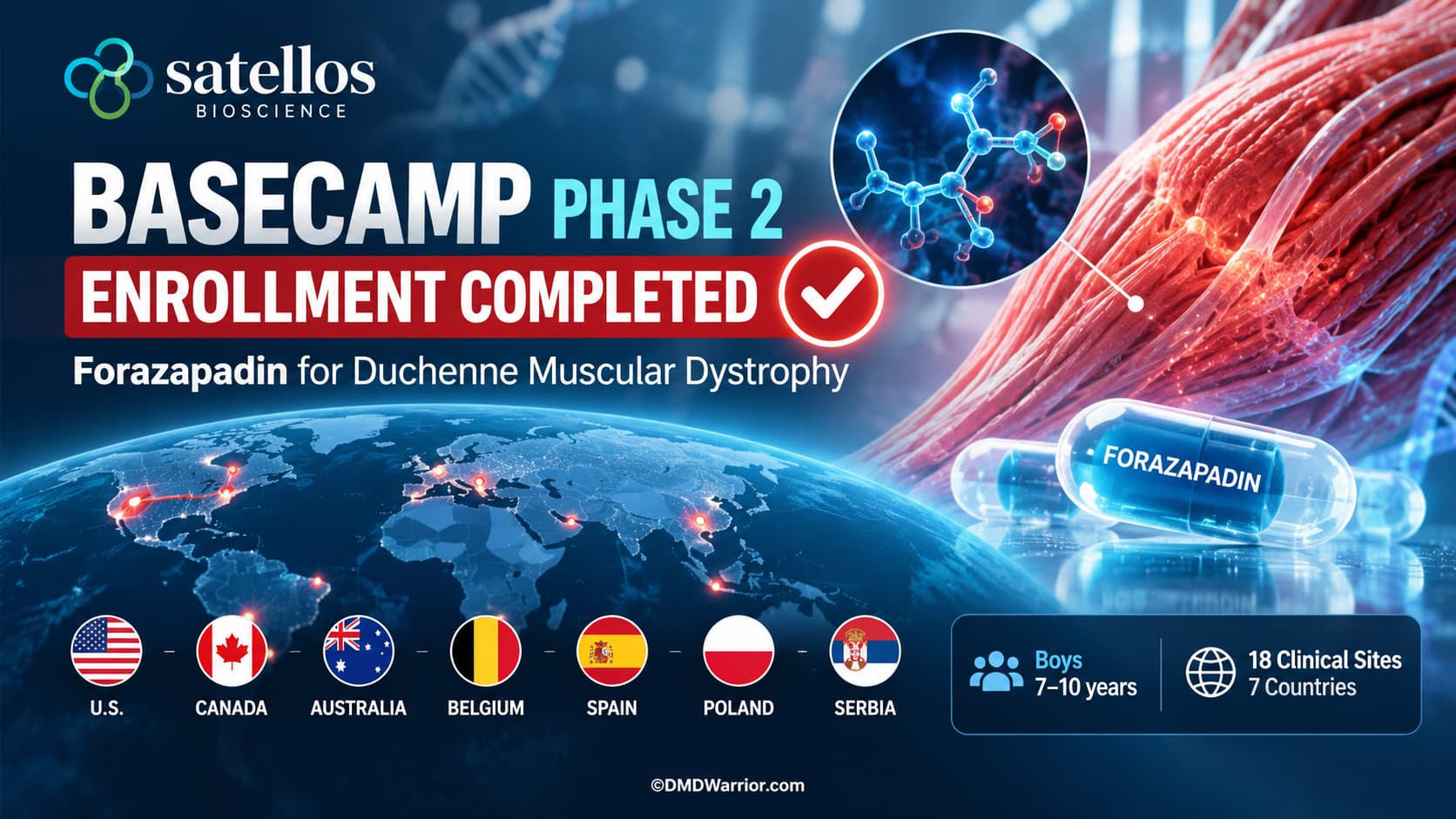
Satellos Bioscience has announced the completion of enrollment in BASECAMP, a Phase 2 clinical trial evaluating Forazapadin (SAT-3247) in boys with Duchenne muscular dystrophy (DMD).
Forazapadin is an orally administered small-molecule drug candidate being developed to restore muscle regeneration in people living with DMD and other degenerative muscle diseases.
The BASECAMP trial enrolled ambulatory boys between 7 and 10 years of age. Participants were recruited across 18 clinical sites in the United States, Canada, Australia, Belgium, Spain, Poland and Serbia. The company reported that it reached and exceeded its enrollment target in less than nine months after screening the first participant.
Participants were randomly assigned in equal groups to receive either 60 mg of Forazapadin, 120 mg of Forazapadin, or placebo.
The study consists of a 12-week placebo-controlled period followed by a 36-week randomized active-treatment period. The primary endpoints focus on safety, tolerability and changes in muscle force measured using dynamometry.
Secondary assessments are designed to examine the potential effects of Forazapadin on muscle quality, physical function and muscle regeneration.
According to Satellos, the trial includes multiple dose groups as well as clinical, functional and biomarker assessments. The company expects the study to provide additional information about Forazapadin and its potential role as a treatment for Duchenne muscular dystrophy.
Satellos has also announced a change to its previous data-release timeline. Instead of releasing topline results earlier as previously planned, the company now expects to share topline clinical data from BASECAMP in the first quarter of 2027. The company said it is taking additional time to compile what it considers a complete dataset before communicating the results.
The completion of enrollment marks an important stage in the clinical development of Forazapadin. The next major milestone for the BASECAMP program will be the release of its topline clinical data, currently expected in Q1 2027.
Descubra mais: Mapa dos locais de ensaios clínicos da distrofia muscular de Duchenne